
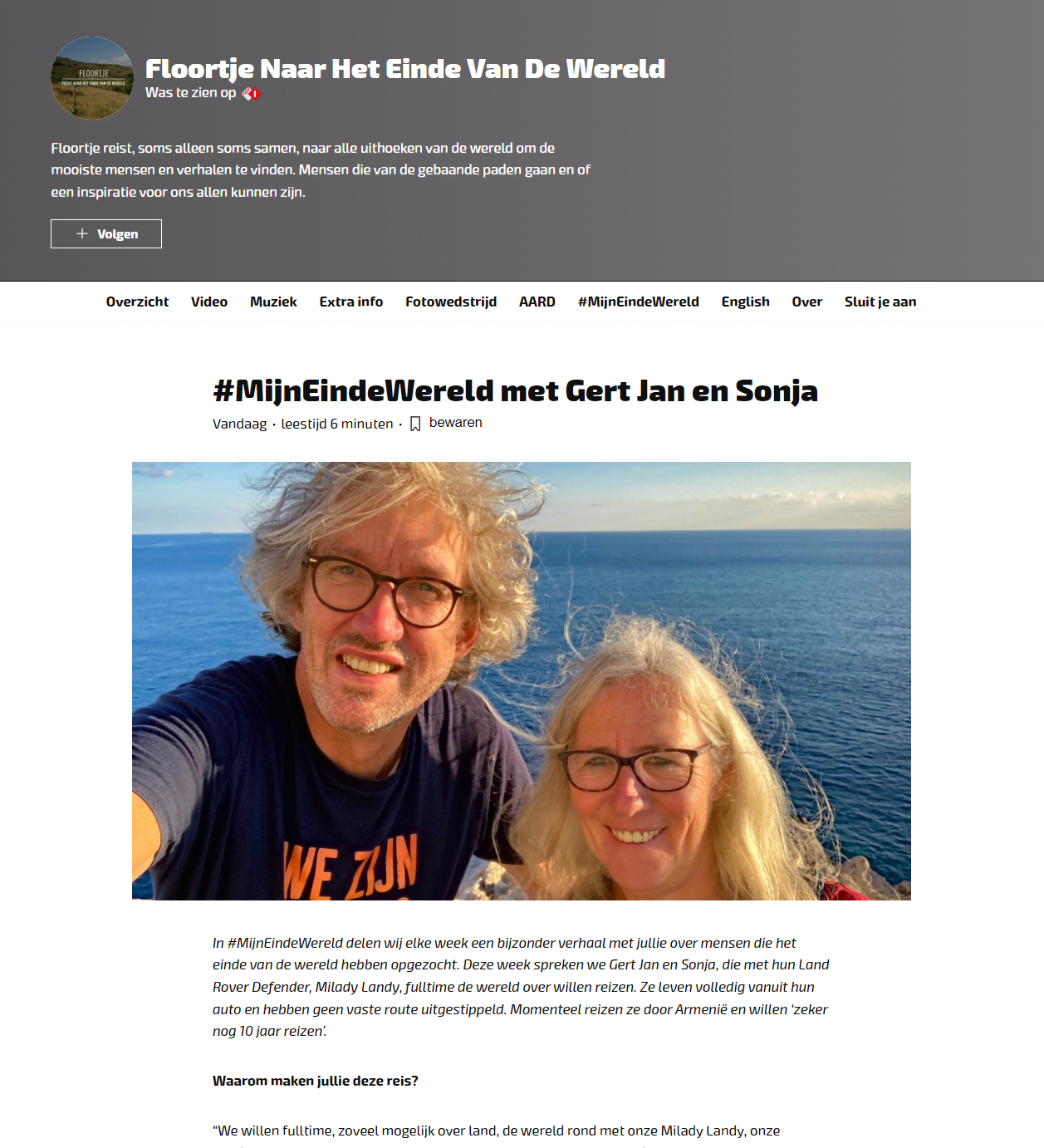
Starting today on MijnEindeWereld: Our story about our world trip with Milady Landy. (Translation below)
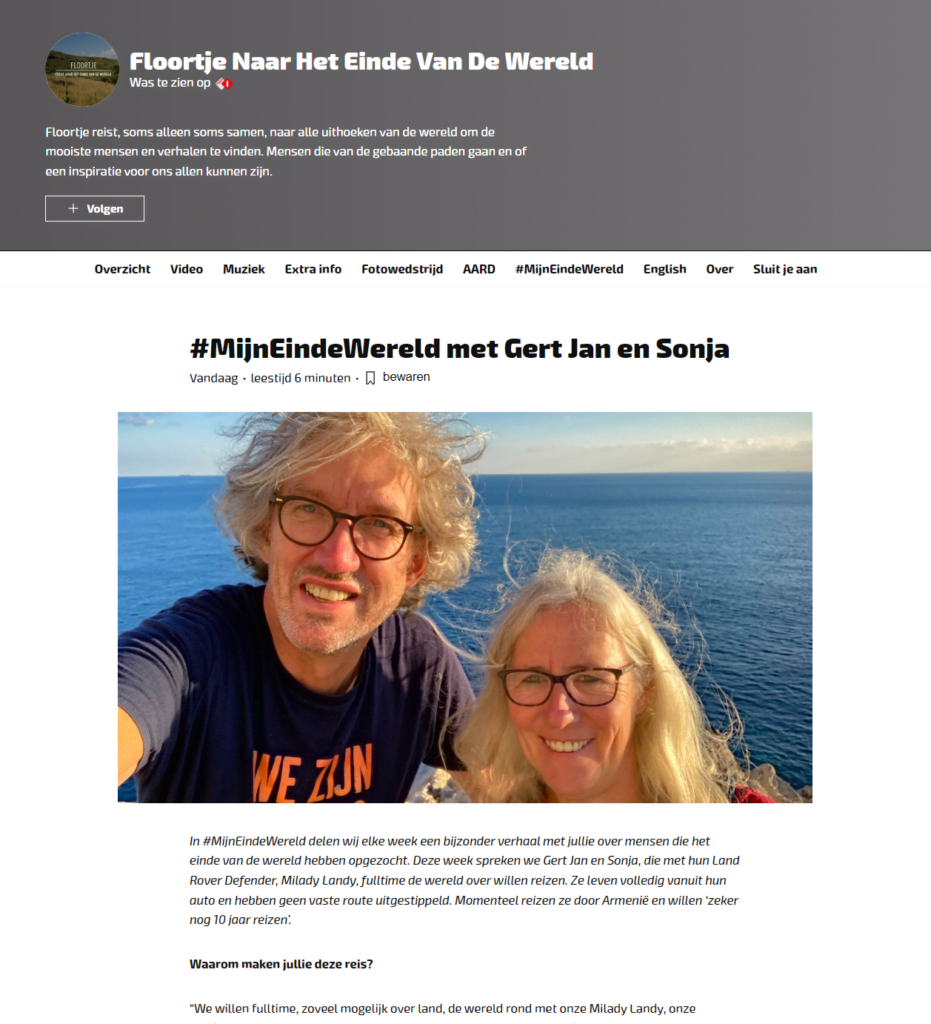
English Translation

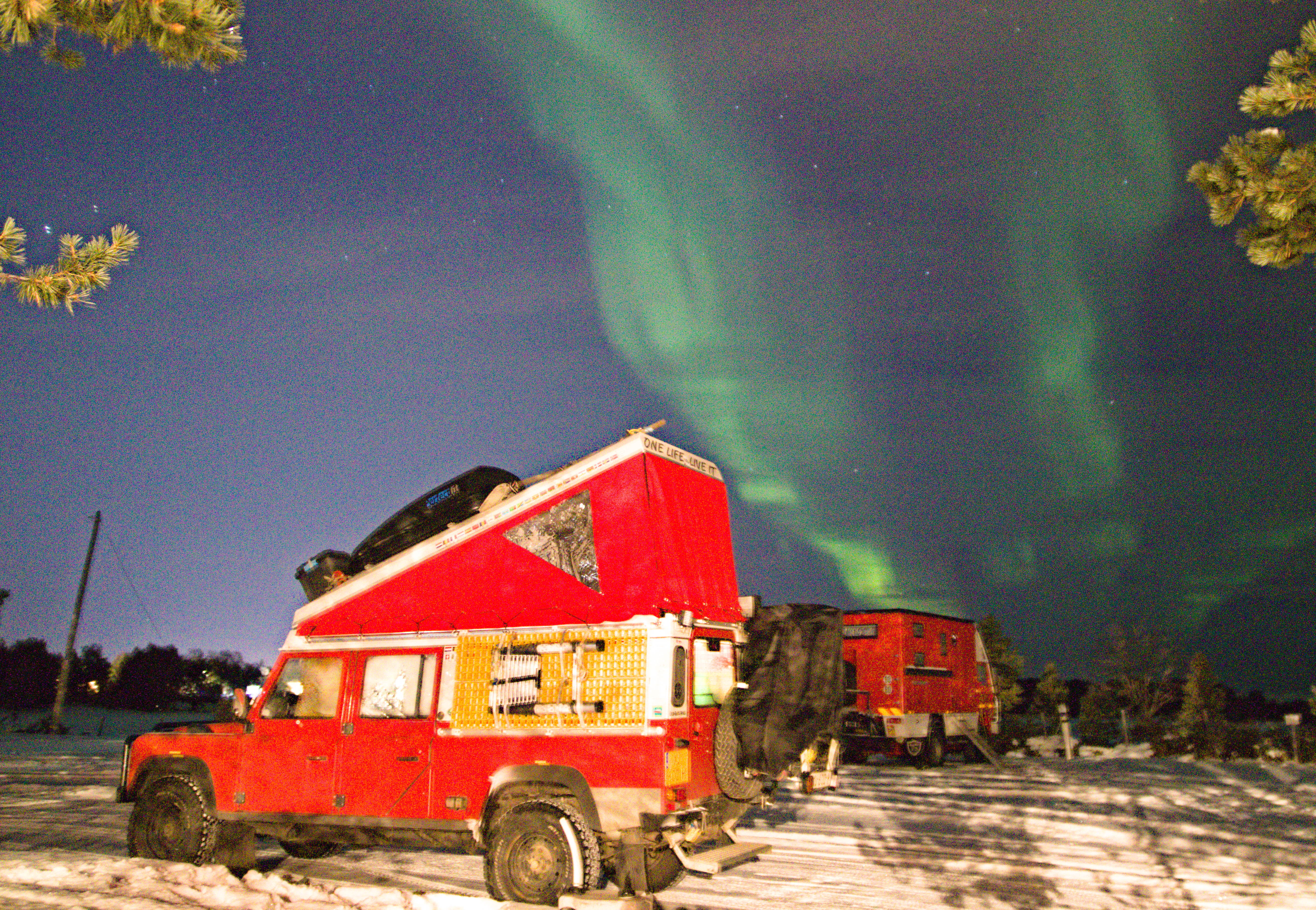
In #MijnEindeWereld we share a special story with you every week about people who have visited the end of the world. This week we speak to Gert Jan and Sonja, who want to travel the world full-time with their Land Rover Defender, Milady Landy. They live entirely from their car and have no set route. They are currently traveling through Armenia and want to ‘travel for at least another 10 years’.
Why are you making this journey?
“We want to go around the world full-time, overland as much as possible, with our Milady Landy, our Landrover motorhome. We left for Morocco in 2019. We traveled through France, Spain, Portugal and finally made the crossing to Morocco. Since then we have almost always been on the road, with a small interruption due to Covid. In the Netherlands we both worked, had a house and children. We had a busy life, both at work and socially. Because of this we sometimes lived a bit past each other. In 2016 we took a six month sabbatical to travel through Africa. We then traveled by car through 12 countries in 6 months. That turned out actually very good. We expected in advance that that trip would change our lives, we just didn’t expect it to lead to the choice to travel full time. During that trip we discovered that we actually really enjoyed traveling together. So when we came back we said: “We want to do this a lot more.” But we had to go back to work after 6 months. We thought: “How nice it must be if you can travel without those fixed agreements and without an end time.” We looked at our finances and future and came to the conclusion that we wanted to stop working earlier and just go for it.”
Was it hard to leave everything behind?
“We sold our house and now live from the car. We definitely do not miss the luxury. There is so many new things to replace it. We have always enjoyed our work very much, and of course you miss your children, the clubs and your friends. But the travelling, enjoying the scenery and the new people we meet make it all worth it. You really have to get used to the minimal life. You are so used to having everything, but you don’t need a lot. Now I have three sets of summer clothes, three sets of winter clothes and a pair of shoes and that’s all I need. We like that we can easily keep in touch with our children. They are now just one video call away. They also get used to us not being around all the time. And when we are back in the Netherlands, we take all the time for them.”
Have you always had such a love for travelling?
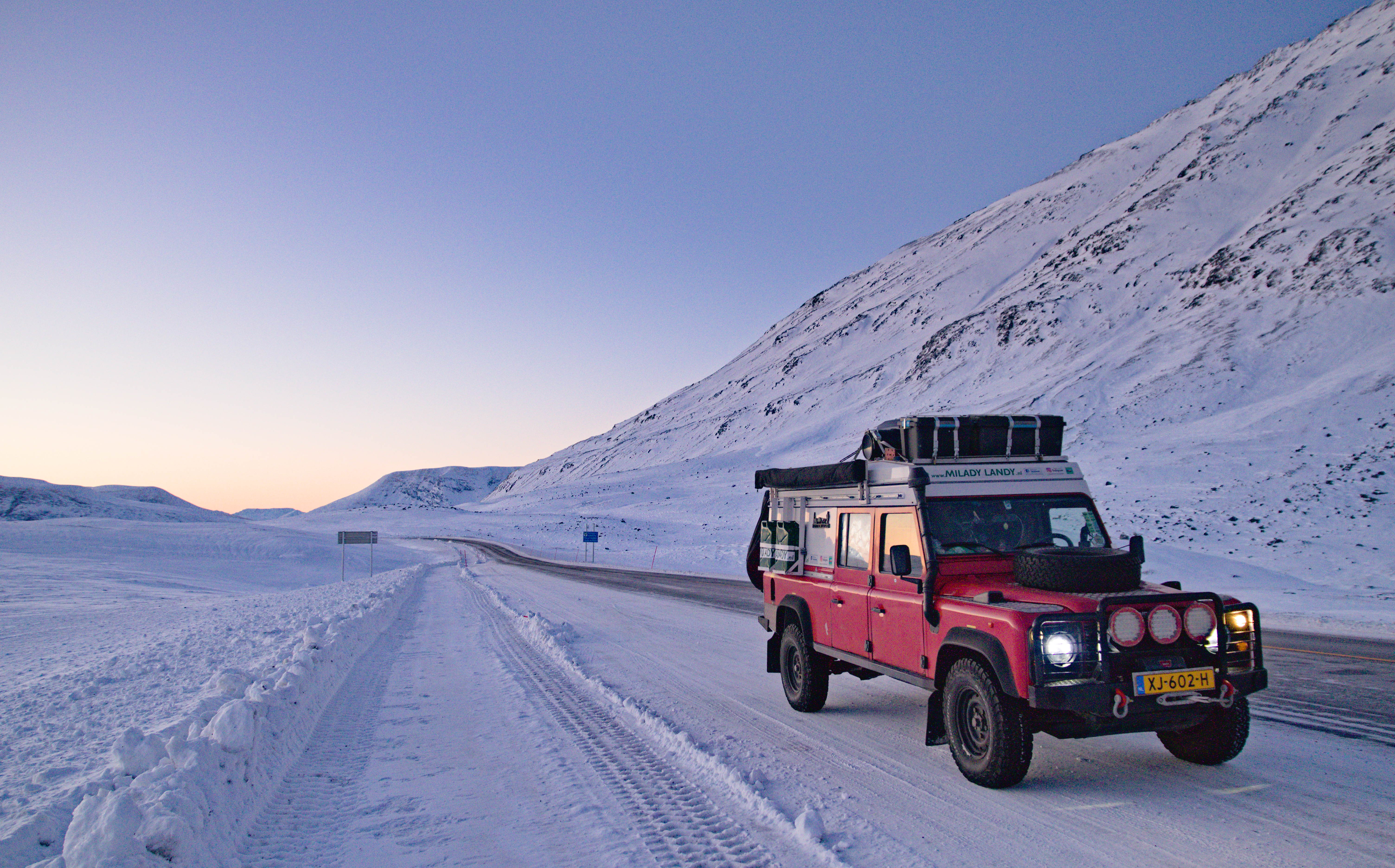
“We always went camping during the summer holidays and even when we didn’t know each other, we traveled a lot. Sonja always had two months of vacation in summer. She then visited all the Greek islands with her backpack. Gert Jan has always been a camper and also loved interrailing. We have always been curious about other cultures, other people, other environments. Our trip only reinforced that. We are curious and eager to learn. We are lucky that we both really want it, that’s why it’s nice to do. We did several tests first. The trip through Africa was a test of whether we would last together. We also traveled through Scandinavia to see if we could also handle a colder climate. Since then, the spontaneity has brought us to our destination.”
What does an average day look like?
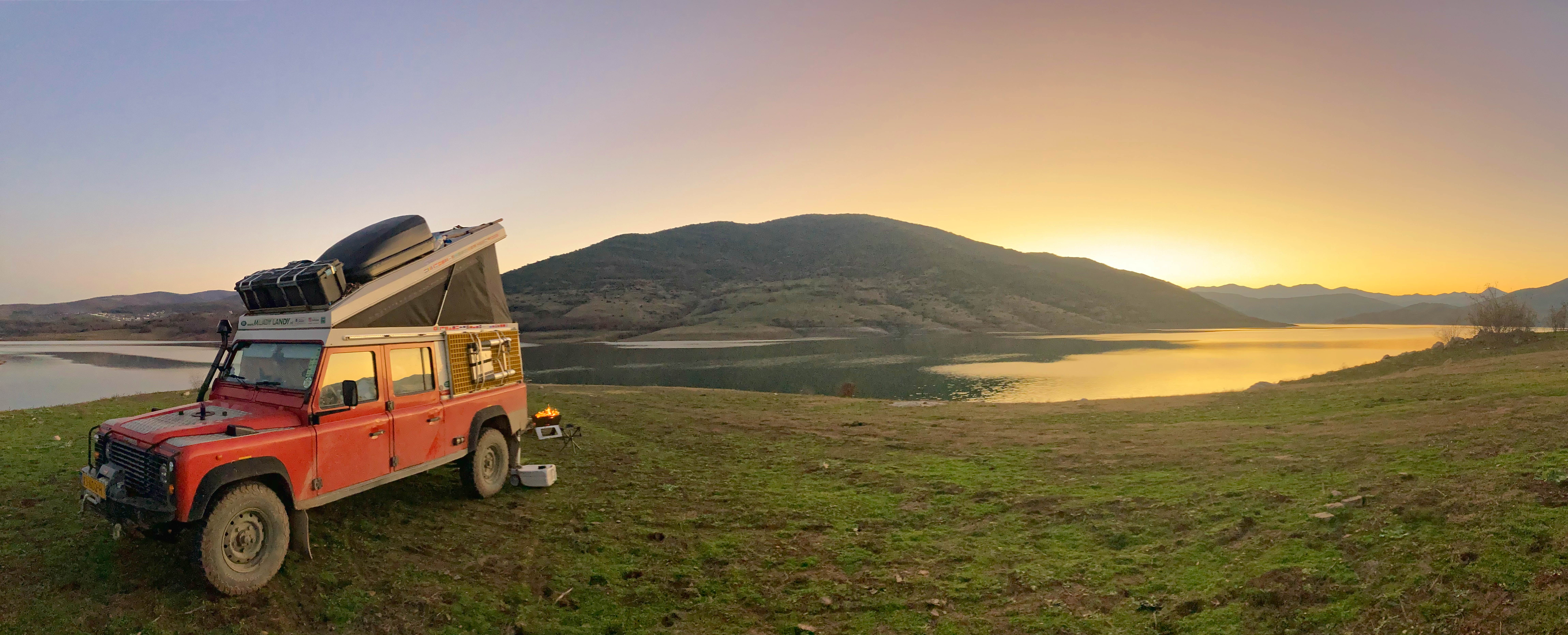
“We have now driven 25,000 kilometers in 9 months. We travel about 80 kilometers a day on average, but sometimes we also stay longer at one spot. Usually we get up around 8 o’clock and have breakfast. If we are going to drive we try to leave around 9am. We then drive for about an hour and a half and stop again for lunch or to see some sights. There is a lot to see along the way, we like to get to know people, nature and culture during our travels. We visit many monasteries and churches here in Armenia. There was a lot of nature in Georgia, so we once drove through a nature park for 4 days. We often choose a place where we want to spend the night along the way. We have everything in the car, so we don’t need that much. A bed, a kitchen and a sitting area. It’s small, but big enough for us. In the countries where we have been in recent months you are allowed to wild camp, so we are not tied to anything. We almost always cook ourselves and in the evening we read or play games. We are addicted to the game Skip-Bo, we play it every day. When we are in nature, we make a fire and cook on it. We also sometimes watch a series until 2 a.m., cozy in the car. Actually, we don’t really have a daily routine. Breakfast, lunch and dinner are the only fixed things.”
What obstacles have you encountered and how have you dealt with them?
“Setbacks are mainly the car that gets faulty. It is an old car that has now driven 545,000 kilometers, you have to take good care of it. Sometimes things wear out and you have to find a garage to get things fixed. But that’s okay, that’s part of the adventure. Finding a garage is often quite an adventure in itself. You drive into a city and often have to go through two or three addresses to find a good garage. And they hardly speak English here, so we’ve gotten really good at talking to Google. If there is something wrong with the car, we know: it can be solved today, but it can also take a week. We just adjust our plan. Sometimes we just grab a hotel if the repair takes a long time. I don’t think we see things as a setback easily. You do have to be flexible. You can’t always go by plan A. For example, we were supposed to travel to Mongolia after the summer, but because we don’t want to go through Russia, we can’t. Plan B was to go to Iran, but we don’t like the current situation either. So now we have plan C, to take the boat from Turkey to Israel and explore the Arabian Peninsula from there. Every setback brings an opportunity. Due to the “setbacks” we have done so many things that we would not actually do, those are experiences that we cherish very much.”

What lessons have you learned during your journey?
“It doesn’t have to be so rushed. We were quite busy in our working lives and we had to distance ourselves from that. We have a very structured life in the Netherlands, but that is not necessary at all. You can drive fine on a road with potholes in it. It’s not all that perfect here, but that doesn’t matter, that has its charm. We also learn a lot from each other. Sonja can sometimes find things exciting and worry about them. Gert Jan is much more carefree and can reassure me. But I am also sometimes a bit of a brake for Gert Jan, because he is sometimes very enthusiastic and then wants to do everything. We have learned to push our limits. And you get to know yourself well, because you really come across yourself.”
What message do you want to pass on to others?
“You have one life, live it. That is also on our car. We hear so many people who have a dream and always say: first this, then I will do it. But before you know it, it’s too late. I think this is the case with everything. Follow your heart if you can. The condition is that you must know yourself well, you must be happy yourself, you must love yourself very much, you must love the other person very much, and then it will be all right. Of course you miss your children, of course it’s hard to leave everything behind, but you get used to that. People sometimes ask: “Where exactly are you going?”. Then I answer: “We are traveling to the horizon.” It does not matter. We’ll see where we end up today. That gives you a lot of freedom. When you are on that kind of journey, you should feel free to travel day by day, to travel to the horizon.”
