
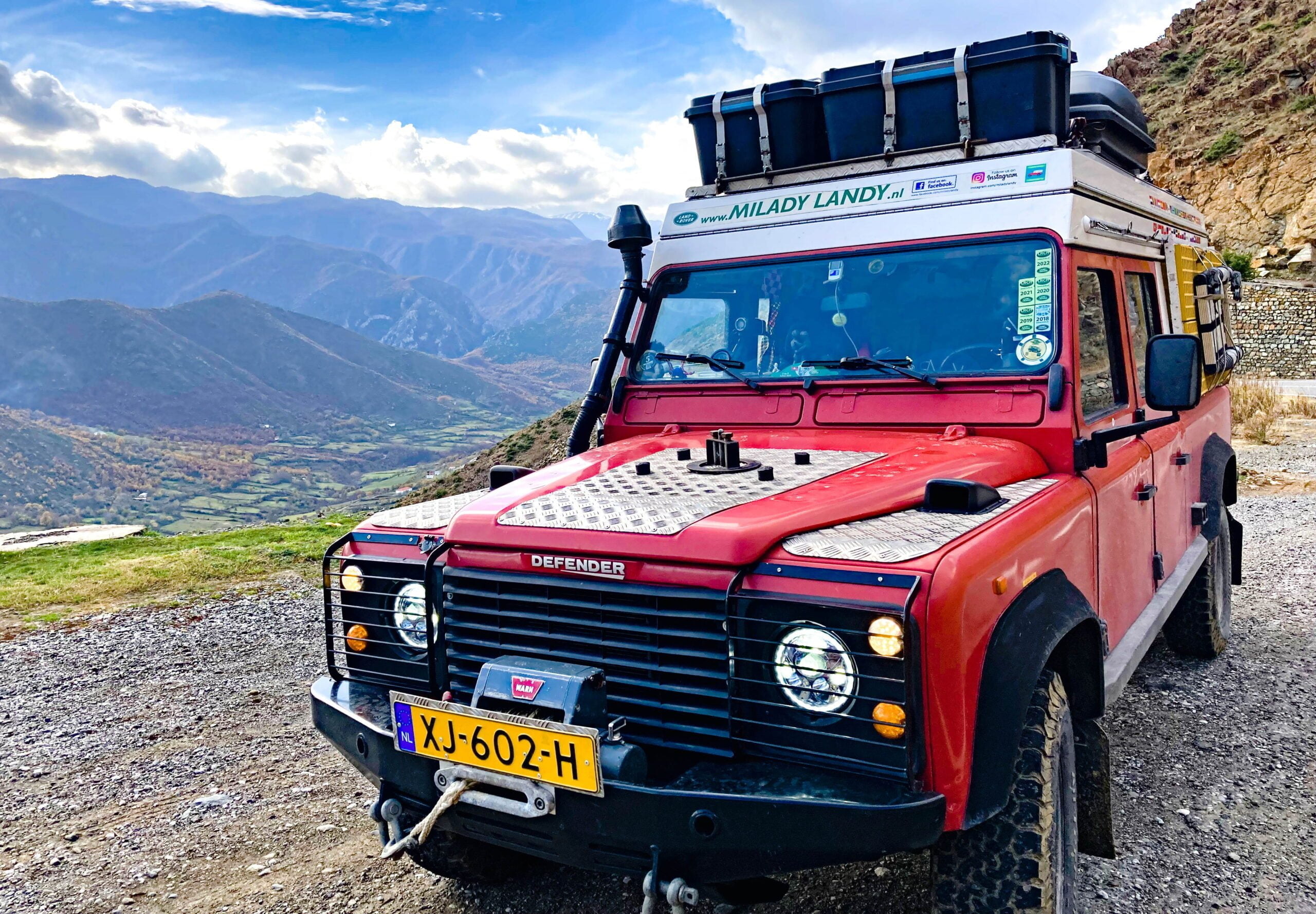
Albania surprises us with its hospitable people, unpaved off-road roads and the continuation of the repair. It really is autumn here, it often rains and sometimes there is a strong wind. Nevertheless, on clear days we enjoy beautiful landscapes and surprising cities.

Uncomplicated hospitality
As soon as we enter Albania, we notice a different atmosphere than in the ex-Yugoslavian Balkan countries. It may be a bit shabbier, but very hospitable. At the first campsite where we are, in Shköder, we eat in the restaurant and we are treated to a Greek salad before and raki after.

Because the weather does not invite us to be outside much, we drive towards Tiranë (pronounced Tirana). The main road to Tiranë is quite boring, lots of industry and old buildings. We stop at a stall and buy 6 eggs from this mother and daughter, we just get a bag of mandarins, again that Albanian hospitality.

At Kruje we turn off the main road towards Kruje Castle. The sun comes through and we wander through the old town and the castle. In this castle, folk hero Skanderbeg managed to resist the Ottomans (Turks) for decades in the 15th century.
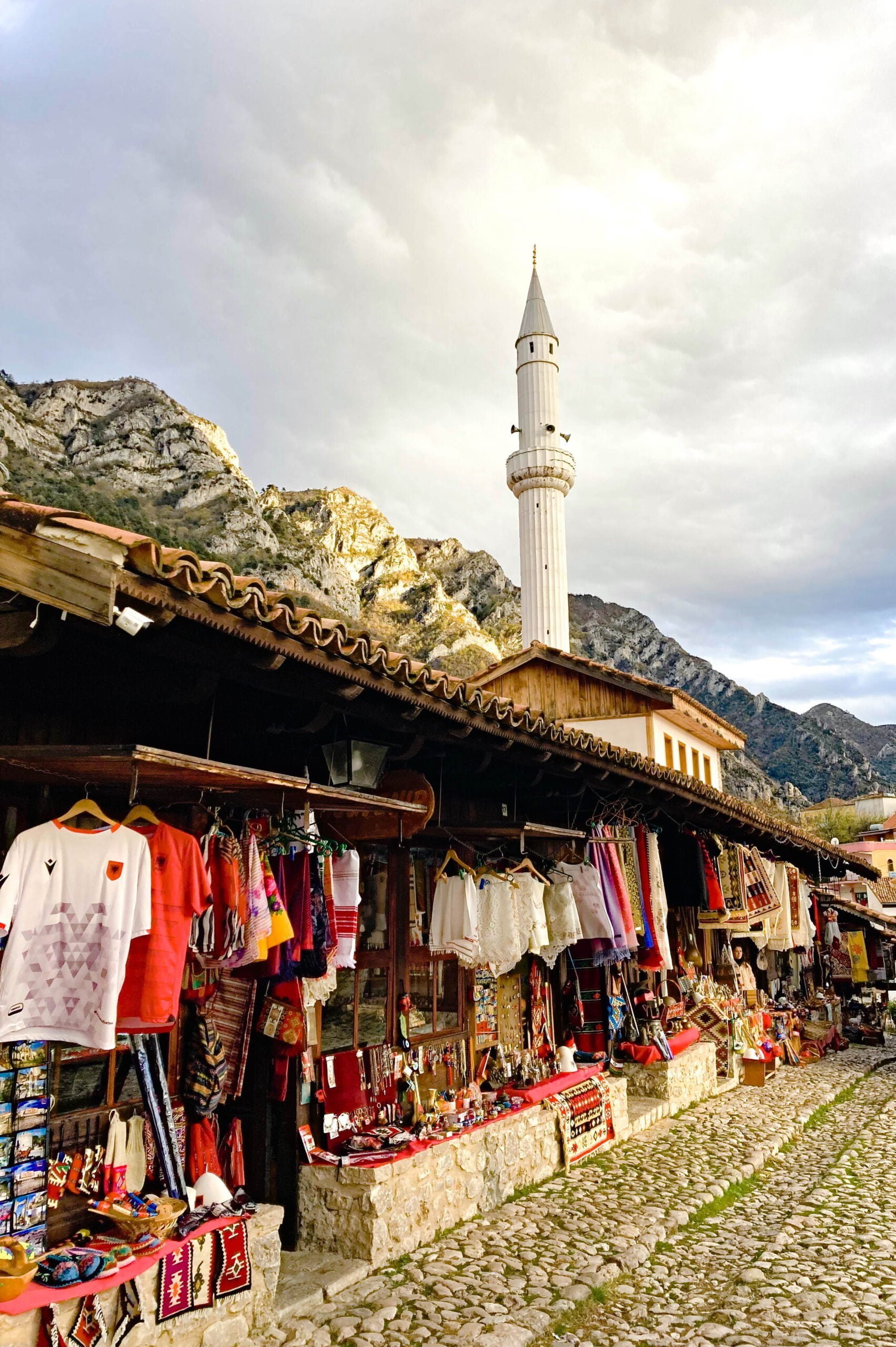


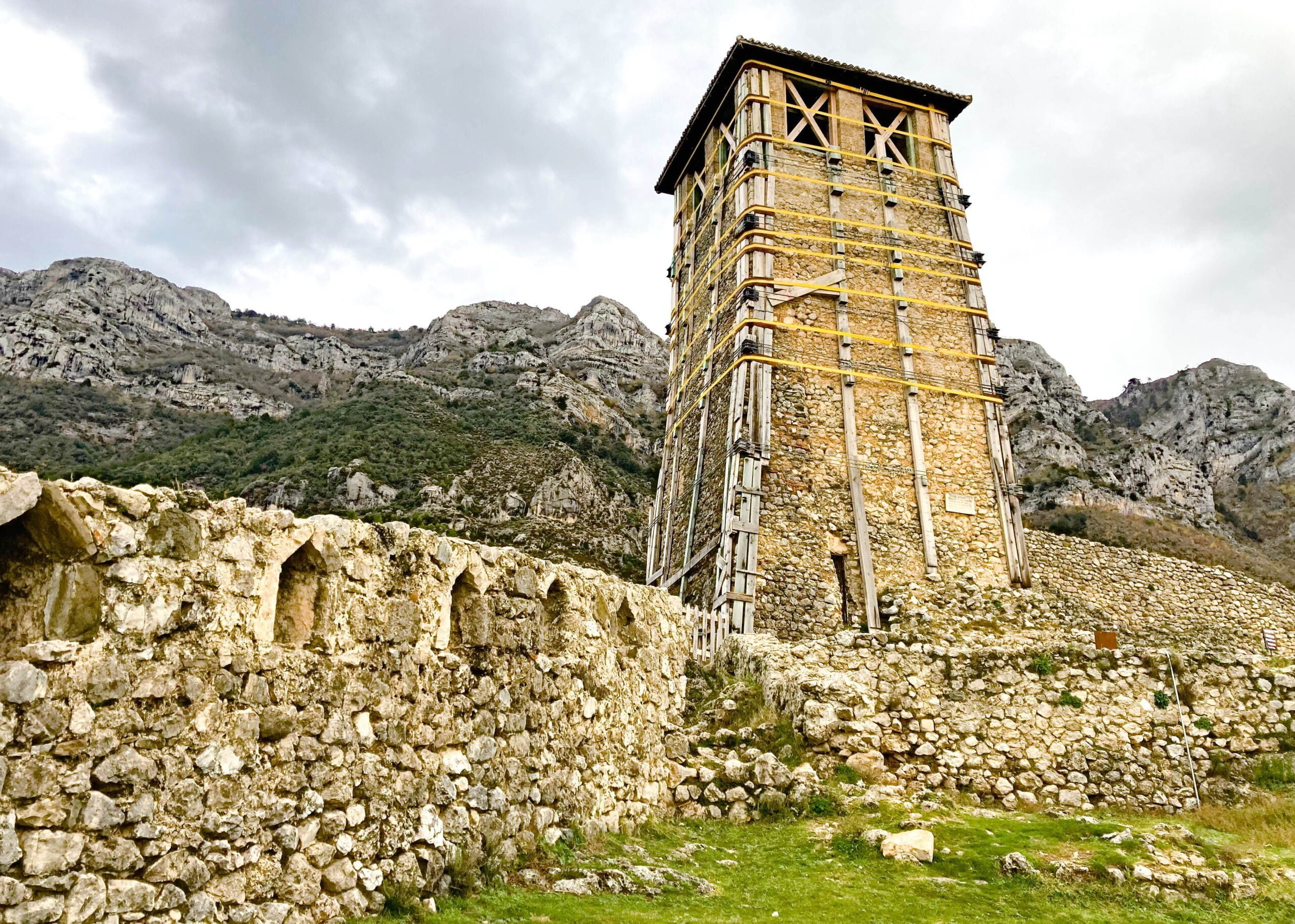


In the Islamic shrine in the castle we are approached by Neki, an older man who likes to tell us something about the history of this shrine and shows us some details despite the renovation. He speaks a word of Italian and with some effort we can understand each other. He also proudly tells us that everyone is welcome in the room where he receives us, regardless of religion, gender or race. When we leave he gives us a sprig of rosemary, what a nice gesture!


We camp in Tirana at city camping Dajti, up a steep and narrow slope, but very hospitable and good facilities. From here we can take the bus to the city.
Tirana
The campsite turns out to be very quiet, we hardly hear city noises and are woken up in the morning by the roosters and geese from the farm.
We meet Peter and Regina, they spend the winter in Albania and temporarily travel in a bus camper. Meanwhile, they are building a large camper, Felix Himmelblau. They show us the way to the bus stop to the city of Tirana, a few hundred meters from the campsite.

We see that the city is already getting into the Christmas spirit. The Christmas tree is decorated and stalls for the Christmas market are set up on the large central square.

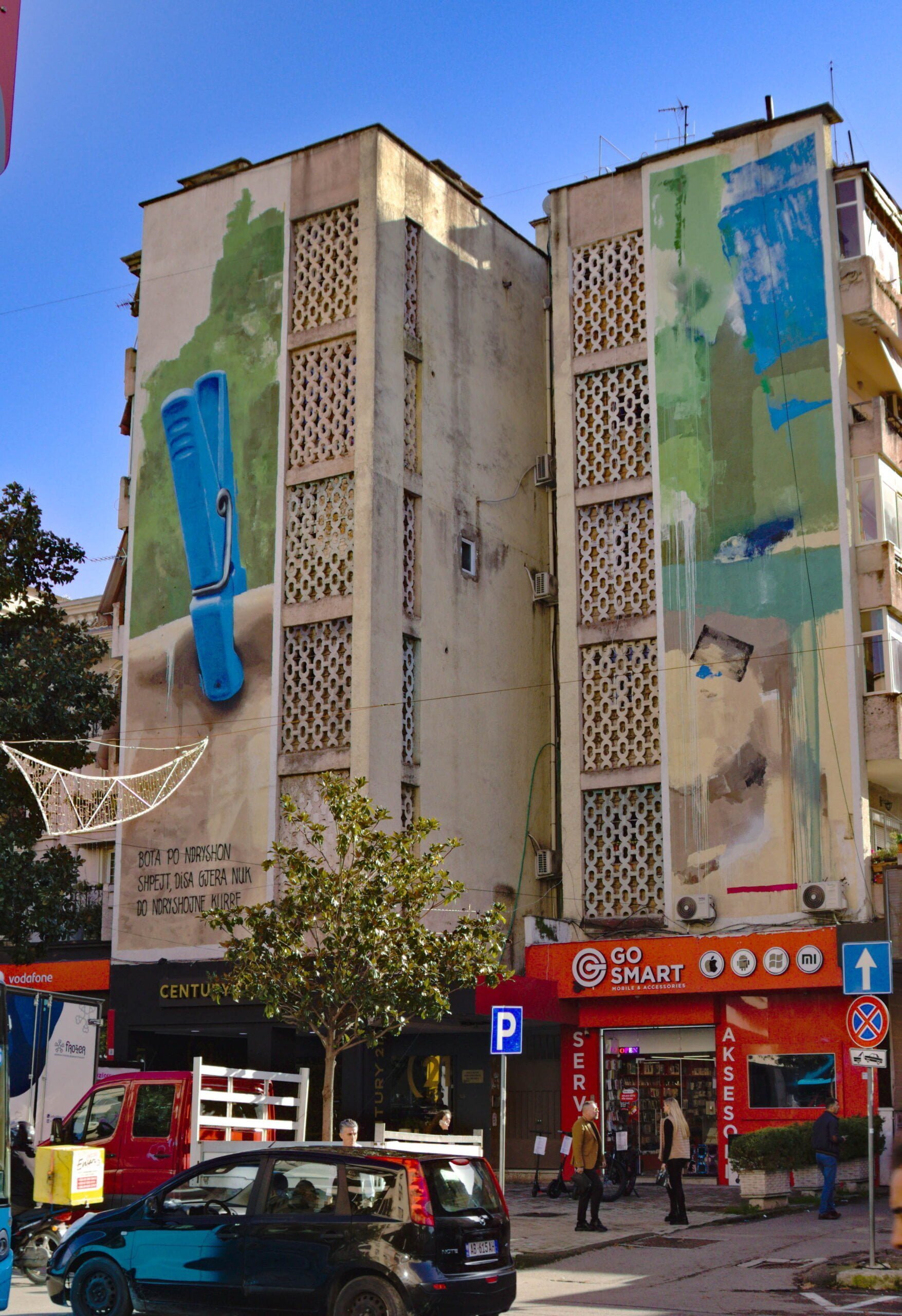
The city does not make a big impression on us, the communist, Yugoslavian time has ensured that many historical buildings have disappeared. It has been replaced by gray residential blocks and office buildings. In recent years, a lot of high-rise buildings have also been built and that is still going on. All this leads to what we see as a fragmented cityscape that does not really appeal to us.


The mosque and the clock tower behind it stand a bit small and lost on the edge of Skanderbeg Square. A visit to the mosque is highly recommended.


A visit to the central market is also definitely worth it, especially because all kinds of eateries around it invite you for a nice meal or drink.


From Tirana we take the paved road to the east and turn south at Shupenzë to continue through the mountains to Elbasan. A rough dirt road, especially after the rain of the past few weeks. Here you should not drive a two-wheel drive car when it rains. Fortunately it is dry and we see several normal passenger cars, mostly Mercedes by the way.

Elbasan, continuation of the repair
Peter, whom we met at the campsite in Tiranë, recommended the Fridolin campsite in Elbasan to us. The owner, Albin, is originally a car mechanic, trained in Germany.
I show Albin the repair made in Montenegro, we ride Milady on his pit and we can inspect the underside together. He immediately sees that the welding has been done poorly and that it has almost come loose. That needs to be professionally repaired. Albin promises that we will find a garage the next morning to have the repair done.


The next morning at 9.30 am we arrive there and half an hour later Milady is standing on the well. 2 hours later the emergency repair has been upgraded to a final restoration of the cross member and everything has been safely reassembled including chassis coating finish. What great service and what craftsmanship.
Now we can continue on the challenging roads of Albania without any doubts.
South Albania
We camp near Lake Ohrid, in an abandoned parking lot with a view of the high snowy mountains of North Macedonia.

The road we take to Berat is again challenging, much unpaved and slippery with mud. Milady knows what to do with this and we are only too happy with that.
Berat
The city of Berat is also called the city of a thousand windows, not incomprehensible when you consider the houses that seem to be glued to the mountain.

We explore the city on foot and see that hard work is being done to restore the old valuable buildings and views.


In the evening we go out for dinner with Peter and Regina, they also happen to be at the campsite. We share some traditional dishes.

The city is attractively lit.


The next morning we venture the climb to the castle strategically built on top of the mountain. Halfway through the climb we stop at the chapel.


In the many centuries of its existence, the castle has already endured many battles and wars and that is visible.


The southern Ionian coast
We continue our way south and find a place to spend the night on the beach on the bay of Vlorë, in Orikum.


The wind is blowing hard and it is raining so we have a restless night, but the next morning the sun is back.
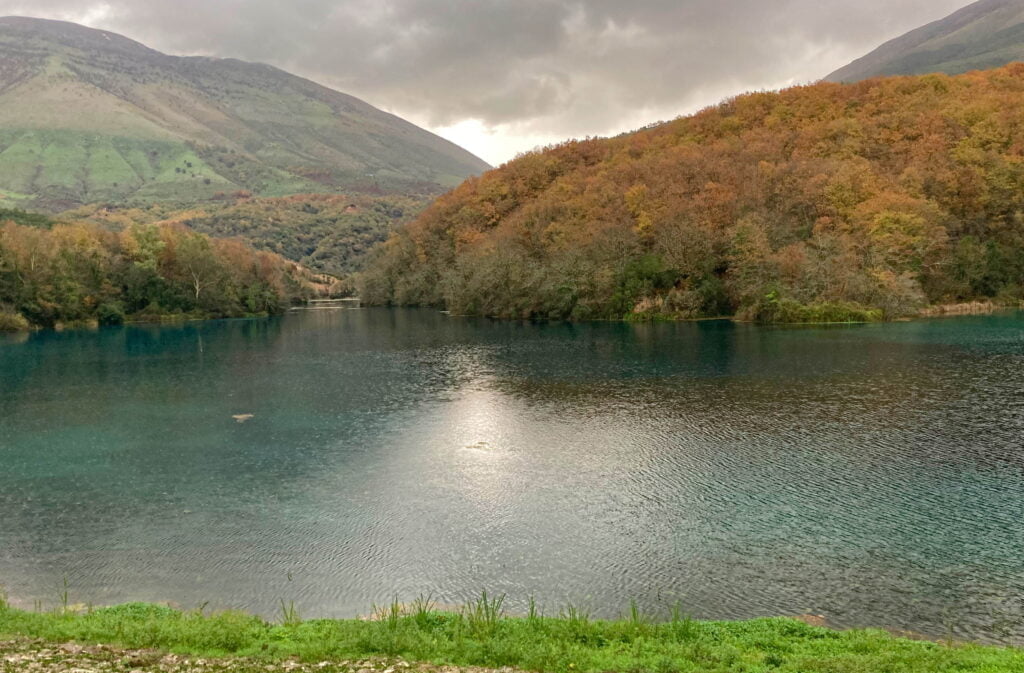
On the way to Gjirokastër we drive past The Blue Eye, a water source where groundwater comes to the surface with a high flow rate. The water is super clear and its blue and green colors surprise us.


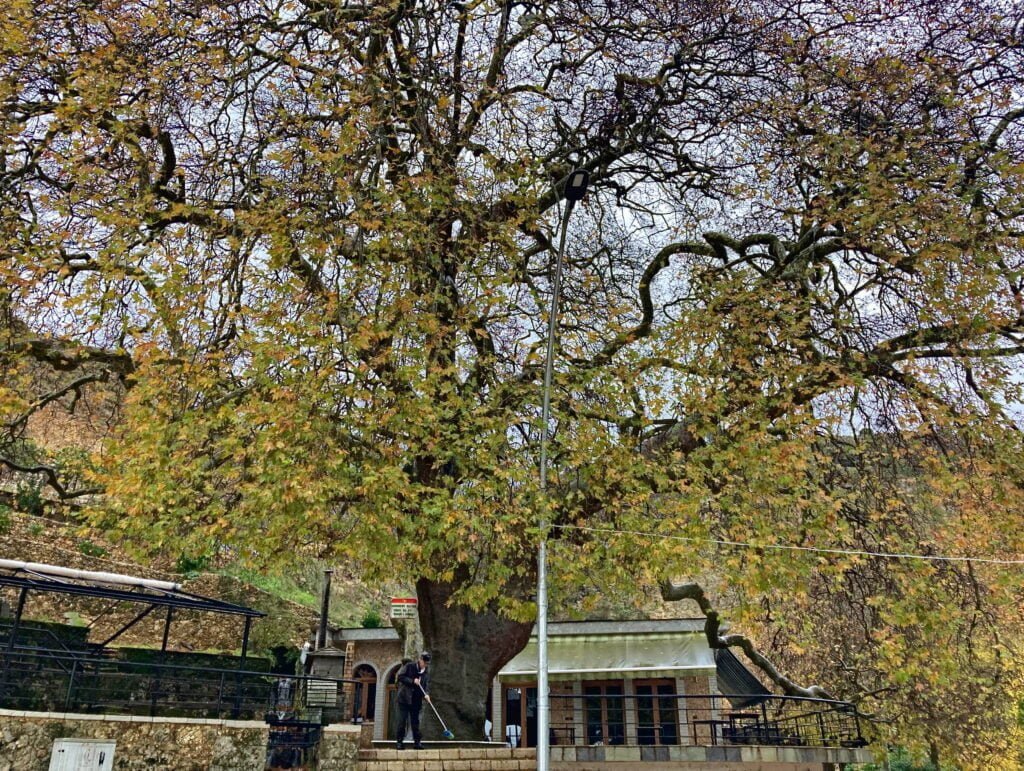
We spend the night in Libohova, in the parking lot of restaurant Libohova, under the huge ancient plane tree.
We hope for better weather, but it rains all night and the next morning it is also rainy, gray and gray. We decide not to drive to Gjirokaster but directly towards the Greek border.
Along the way we come across a remnant of Albania’s communist era, these types of shelters have been built all over the country.

Butrint
Cousin Tanja gave us the tip not to skip Butrint. We are going to experience that tip, after surviving the ferry adventure.
The archaeological site of Butrint offers a nice insight into the history of this region. From the early Etruscan remains through the Greeks and Romans to Byzantine times, there is much to see and especially in this season, it is very peaceful.


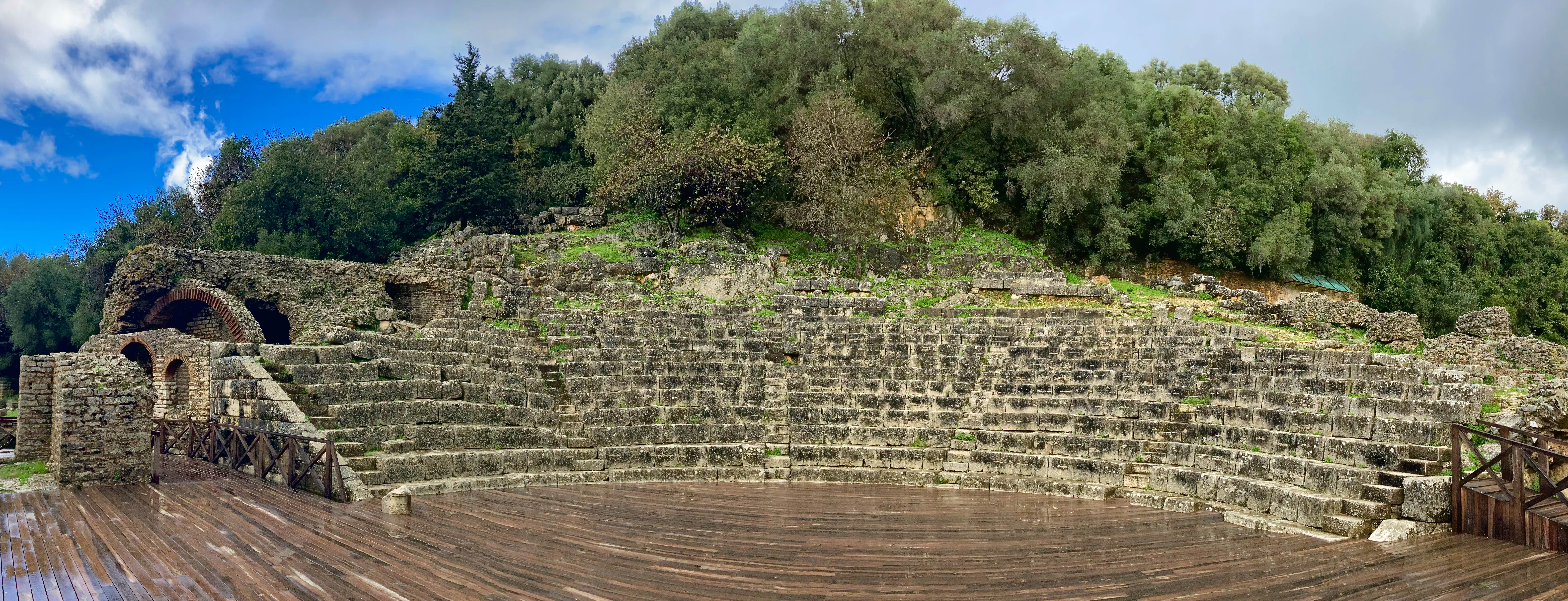
Much of the originality of the park, in which this old city was built, has also been preserved.


We go back by ferry and drive into Greece, a new chapter.