After travelling through the Middle East for over a year, we can honestly say that Oman is our favourite. The country combines everything that other countries in this unknown region have: white beaches, vast deserts, raw mountain ranges, refreshing wadis and oases, old souks and historic castles. But especially the people of Oman stole our hearts, the ultimate, unbiased hospitality surprised us time and time again, they really gave us an insight into real life in this unknown region, the Middle East.
We explored the country extensively, from the beaches of the north in Sohar to the green oases of the south in Salalah and from the pearly white Sugar Dunes on the coast via the high peaks of the Jebel Akdhar to the endless orange desert, the Rub al Khali. We travelled for almost 5 months in total in this beautiful country with its rich history of trade and incense production and were taken by the hand time and time again by the exceptionally friendly Omanis we met.
Oman is a country that welcomes you with open arms and captures your heart. With its unique blend of age-old traditions, breathtaking nature and unparalleled hospitality, it has everything a traveler could wish for. No frills, no excess, but pure and sincere – Oman is the hidden gem of the Middle East.
For anyone still hesitating about the Middle East, Oman is our recommendation as a travel destination in this region. In a world full of destinations, Oman is our favorite of the Middle East. Not only because of what you see, but especially because of how it makes you feel: welcome, amazed and at home.
Map of our travels in Oman
Our travels in Oman.
The nature of Oman
The nature of Oman encapsulates everything the Middle East has to offer. On the coast we find pristine white beaches on the turquoise waters of the Indian Ocean. We trek through the dramatic peaks of the Al Hajar Mountains and drive through the wadis, green oases full of palm trees and hidden swimming pools. Our Milady takes us, off road in the deserts, deep into the golden dunes of the Wahiba Sands, the snow-white expanse of the Sugar Dunes and the serene silence of Rub’ al Khali (the Empty Quarter).
Beach and Ocean
Our renewed acquaintance with the Indian Ocean takes place in Sohar, a lovely beach on the pleasant water of the ocean. Snorkeling and swimming is wonderful here and Gert Jan takes a dive every day.
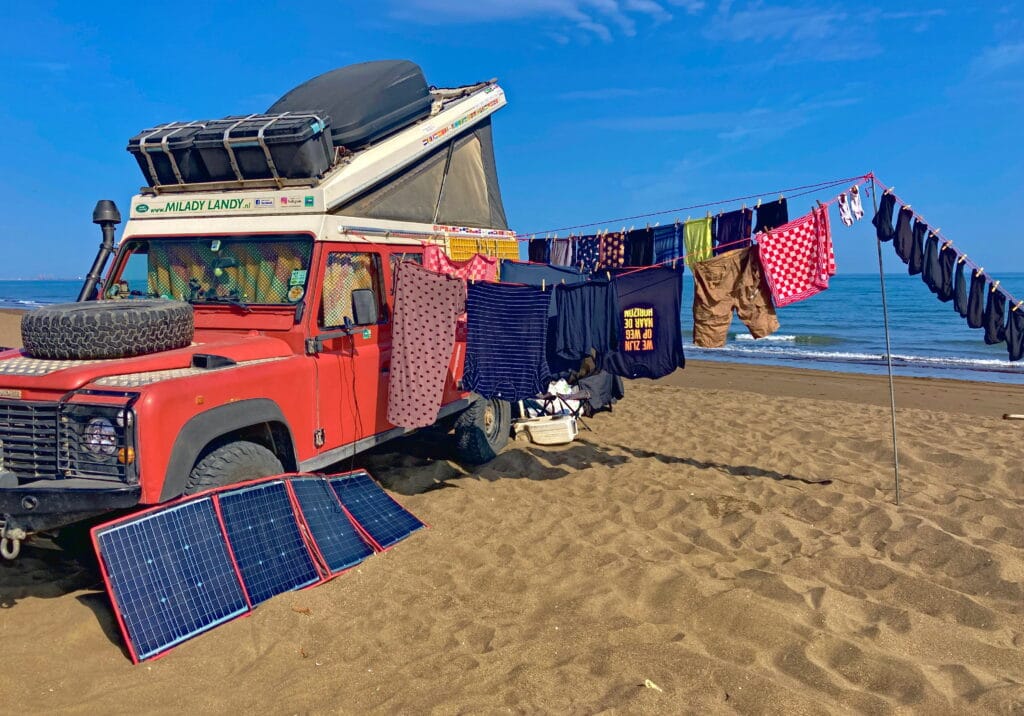
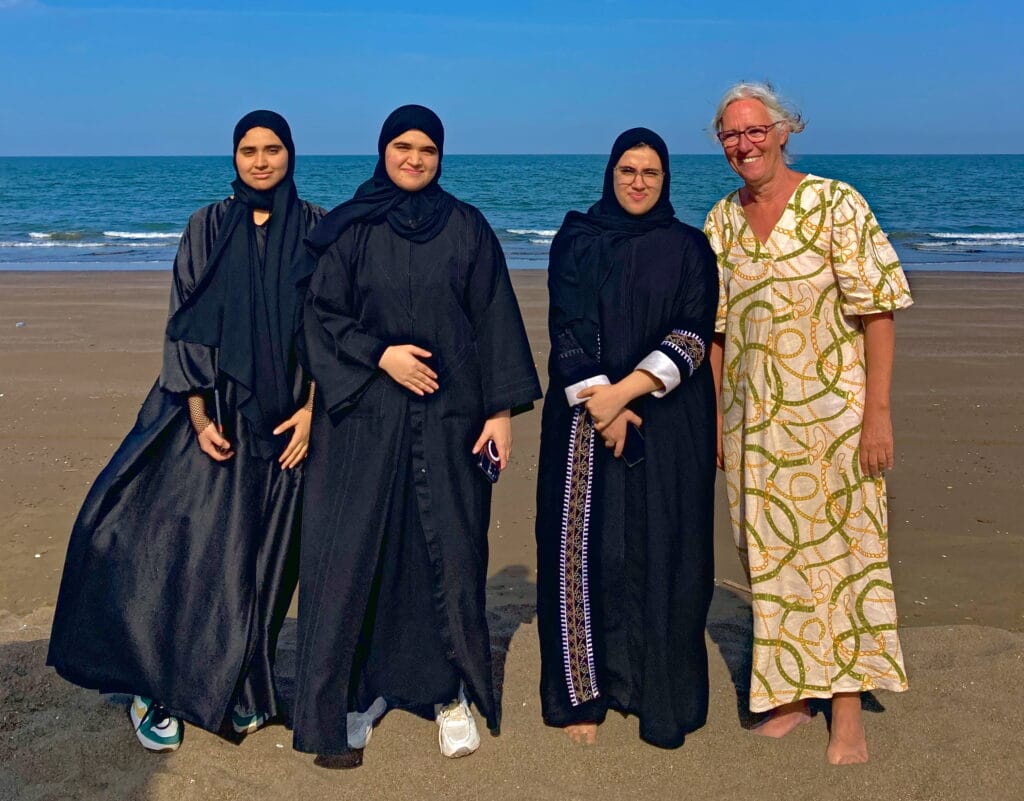

All along the coast of Oman we find beautiful beaches, from pebble beaches with rock formations that continue into the ocean to snow-white sandy beaches on the edge of salt flats and the Sugar Dunes.
In many places along the coast of Oman you can snorkel and the underwater life is always surprising. Below the surface a world awaits that is just as diverse and surprising as the landscape above. We swim among schools of colorful fish that hide in sea anemones and colorful coral structures and we are surprised by graceful sea turtles.


In Musandam, the northern enclave of Oman in the Emirates, we see numerous dolphins during a boat trip.
On Masirah Island we find mostly peace and beautiful beaches, snorkeling is not attractive, because of the strong wind and rough sea during our visit. The far south of Oman, the city of Salalah and surroundings, offers green oases and mountain streams that flow into the ocean.

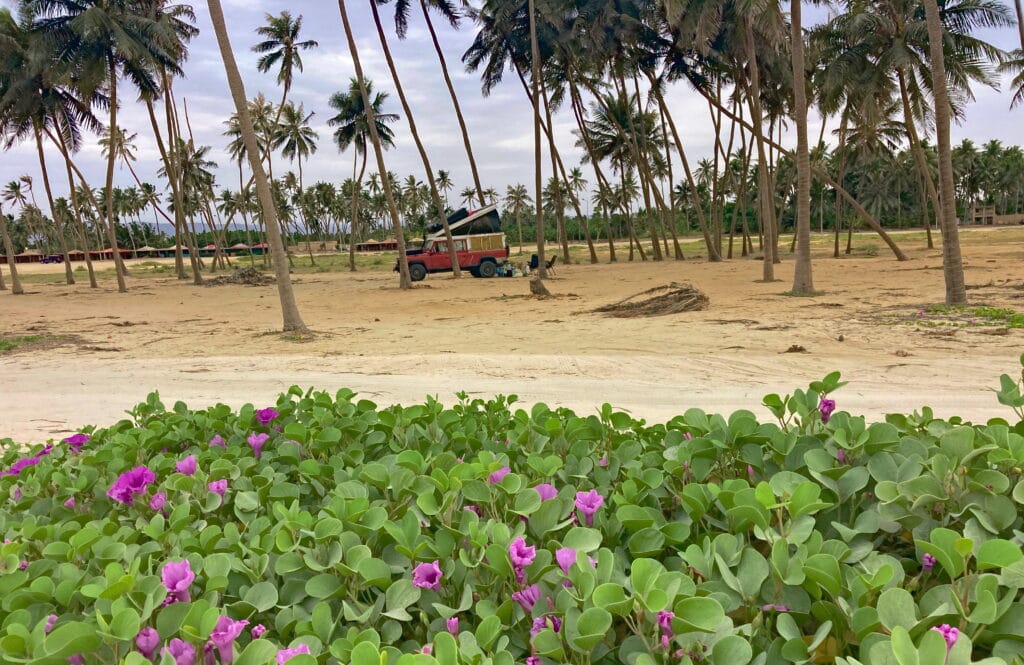
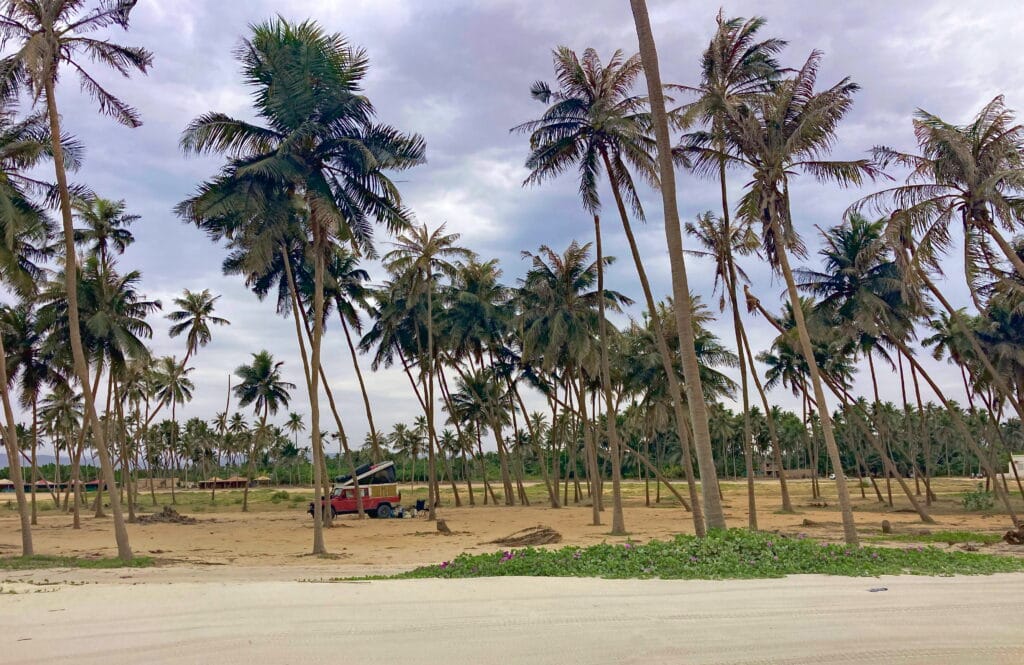
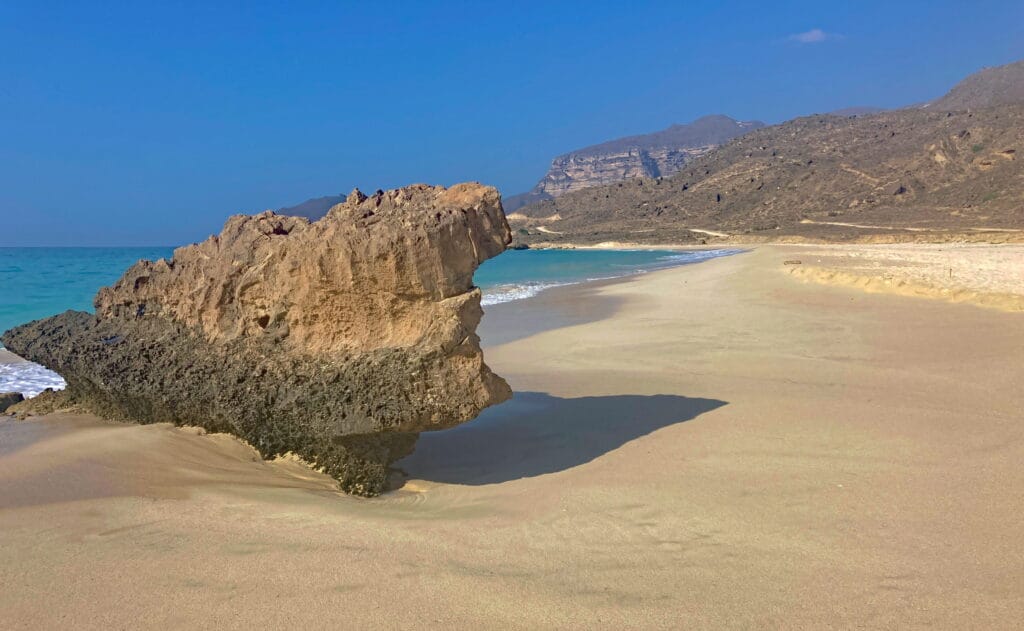


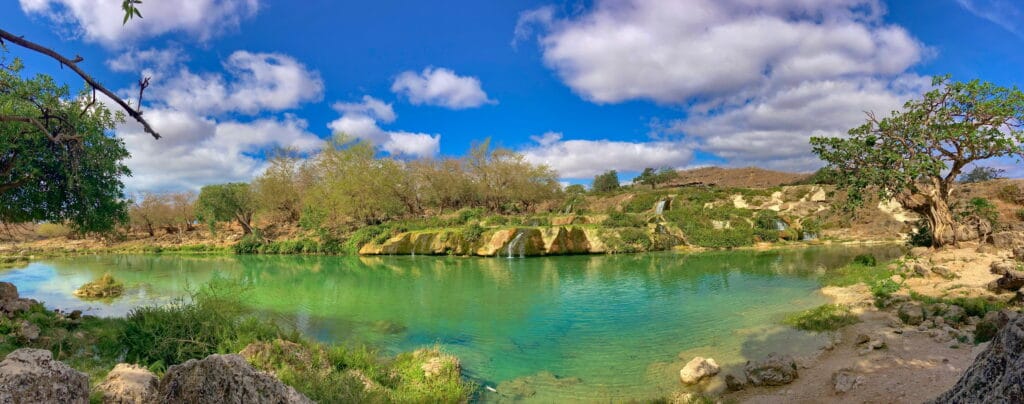
The hidden beaches south of the city, towards Yemen, are wonderful resting points on our journey.
The Al Hajar mountains
Jebel Shams
The mountain range is home to Jebel Shams, also known as the “Mountain of the Sun”, Oman’s highest mountain at 3,028 metres. We previously visited this area in the spring of 2024.
From the top of Jebel Shams you have a breathtaking view over Wadi Ghul, also called the “Grand Canyon of Oman”. We experience the steep cliffs and dizzying depths during our walk along the Balcony Walk.

Jebel Akhdar
Later we venture up the steep road to Jebel Akhdar, only 4-wheel drive vehicles are allowed on the mountain pass. Jebel Akhdar, “the Green Mountain,” offers another face of the Al Hajar Mountains. The cooler climate and abundant water sources make this area an oasis of fertility. In early spring we experience the apricot trees in bloom.
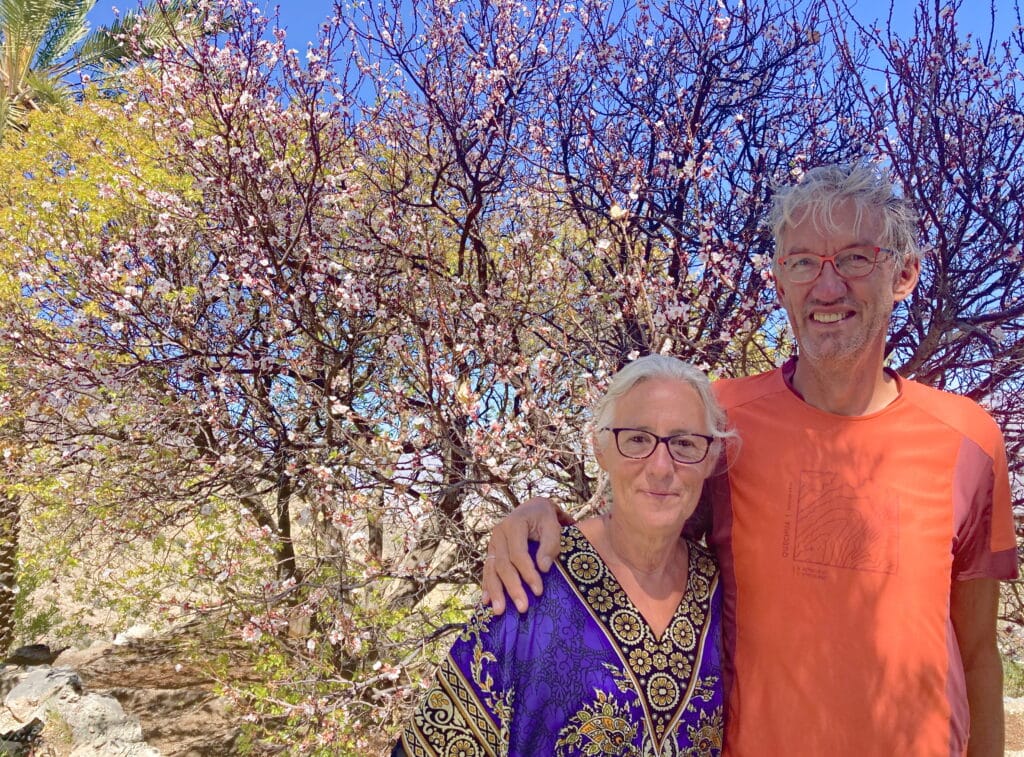
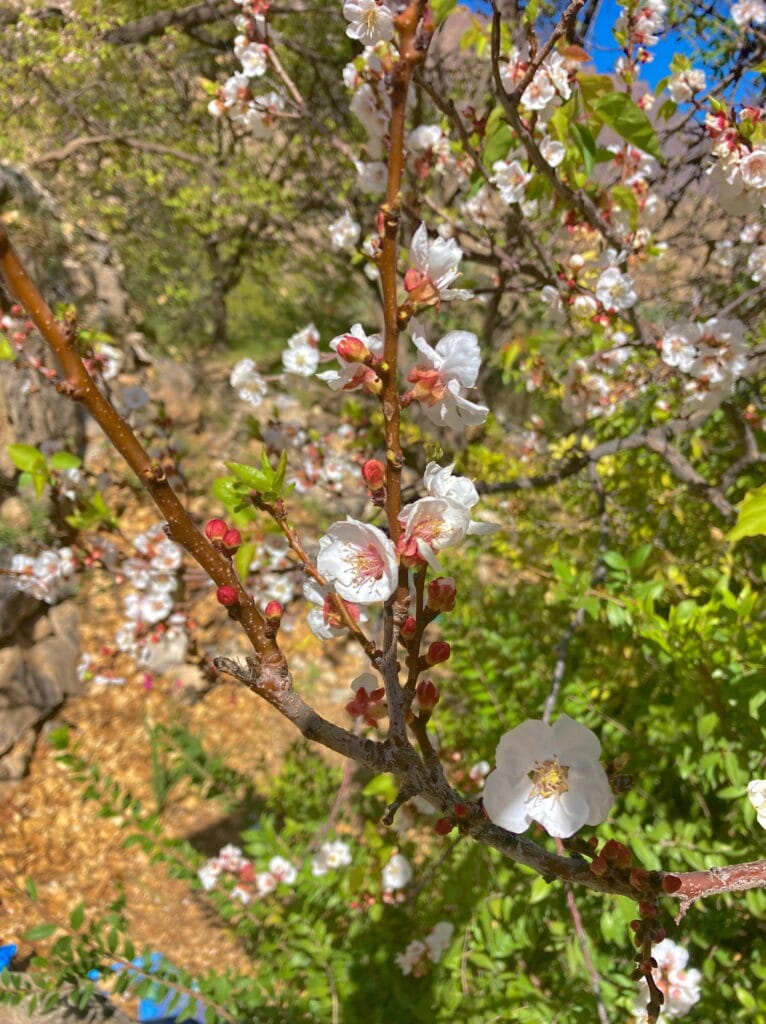
Later in April we see the terraced fields of roses being harvested for the famous Omani rose water.


The dunes and deserts
From the golden dunes of the Wahiba Sands to the endless expanse of Rub’ al Khali, also known as ‘the Empty Quarter’, Oman’s deserts offer a breathtaking journey through timeless silence, rugged beauty and surprising life.
The Sugar Dunes
Maybe not a desert, but the stark white Sugar Dunes certainly offer us an experience that can compete with the great deserts of Oman. From the turquoise waters of the Indian Ocean, the dunes rise high.


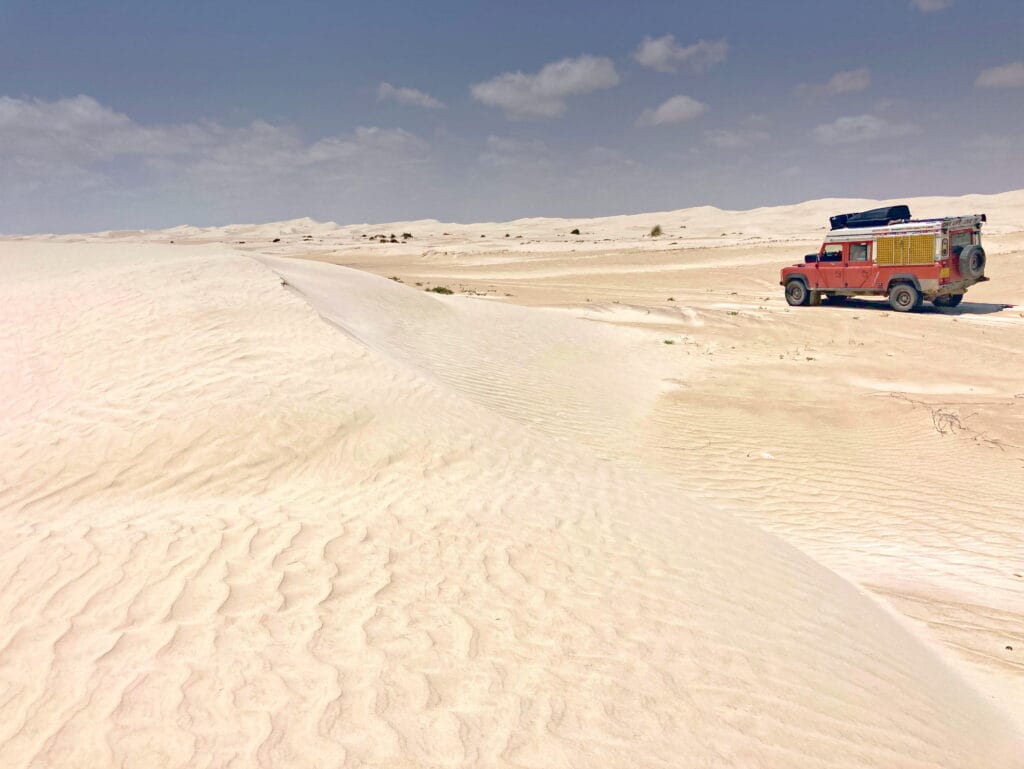
We drive along the white beach and reach the Sugar Dunes after leaving the endless salt flats of Filim east of Masirah Island behind us. We drive a few hundred meters into the dunes and find a beautiful place to stay overnight.
Wahiba Sands
The Wahiba Sands, also known as the Sharqiya Sands, are one of Oman’s most iconic deserts. We cross this area from south to north and have to reduce our tire pressure considerably. The sand is soft and the dunes are sometimes steep. This 12,500 square kilometer area is characterized by endless undulating sand dunes that can reach up to 100 meters high. The colors of the dunes are constantly changing, ranging from soft gold to deep orange.
Driving through the dunes is fantastic, the sunset is indescribable and the silence we experience when we have found a camping spot is unprecedented. In short, this is really one of the beautiful places we discover during our unique journey.
Rub’ al Khali (the Empty Quarter)
Rub’ al Khali, the largest continuous sand desert in the world, is a place of ultimate isolation and natural beauty. This vast area is shared by Oman, Saudi Arabia, the United Arab Emirates and Yemen. Here you are surrounded by imposing sand dunes, deep salt plains (sabkha) and an unreal silence.
In Oman we drive into this enormous desert for a day, a beautiful journey along the red dunes and vast sand and stone plains. We even venture into the dunes and find another beautiful place to spend the night.
In addition to sand and dunes, the desert is also home to a unique ecosystem. Here you will find acacia trees and shrubs that are resistant to drought, and native species such as the Arabian gazelle, the Arabian oryx and desert foxes. At night, the landscape comes alive with reptiles and insects that are perfectly adapted to the harsh climate.
Later, on our way to Saudi Arabia, we experience more of this enormous sand ocean.
The warmth of the Omanis
Oman is not only distinguished by its beauty, but also by its people. The Omanis are proud of their country and culture and share it with a genuine friendliness. We never feel like tourists here, but rather like welcome guests. A cup of fragrant cardamom coffee, accompanied by dates, is just one of the ways in which we are offered hospitality.
We will never forget the encounters with Ahmed (Abu Salem) Al Ismaili, biker, campsite owner in Nizwa and especially warm host of our stay in Nizwa.
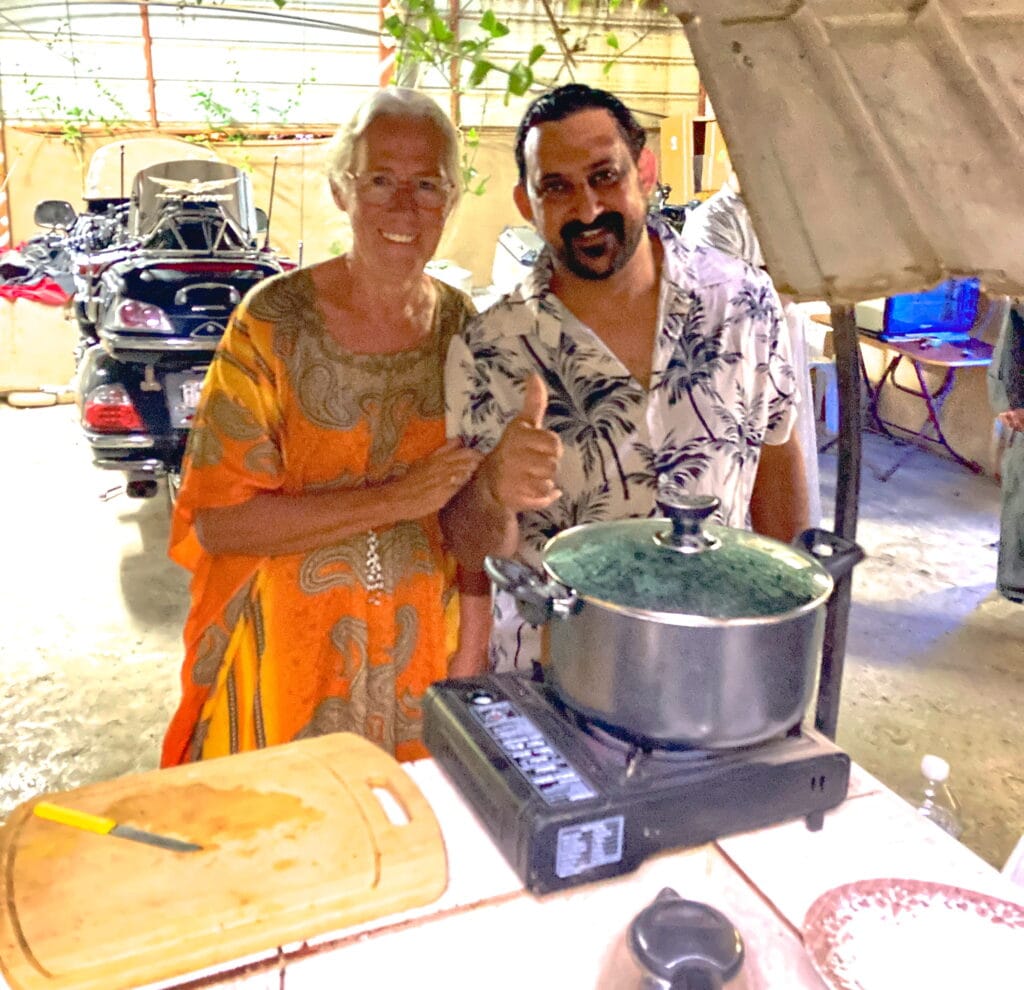
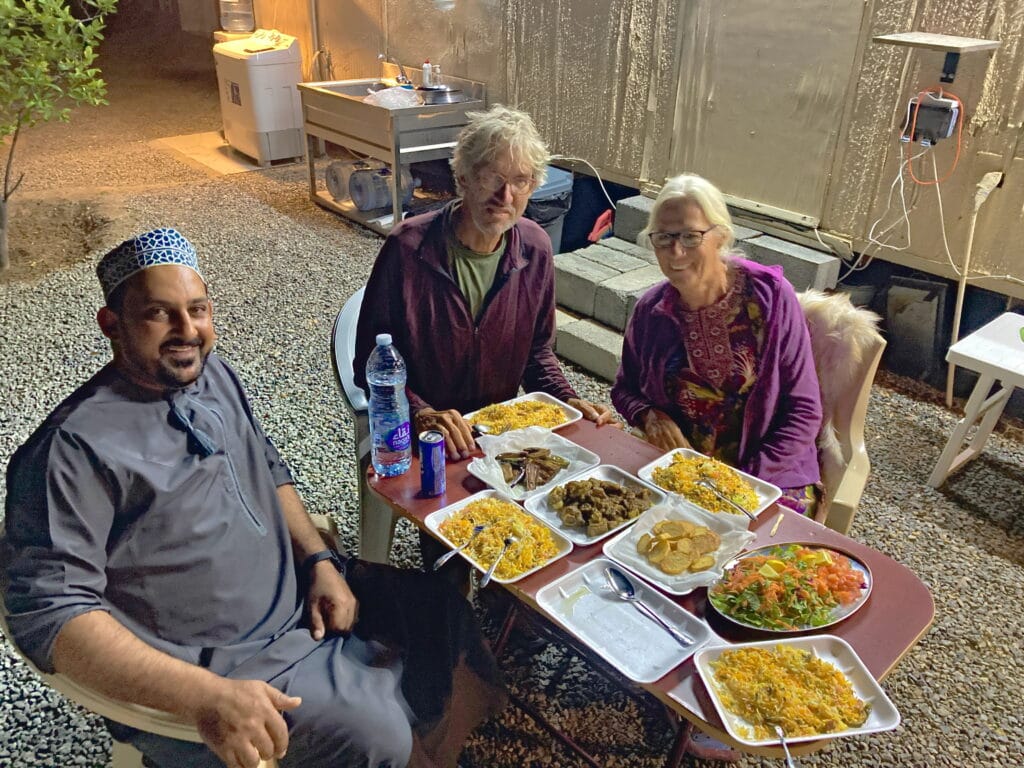
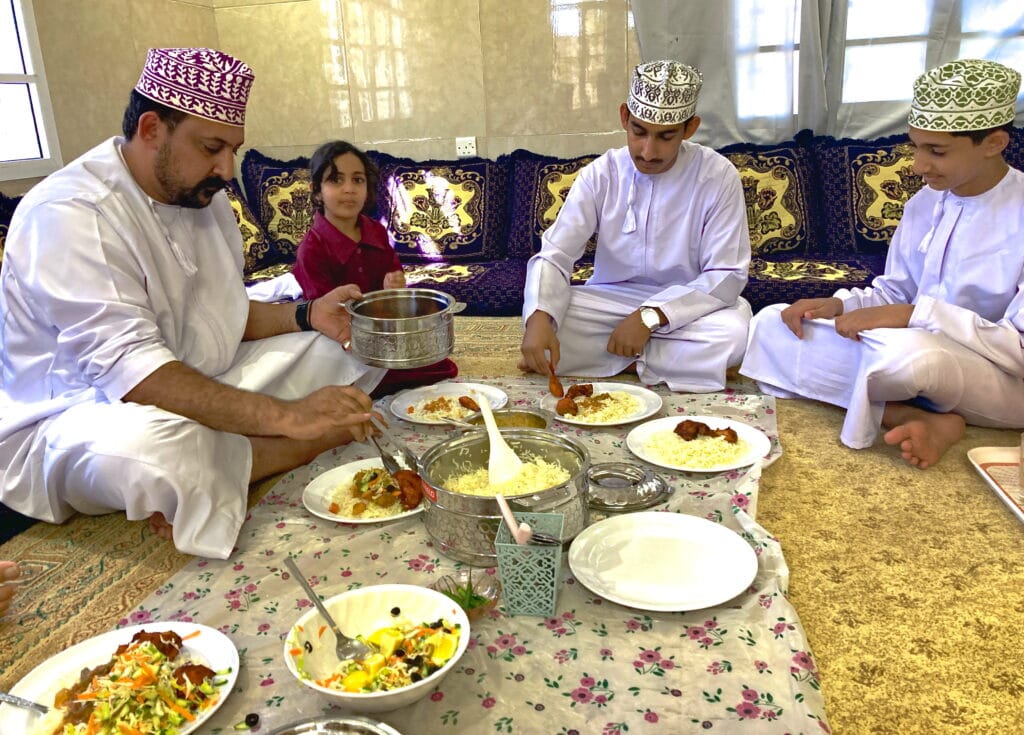
Then there was Doctor Ali whom we first met in Al Banah and were later invited to his date plantation in the Salalah region.


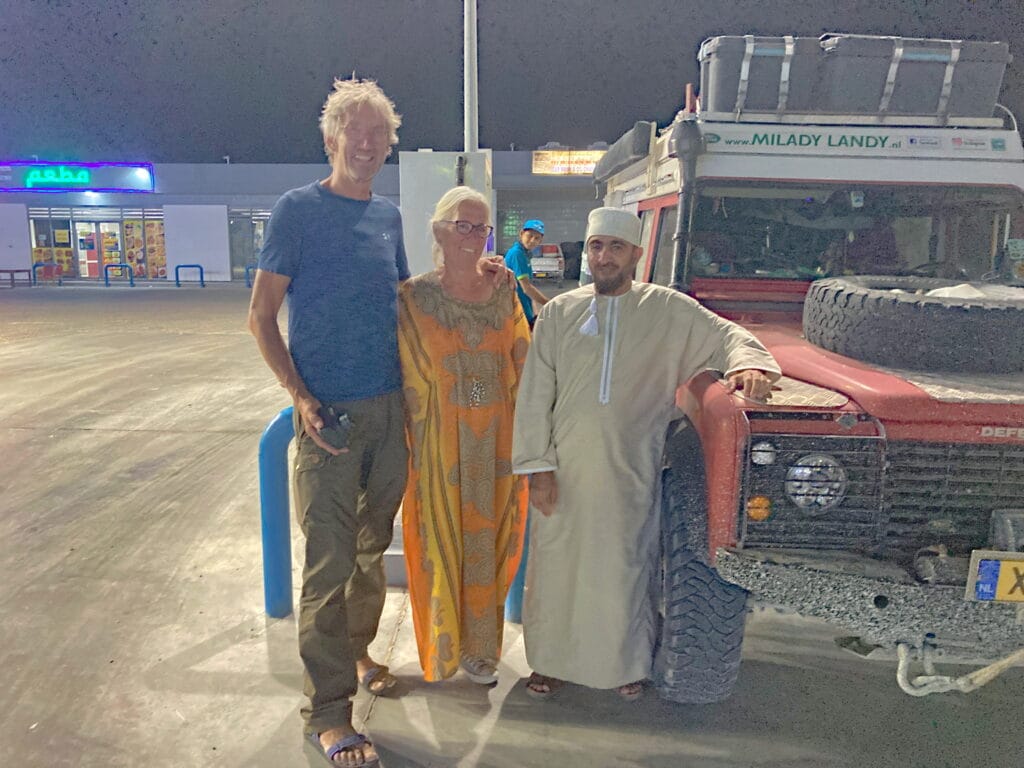
Through these and many other encounters we learned much more about the culture and background of the country and especially its people than we could ever imagine.
A journey through history
Oman is steeped in history, far more than any other Middle Eastern country. Think of the ancient trade routes along which frankincense and spices were traded, or the imposing fortresses that watch over the valleys like sentinels. For millennia, Oman has been a hub for trade between China, India, Africa and Europe.

Our favorite is the city of Nizwa, once the intellectual heart of Oman. The city houses a colorful souk and an impressive fort that takes you back to times long past. The goat market on Friday is an experience in itself, see also our previous blog.
The flavours of Oman
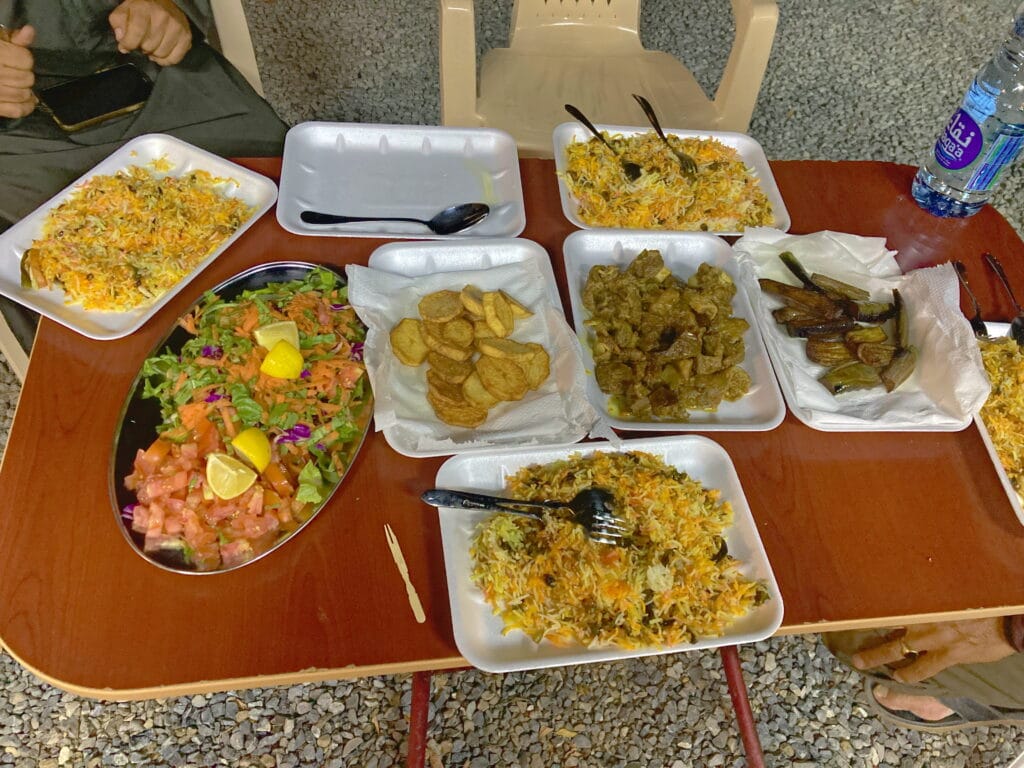
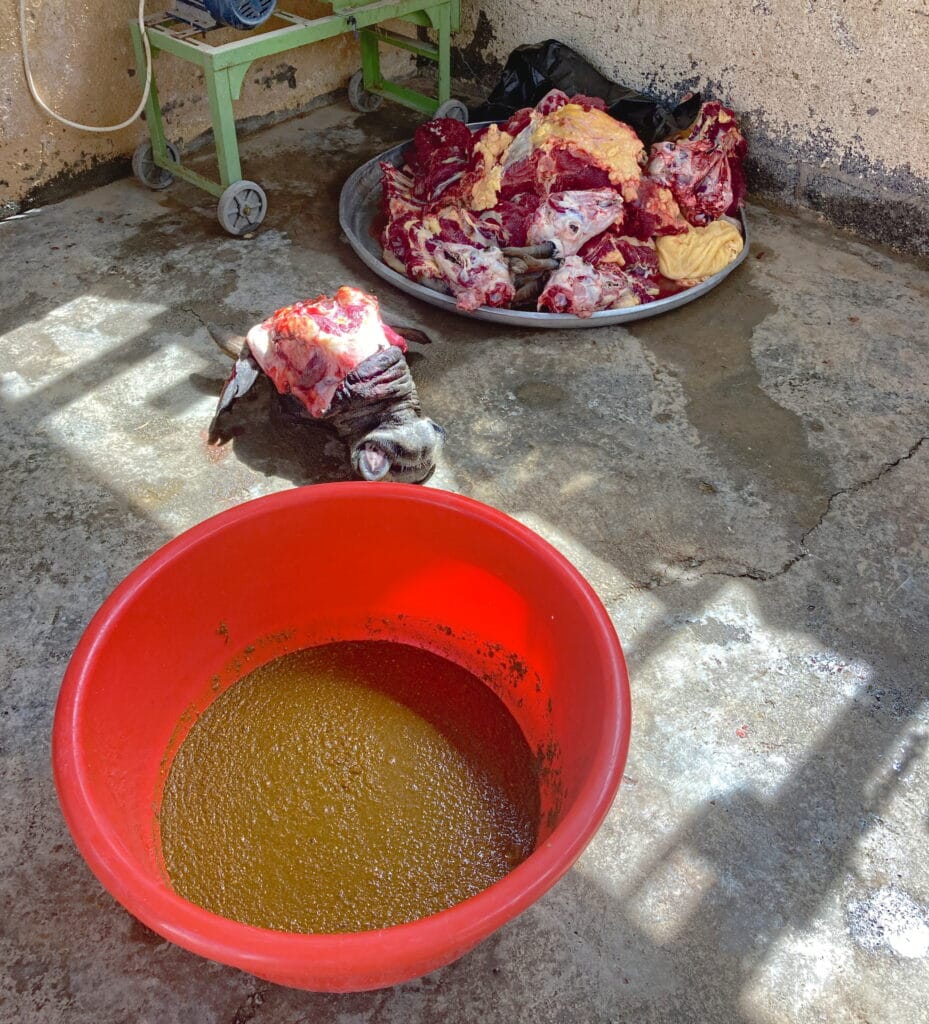
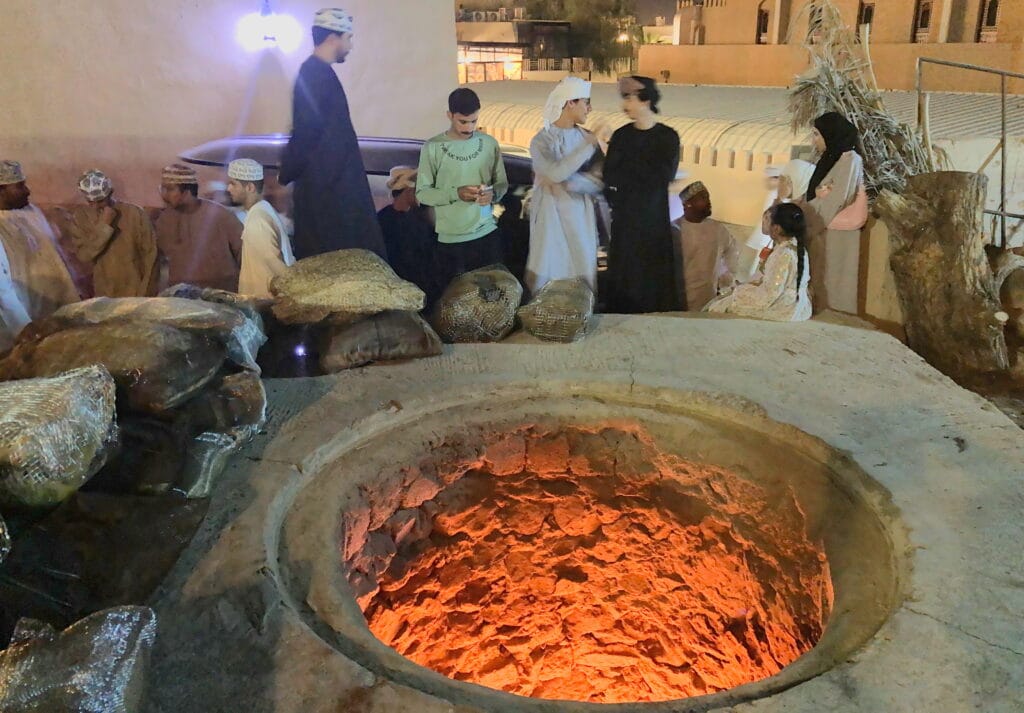
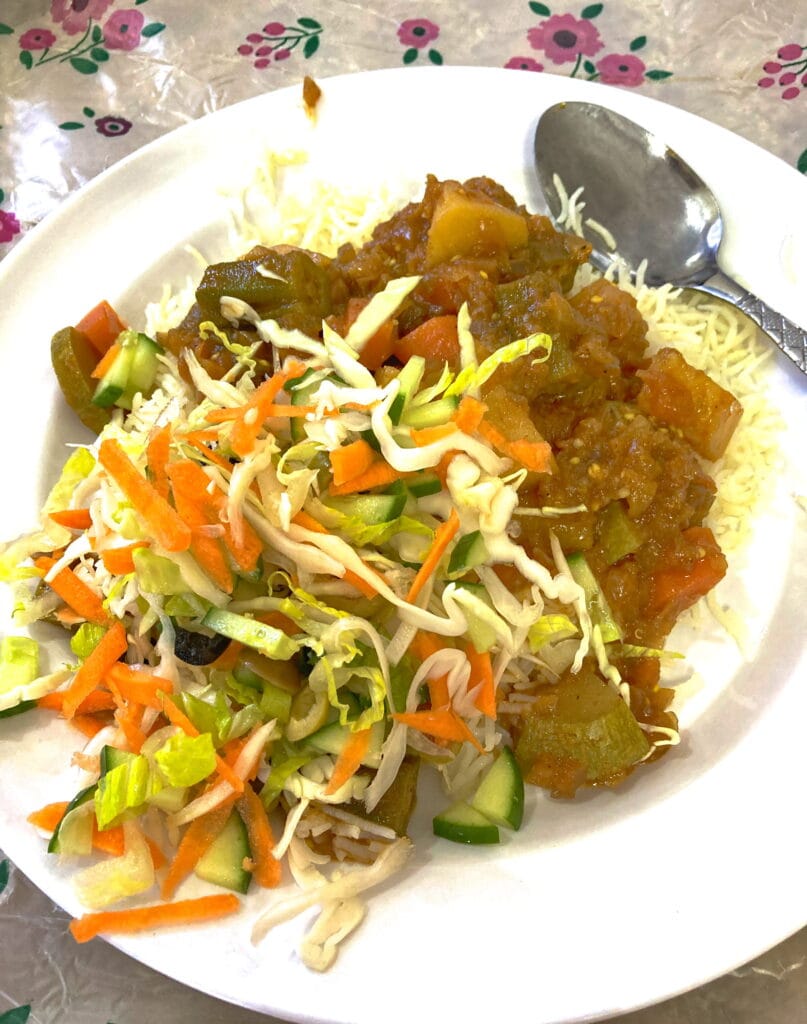
Omani cuisine is a true voyage of discovery. We regularly sample the fragrant biryani, a rice dish served with meat, chicken or fish. The saffron-infused shuwa meat is cooked in underground ovens on festive occasions, such as we experienced during Eid-ul-Fitr at the end of Ramadan. In the markets, the irresistible halwa is sold as a sweet end to the meal. Spiced with the warm flavours of cardamom, cinnamon and cloves, the cuisine reflects the influence of the old Silk Road and the trading connections of yesteryear.