
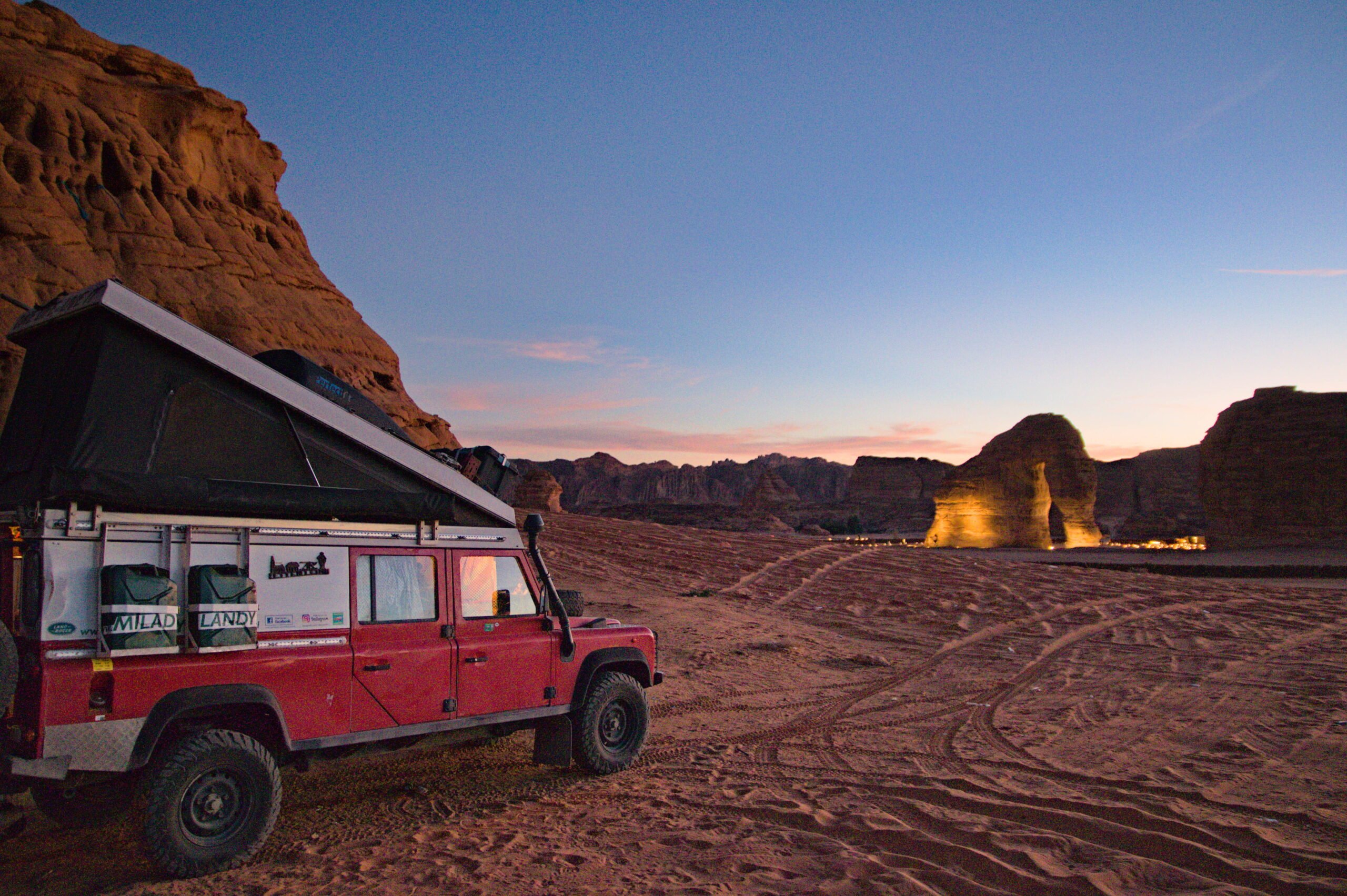
It is common knowledge that Saudi Arabia is a country of deserts. We were surprised that the deserts of the north of the country are so diverse. Nowadays the oases are mainly orchards with date palms, the groundwater that is present here ensures the fertile environment.
The hospitality of the people is on a different level than we have experienced so far. Almost every day we are invited for coffee, we are treated to (freshly picked) dates and people take us to their farm to taste their fresh fruit and vegetables.
At the end of this blog 3 videos about our trip and our stay in the desert.
Our journey through northern Saudi Arabia.
More details about our trip on Sonja’s Polarsteps.
Hospitality
The border from Jordan to Saudi Arabia
The Jordan border
When entering Jordan we had to hand over our SpotX. This would be back at the border when we left the country, which is exciting.
Fortunately, with little effort, as little English is spoken by Jordanian customs, I manage to explain that I would like to get the SpotX back. We still have to go to several desks, but in the end we get it back, which is a relief.
Now the whole procedure to leave the country begins. We stand in line to get a paper stamp. For this you have to pay an exit fee: 25 JOD for the car and 20 JOD for the two of us. It turns out that we leave Jordan 1 day late. Because of this we have to pay an extra amount of 15 JOD. Once we have the exit stamp in our passport, we enter Saudi Arabia.
Saudi Arabia
We are being pulled over at the Saudi border for no apparent reason. After a while it turns out that our e-visas and passports have to be checked in another office. Our fingerprints are also taken and a photo taken.
It is now time to arrange the car papers. That turns out to be quite a job because the registration certificate is in Dutch and has to be translated into Arabic! After this, the car is inspected, first a dog is given a tour of Milady and then she is examined by a police officer. Gert Jan has to go to the X-ray scanner with Milady last, Sonja is not allowed to come along. It took some time to find staff for the scanner, but in the end Milady was scanned and found to be OK. Then we have to take out insurance for 3 months and then, after 4.5 hours of border work, we drive into Saudi Arabia!
The usual ritual in a new country starts: withdraw money and purchase a SIM card with internet bundle.
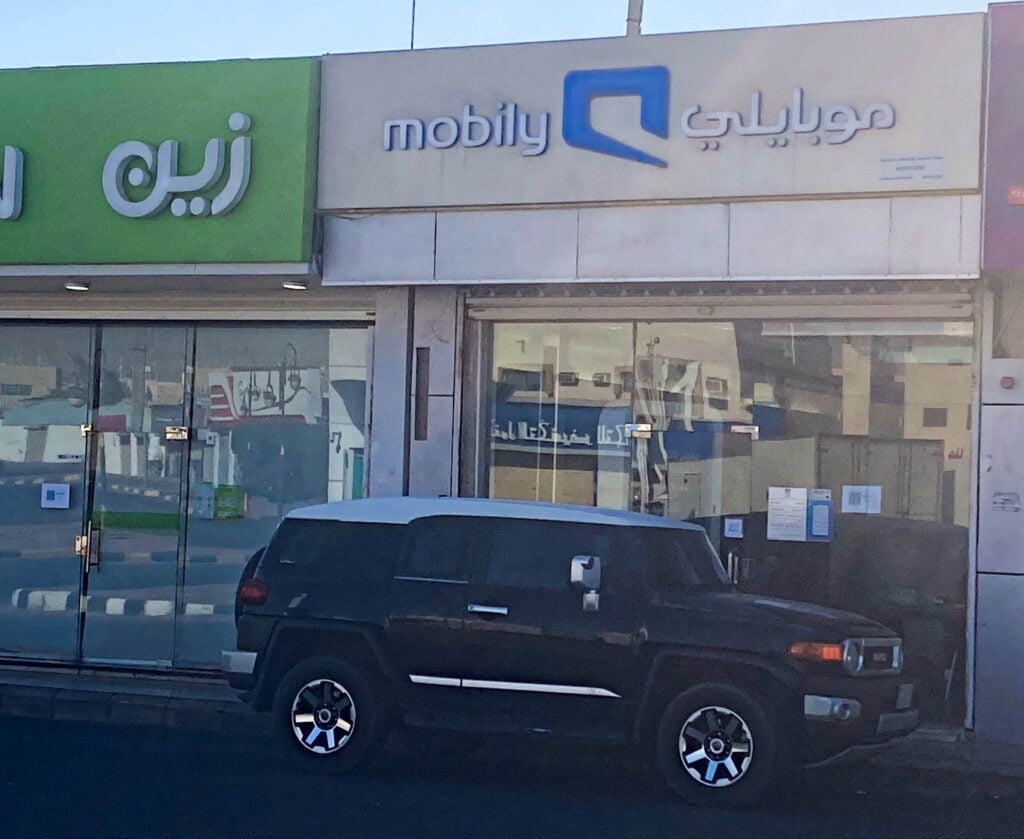
We also urgently need to look for a gas station. In Haqil we can find everything! The diesel is incredibly cheap: 0.78 Rial/liter, the equivalent of € 0.20/liter. We have never experienced a full tank for €20.
Encounters
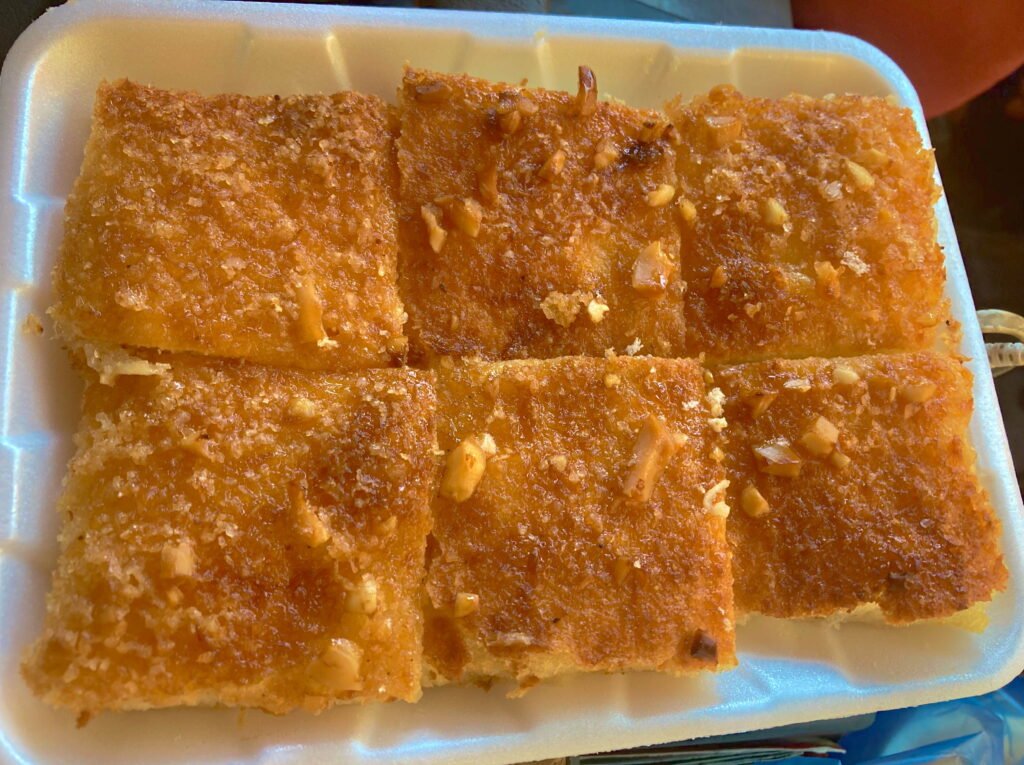
In Haqil, Abdullah invites us to his home for Arabic coffee. We have heard of the hospitality in Saudi Arabia before, but we did not expect an invitation so quickly. In the apartment we meet his wife and son and after an hour we are on our way again. We buy something tasty at the local bakery and receive a bowl full of sweets for free.
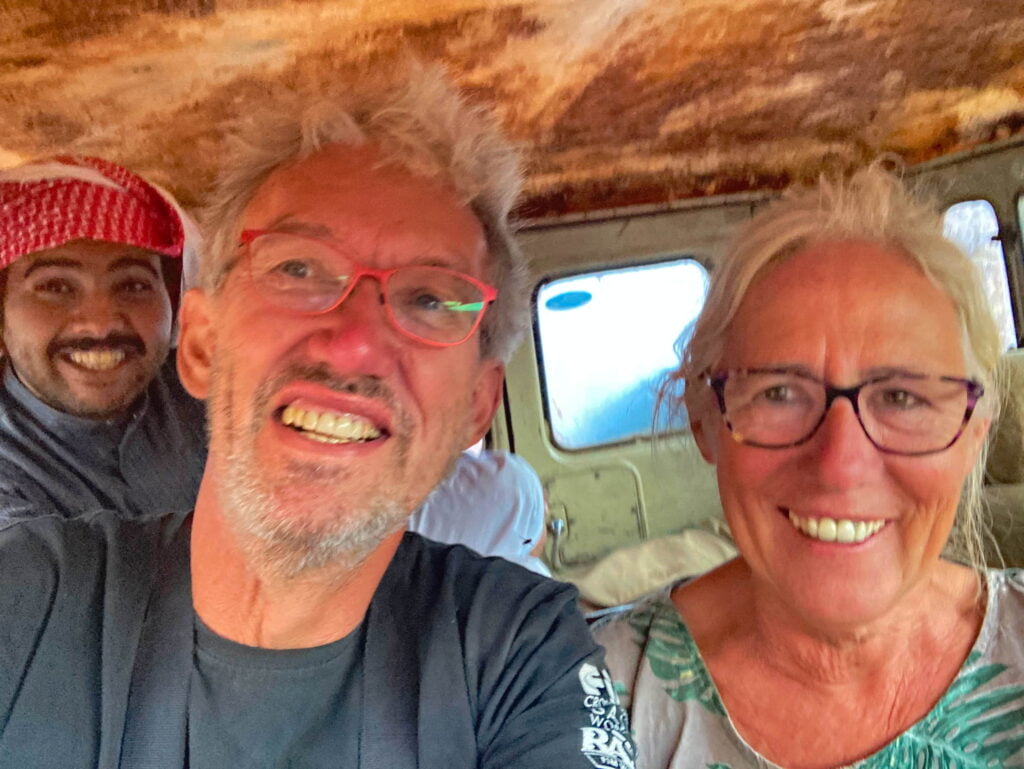
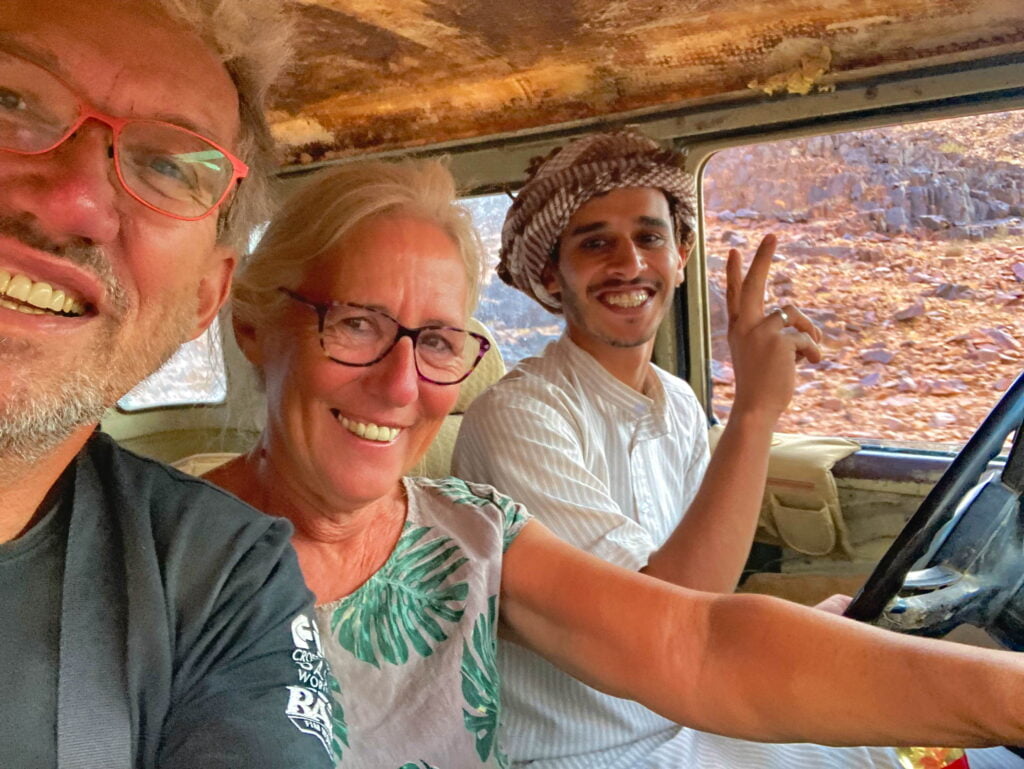
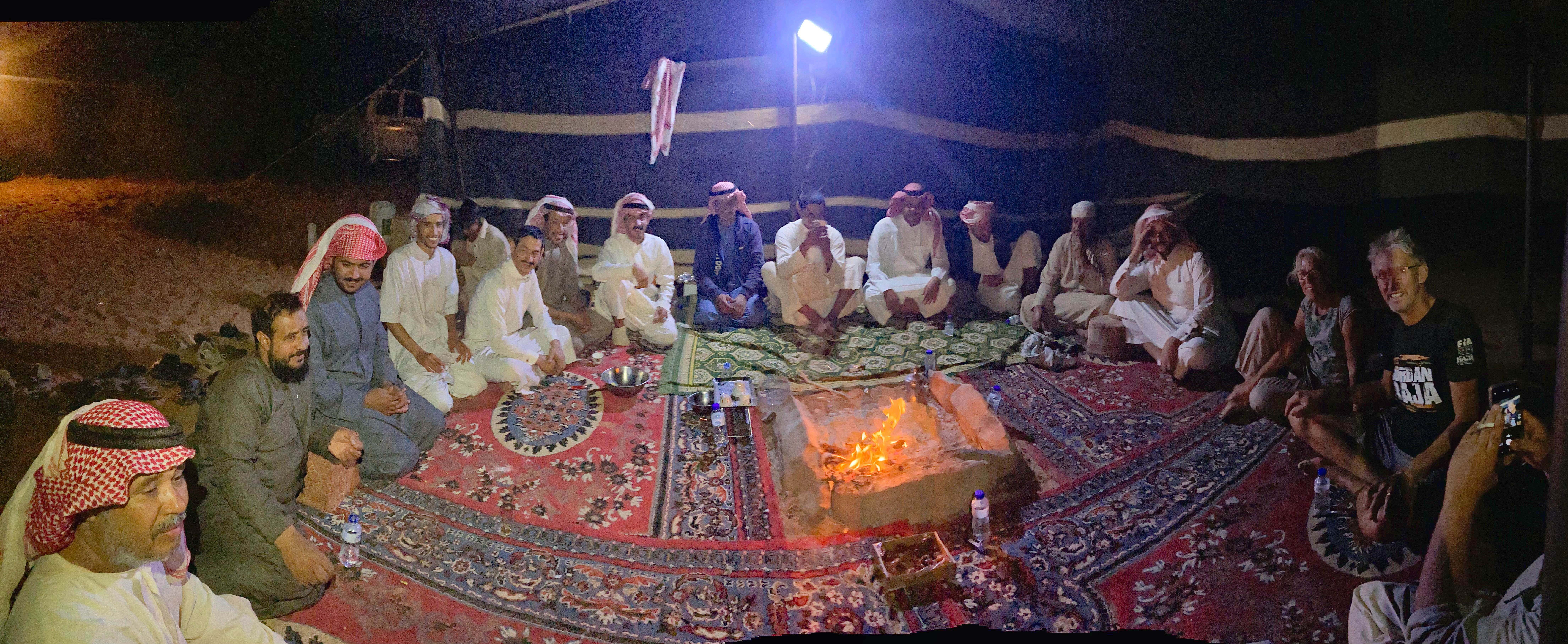
We are also warmly welcomed in the Jibal Hisma desert by Mohsin and Bassam in their old Toyota Landcruiser from 1983. They drive with us to a number of beautiful places in the desert and invite us to spend the evening with their friends and family (all men). to spend.
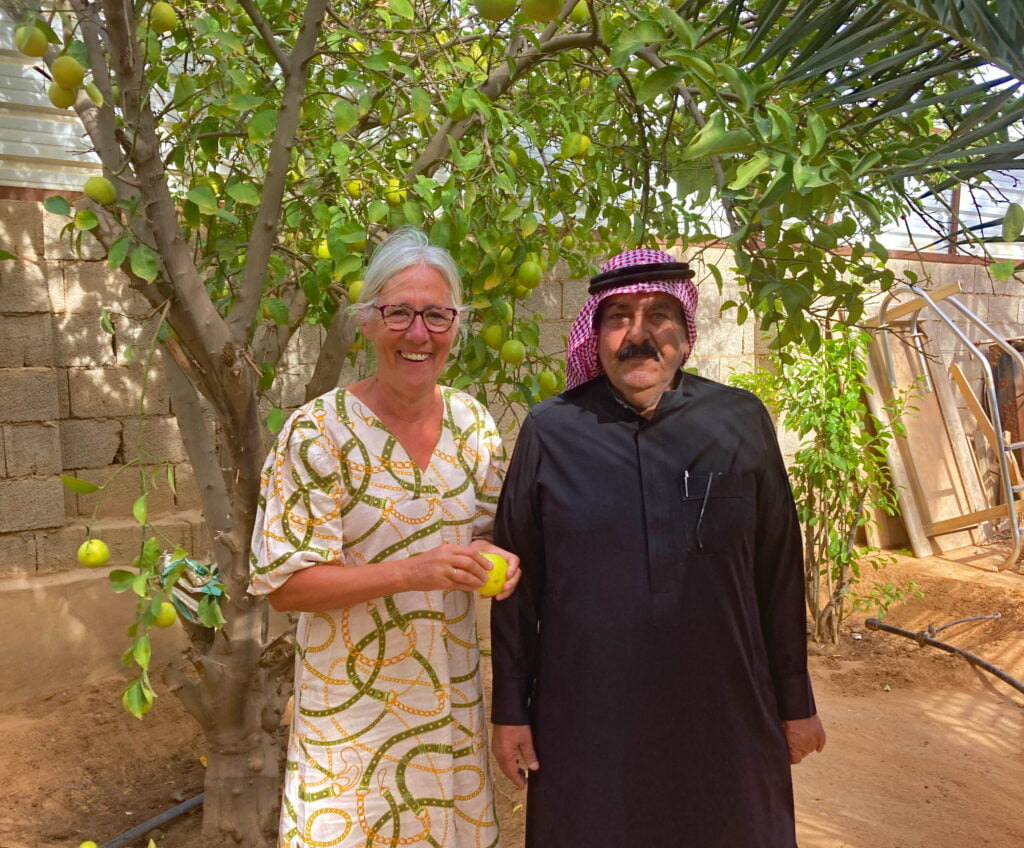
Further east, towards Syria and Iraq, we drive through the oasis city of Dumat-Al-Jandal where we visit the old castle. We are first invited by Saleh to his house to get water and of course drink coffee. The ritual of drinking coffee in Saudi Arabia consists of: first eating a date, a cup of Arabic coffee and then a cup of tea. Saleh’s garden is a place with citrus trees and date palms and we are given a full bag of citrus fruits and 2 boxes of dates.

His friend Abdullah later takes us through the city, the date orchards and the surrounding area.

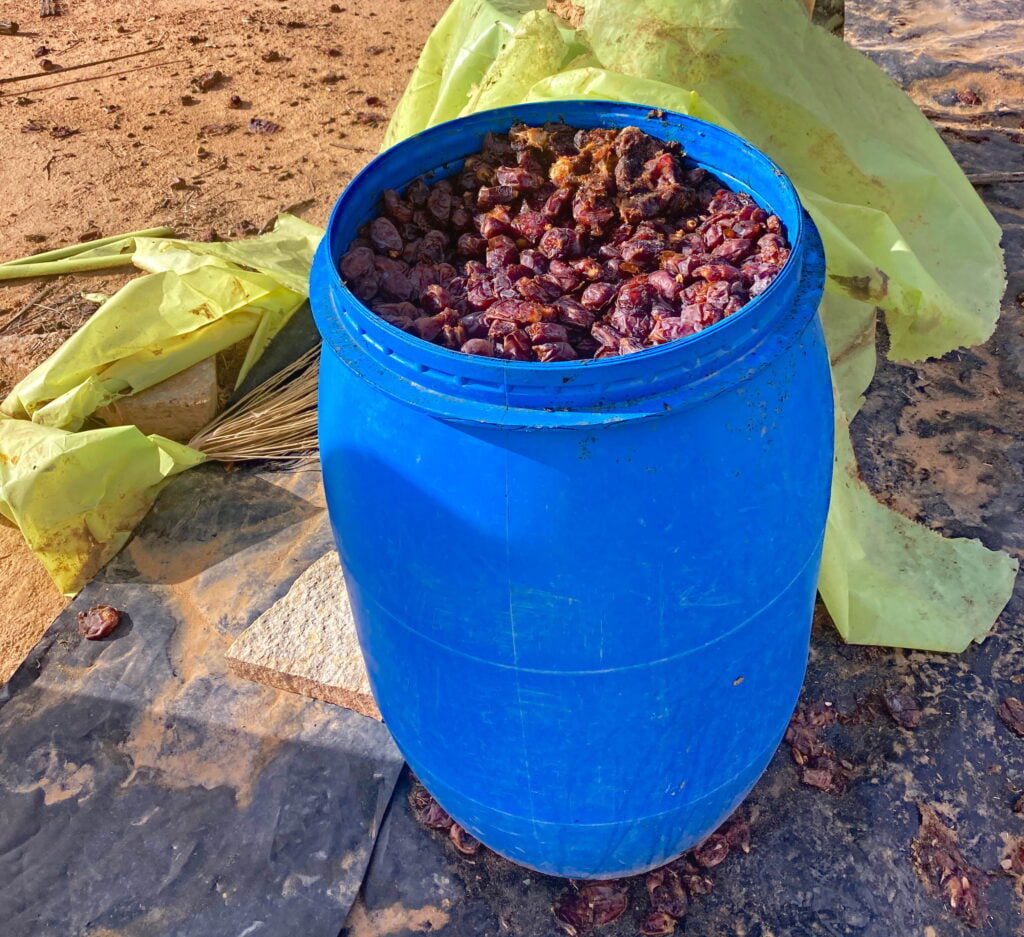
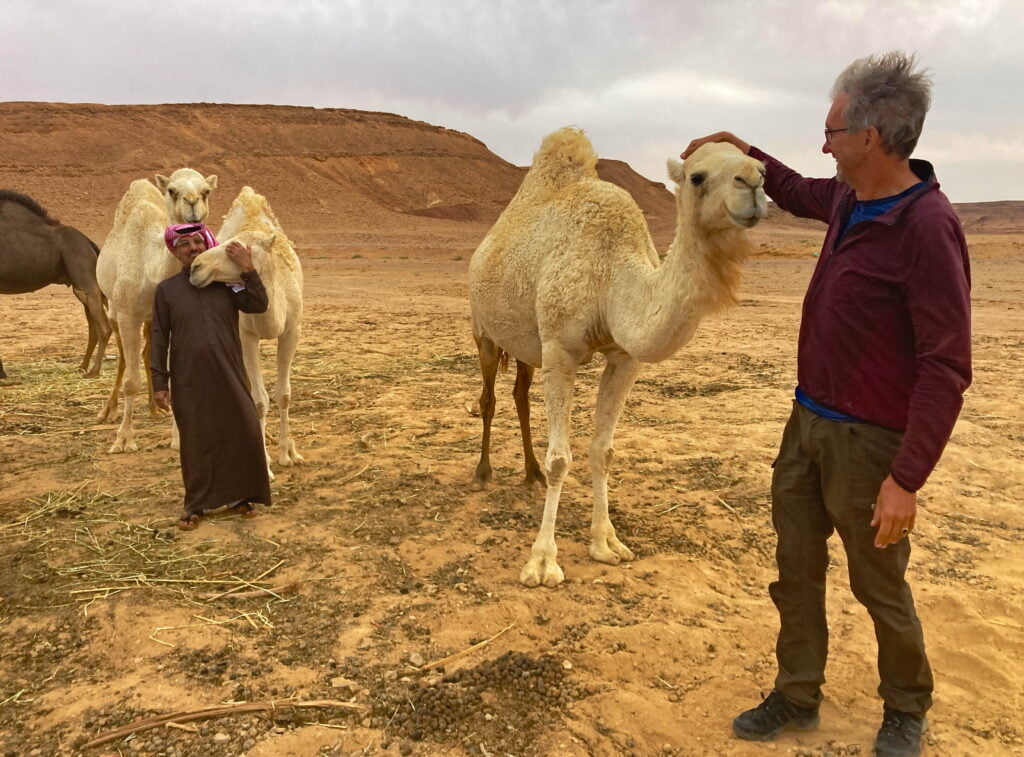
He takes us to his date farm and his goats and shows us his cousin’s camel farm. Everywhere we are treated to dates, coffee and tea and we share our travel stories. At night we can stay for free in a hotel in the city and Abdullah will bring us a meal.
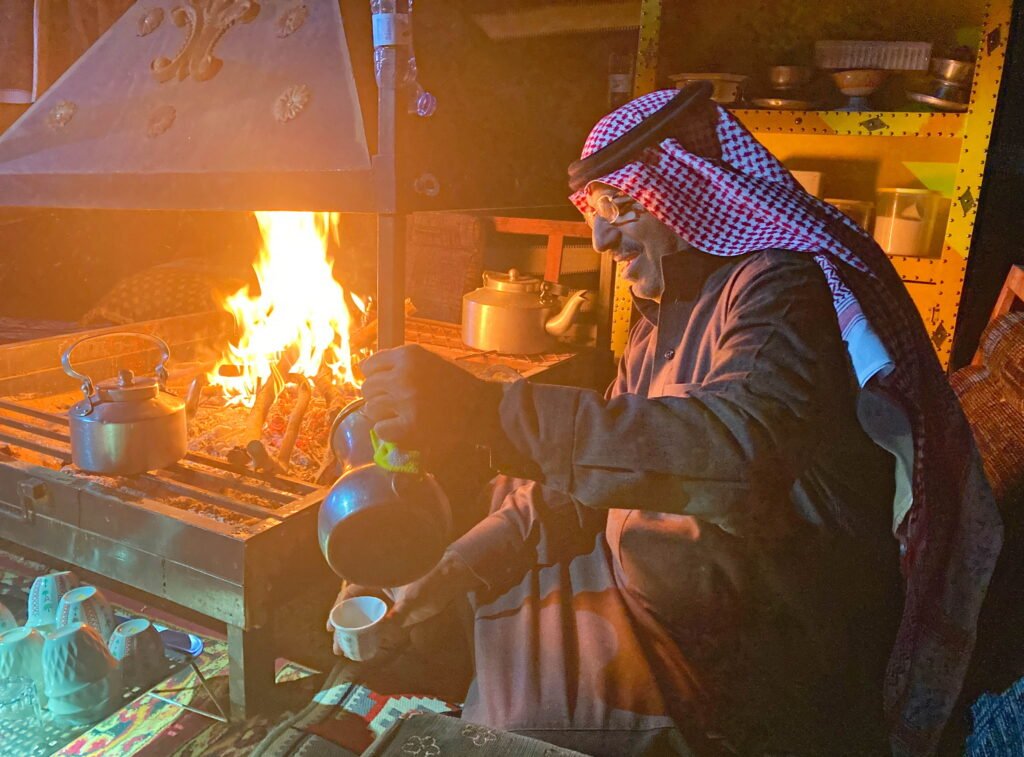

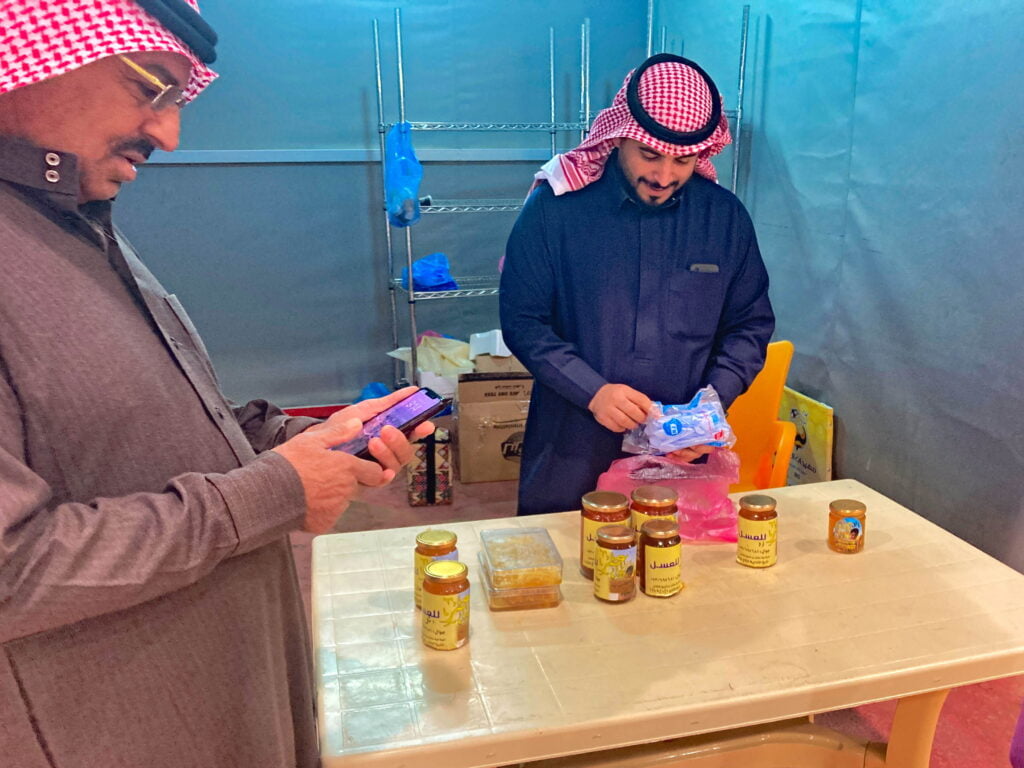
We go to a honey festival with him and are offered more coffee by another family member. Sonja goes to Abdullah’s wife and her sister and Gert Jan is taken to a friend.


Deserts and oases
Jibal Hisma and the Wadi Al Disah
Of the deserts in the north of Saudi Arabia, we will especially remember the Jibal Hisma and the Wadi Disah.
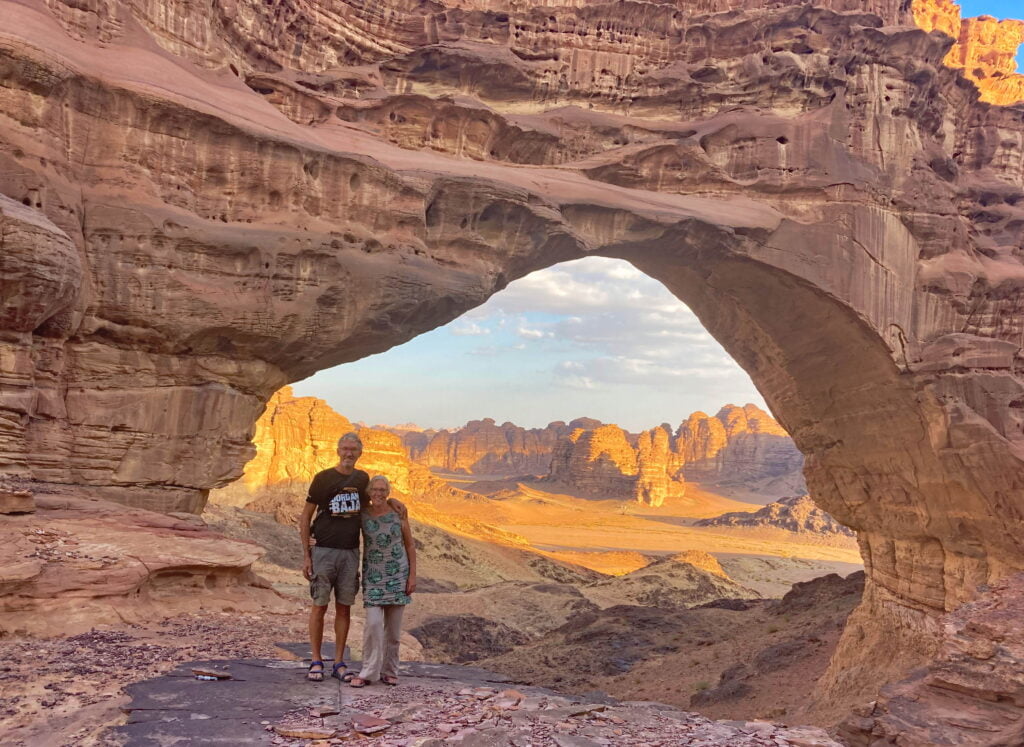
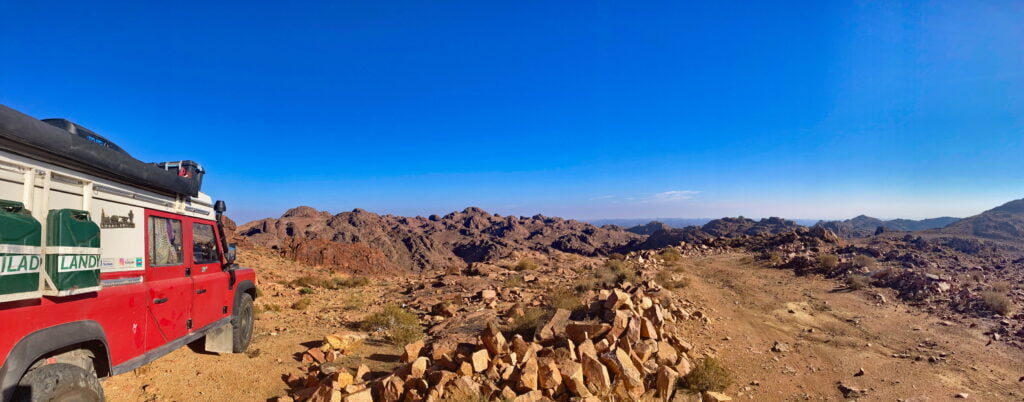
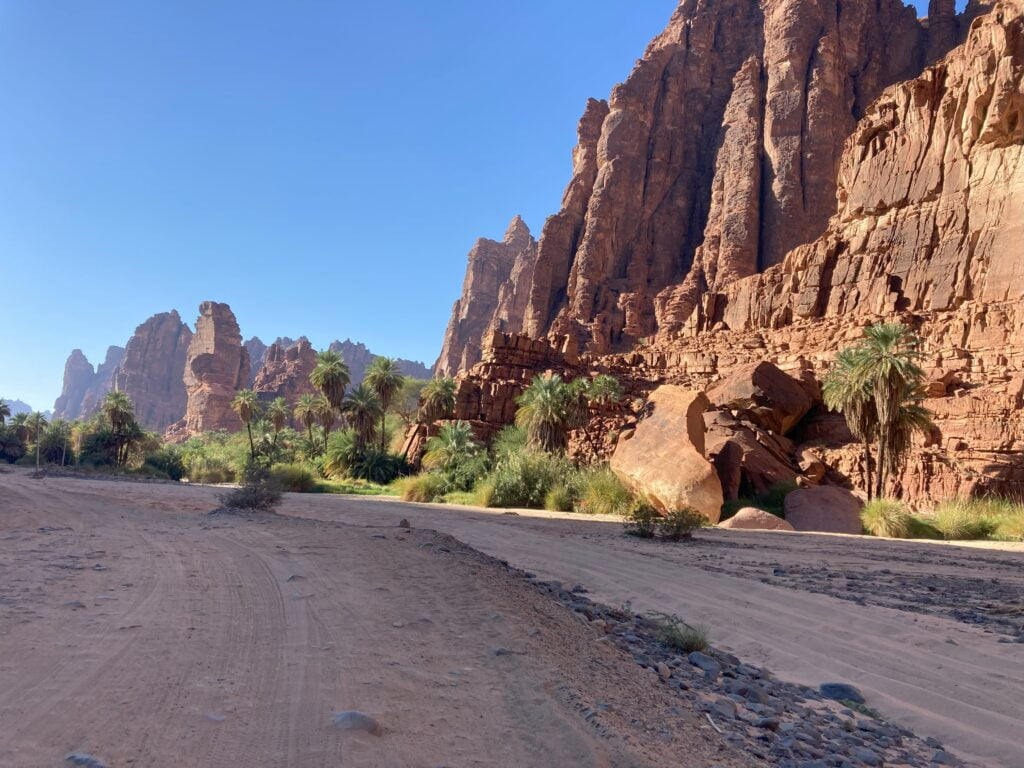
The Jibal Hisma through the immense stone formations that characterize this desert…


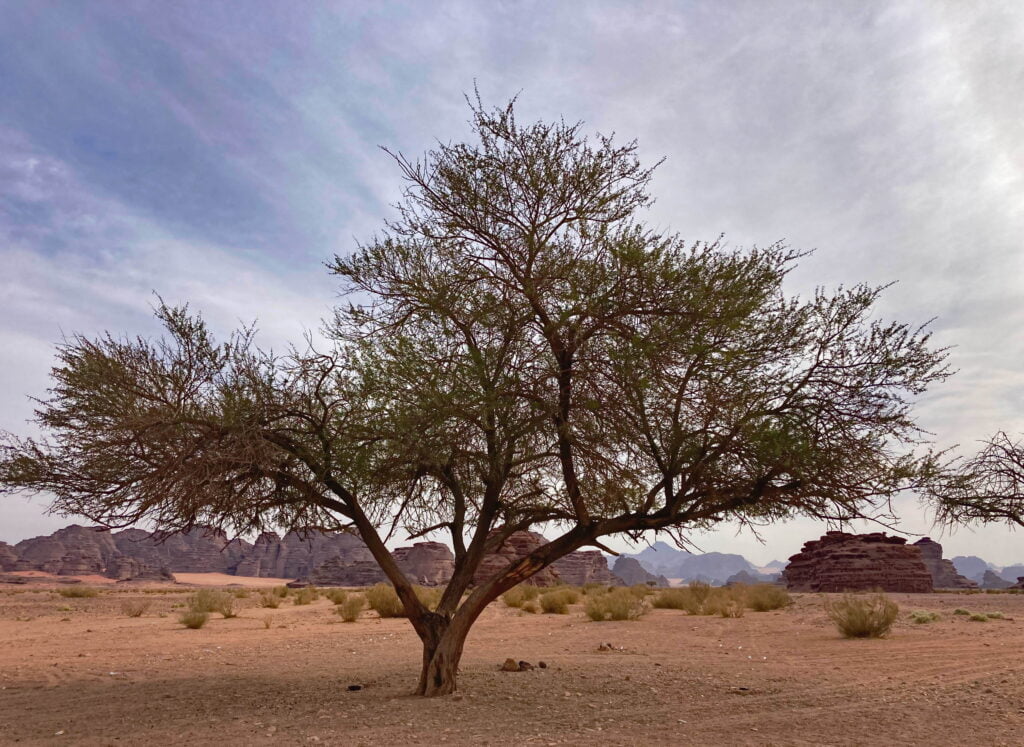
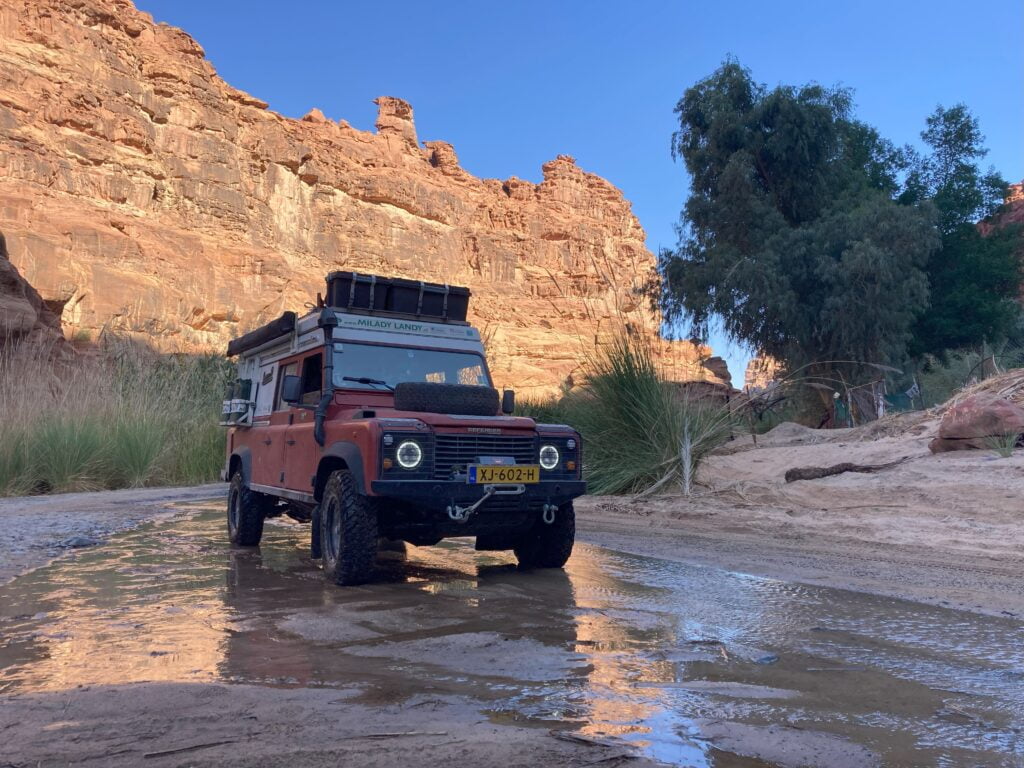
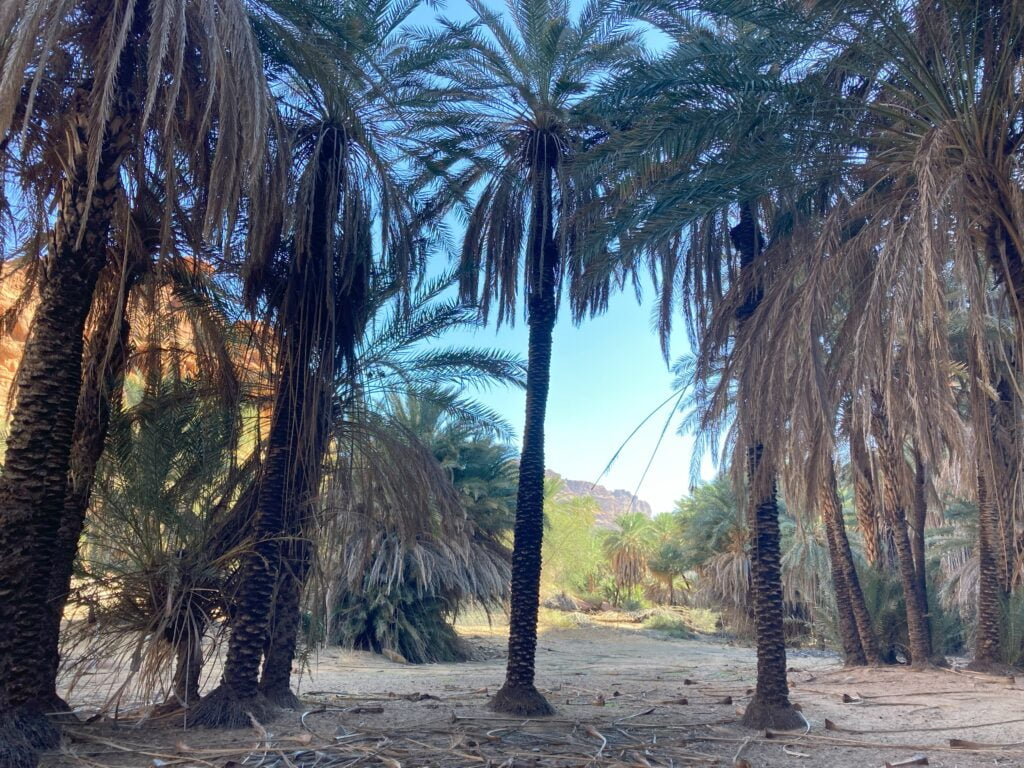
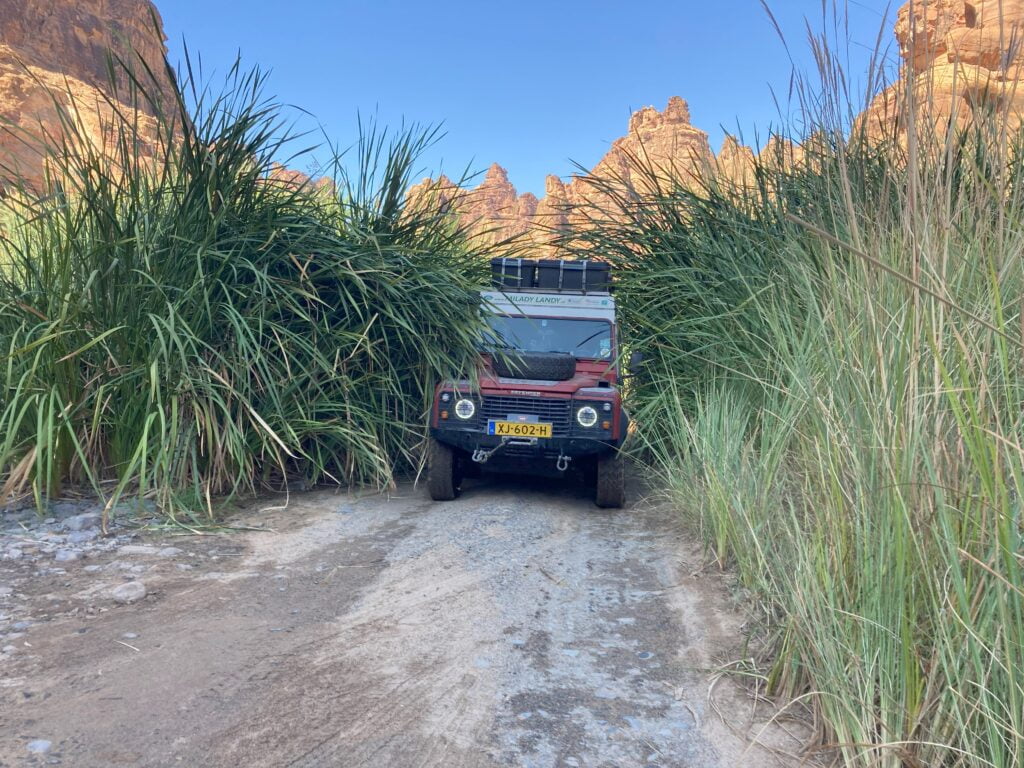
… and the Wadi Disa through the beautiful oasis that forms the heart of this desert with palms and rustling reeds.
Al Ula
The city of Al Ula is located in the middle of the desert. For decades, this oasis city has been a center of trade and a resting place for the incense and spice caravans that traveled across the Arabian Peninsula.
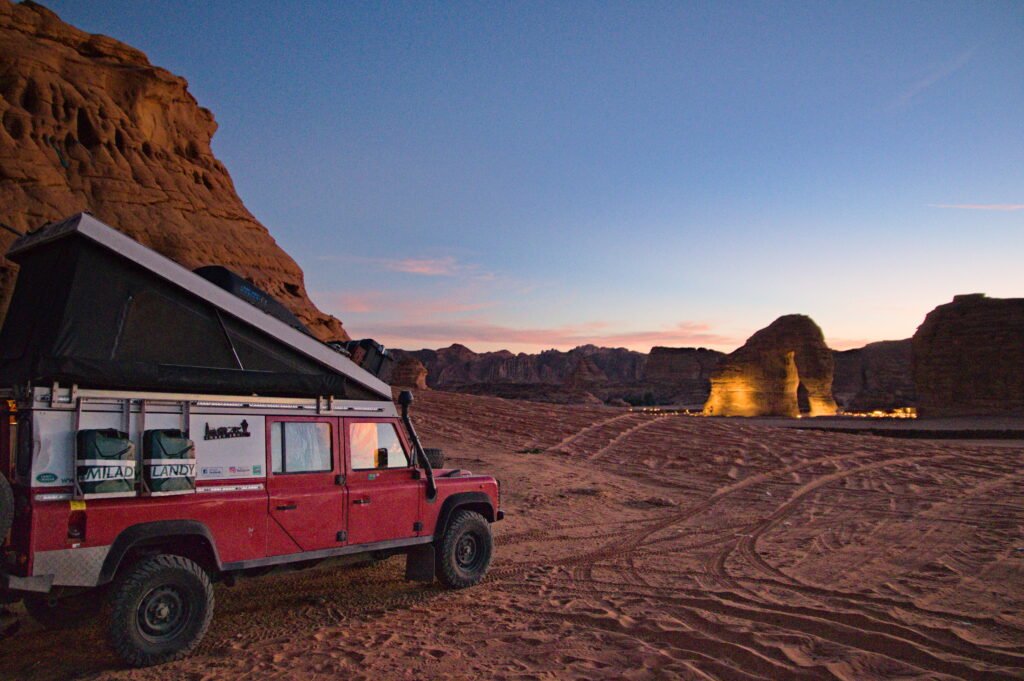
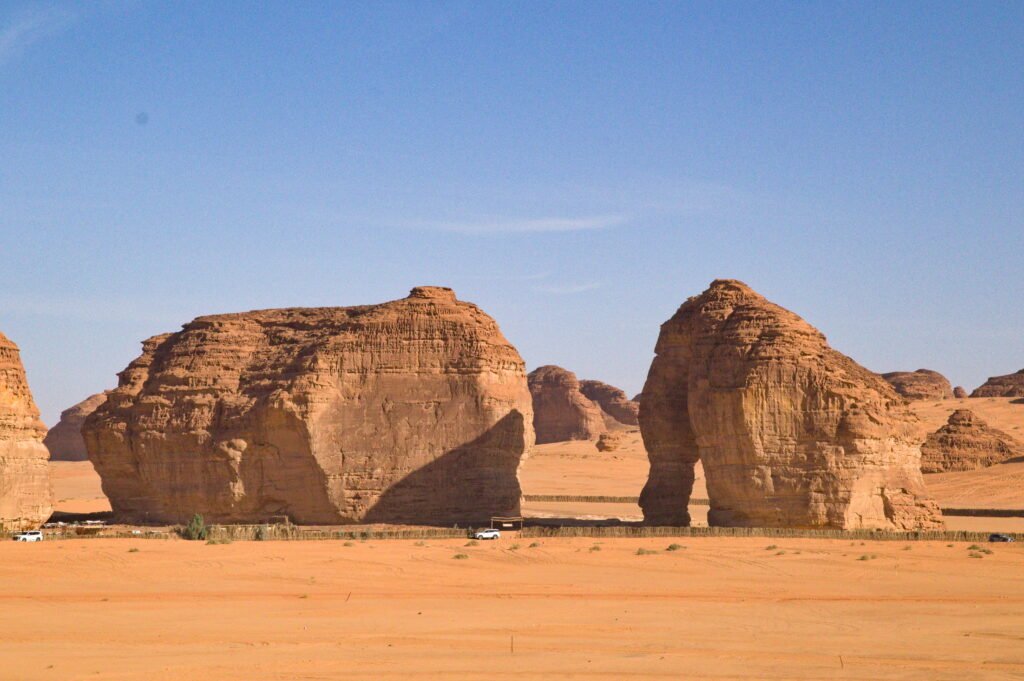
Nowadays Al Ula is mainly an emerging tourist attraction. The Elephant Rock is beautifully lit and equipped with seating areas for visitors, the old town has been cleaned up and is being further equipped to entertain a large flow of tourists with stalls, shops and terraces.
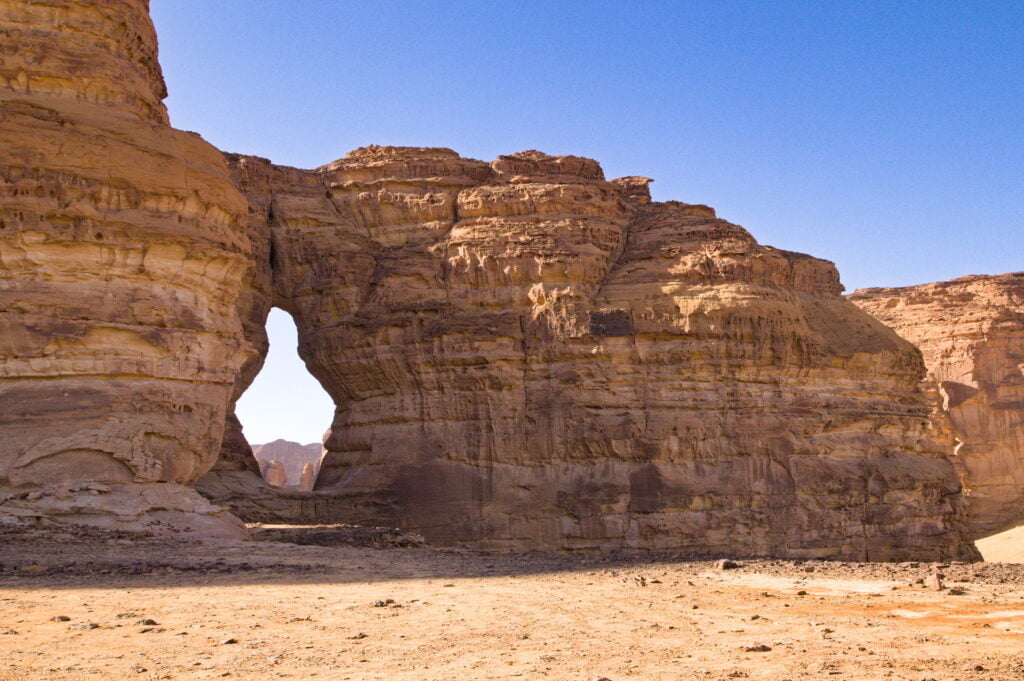
But what Al Ula is best known for is its counterpart to Petra in Jordan: Hegra, or Madain Saleh in Arabic. This ancient Nabataean city includes more than 100 tombs carved from the rocks in the desert.
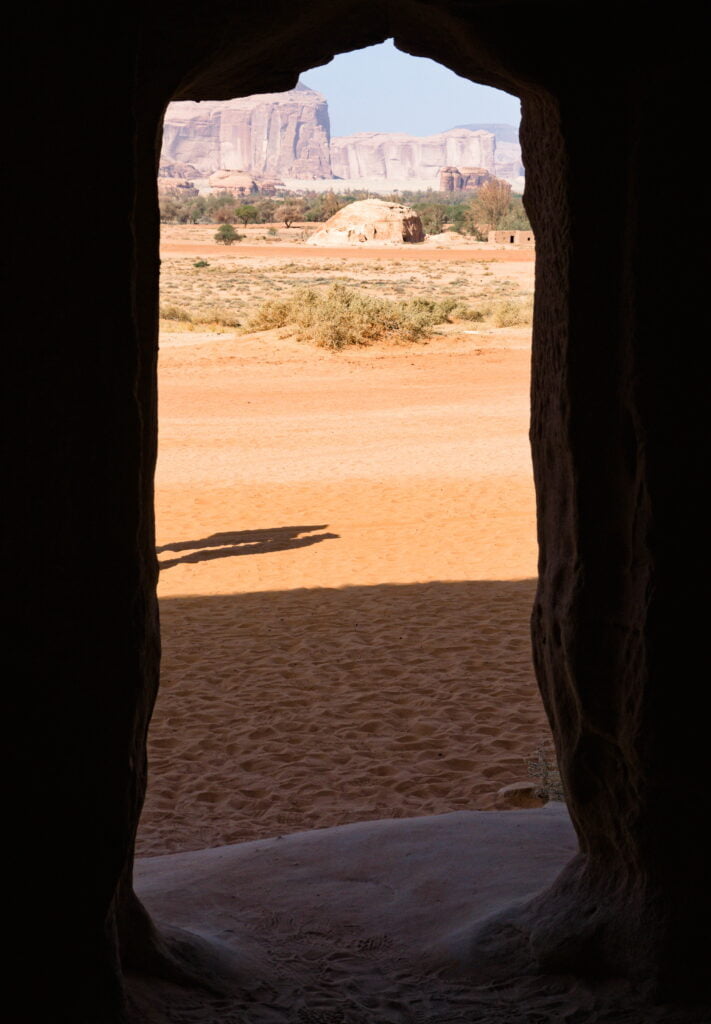
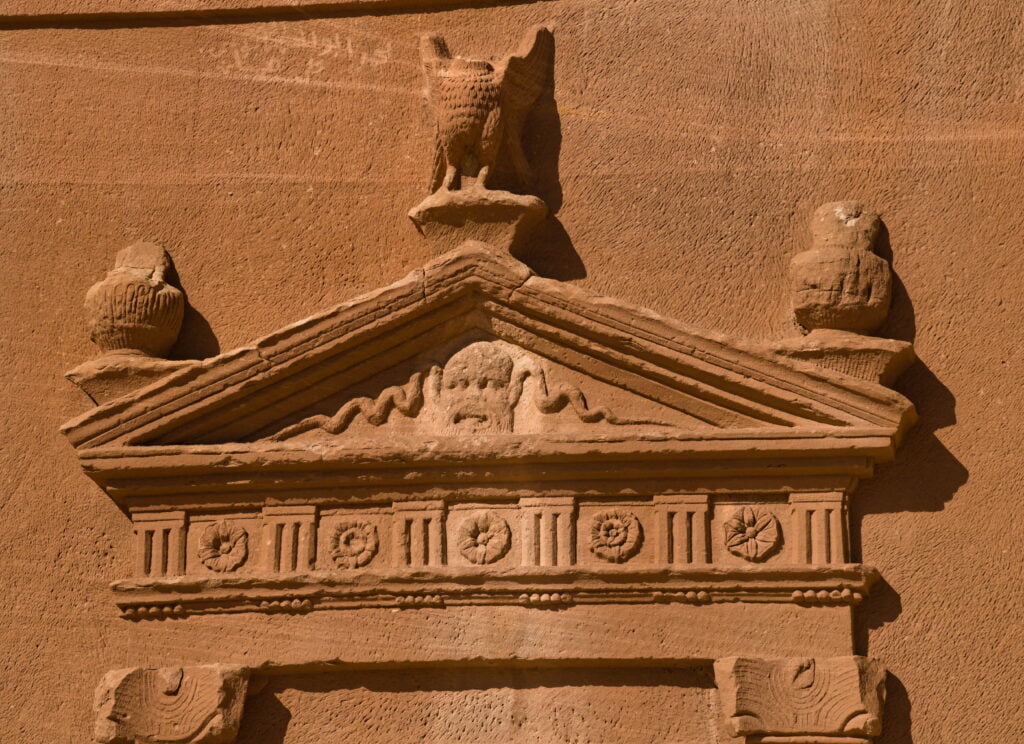
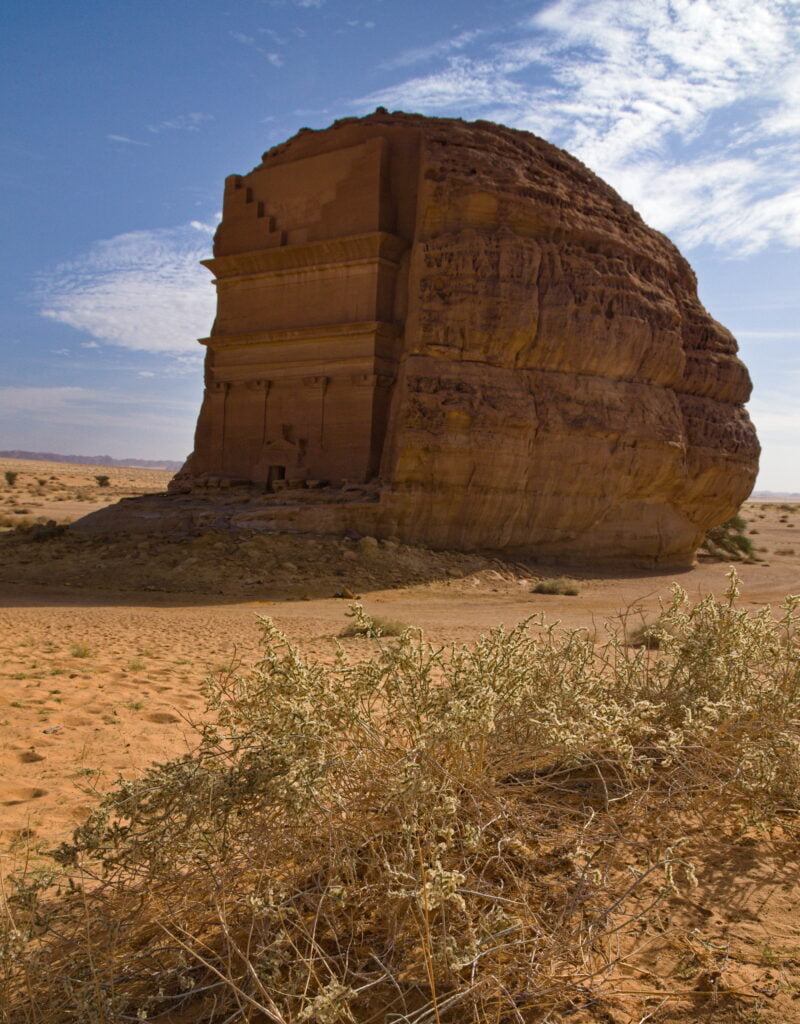
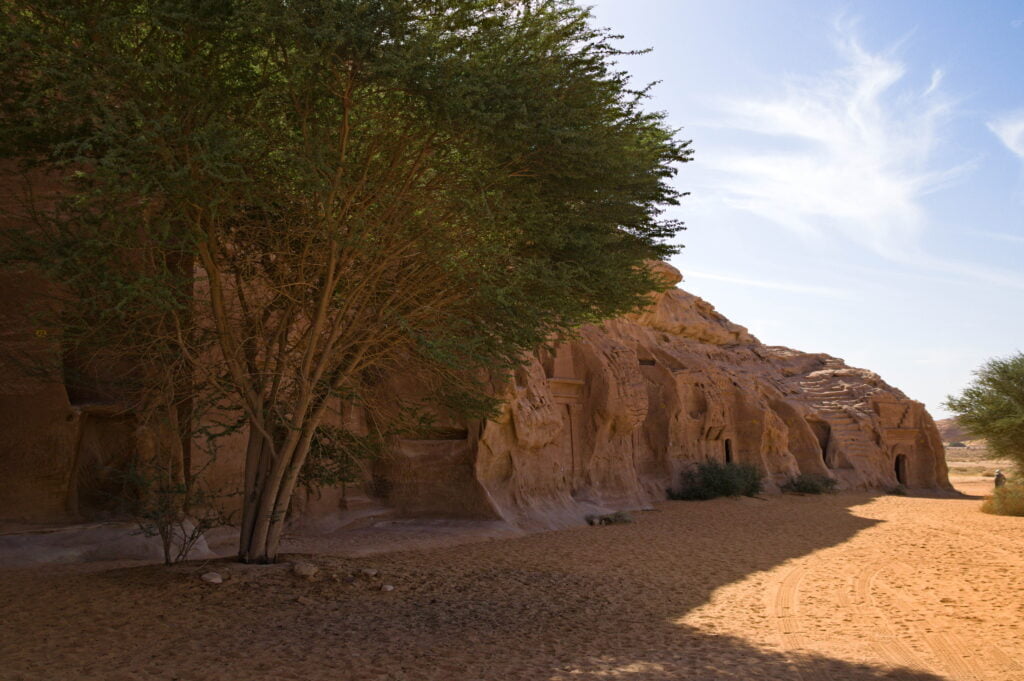
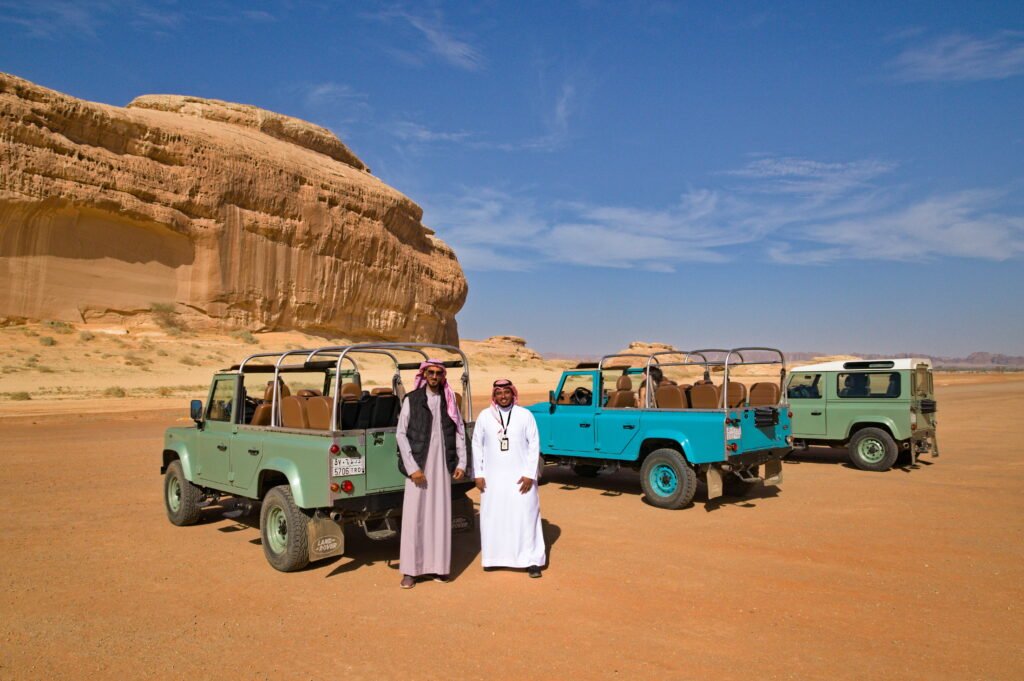
We drive past in a coach, but for those with a bigger budget, a trip with a Land Rover Defender (2015 edition) is also possible.
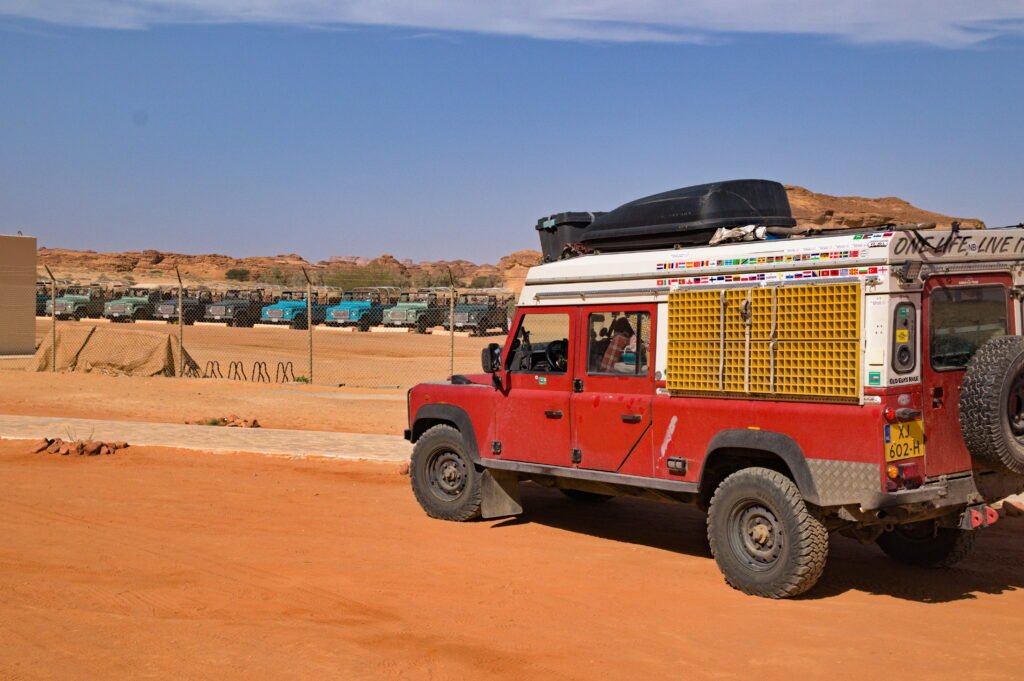
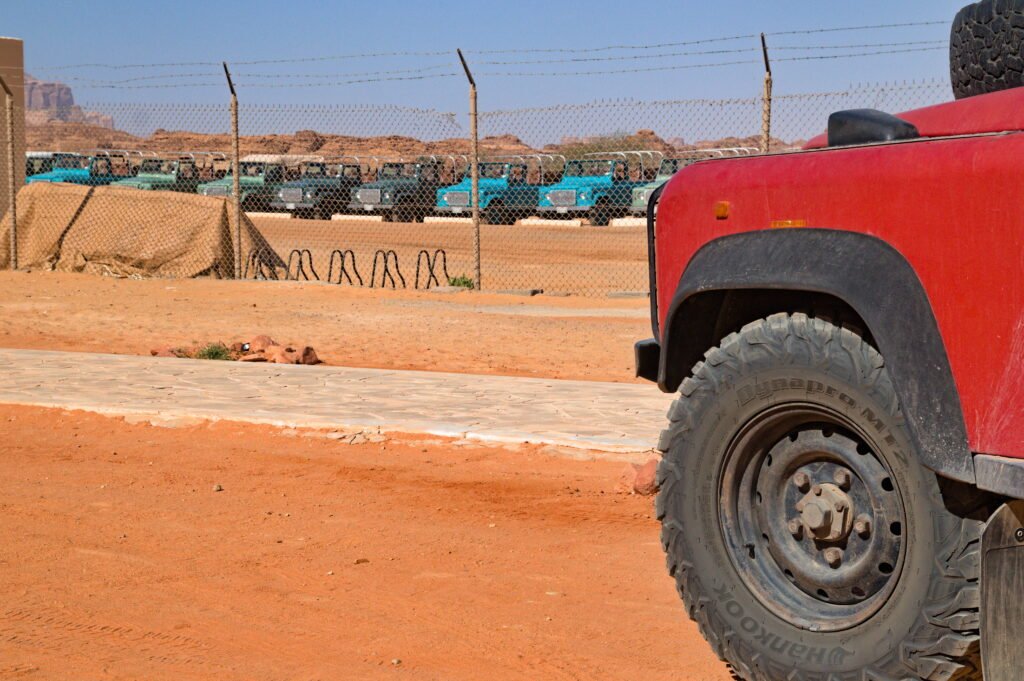


The Ashar Valley is a closed part of Al Ula that can only be reached by reservation. We reserve lunch in the Tama restaurant and marvel at the people, especially ladies, who take pictures on the catwalk in the swimming pool.
But we mainly visit the Asher Valley for the Maraya building. Maraya is a beautiful work of art, rising like a mirage from the sand and completely blending in with the surrounding landscape. It is covered with 9,740 mirror panels that reflect the beauty of Al Ula, making it the largest mirror building in the world, according to Guinness World Records. The large concert hall, where performances, concerts, art programs and arthouse films are shown, is emerging as a cultural center on a global scale. At least, that is Saudi Arabia’s aim!
Videos about the desert
This video gives a general impression of our ride through these deserts:
And this video gives an impression of how we camp in the desert: