

When we travel east from Cappadocia, we notice that we end up in a less touristy area. The roads are narrower and sometimes of lesser quality, people are more curious about us as travelers and the landscapes are wider. We also pass through the area where a major earthquake occurred in February 2023. The devastation and other consequences shock us, we did not expect to experience this.
A literal highlight of this stage is Nemrut Daği, at 2,150 meters the highest mountain in the northern Two Rivers Region.

Fill up with water on the way
Our 45 liter water tank is regularly empty. We use the water in our water tank mainly for cooking and washing, we buy drinking water in 5 liter bottles in the supermarket or at small shops on the way.
We rely on the possibilities we encounter along the way to fill the water tank. Sometimes we fill up at a campsite, when we spend the night there, but because we usually camp wild, we also have to look for water points along the way. In Turkey, these public water points are widely available, sometimes at a small mosque, but also often simply indicated with a sign.

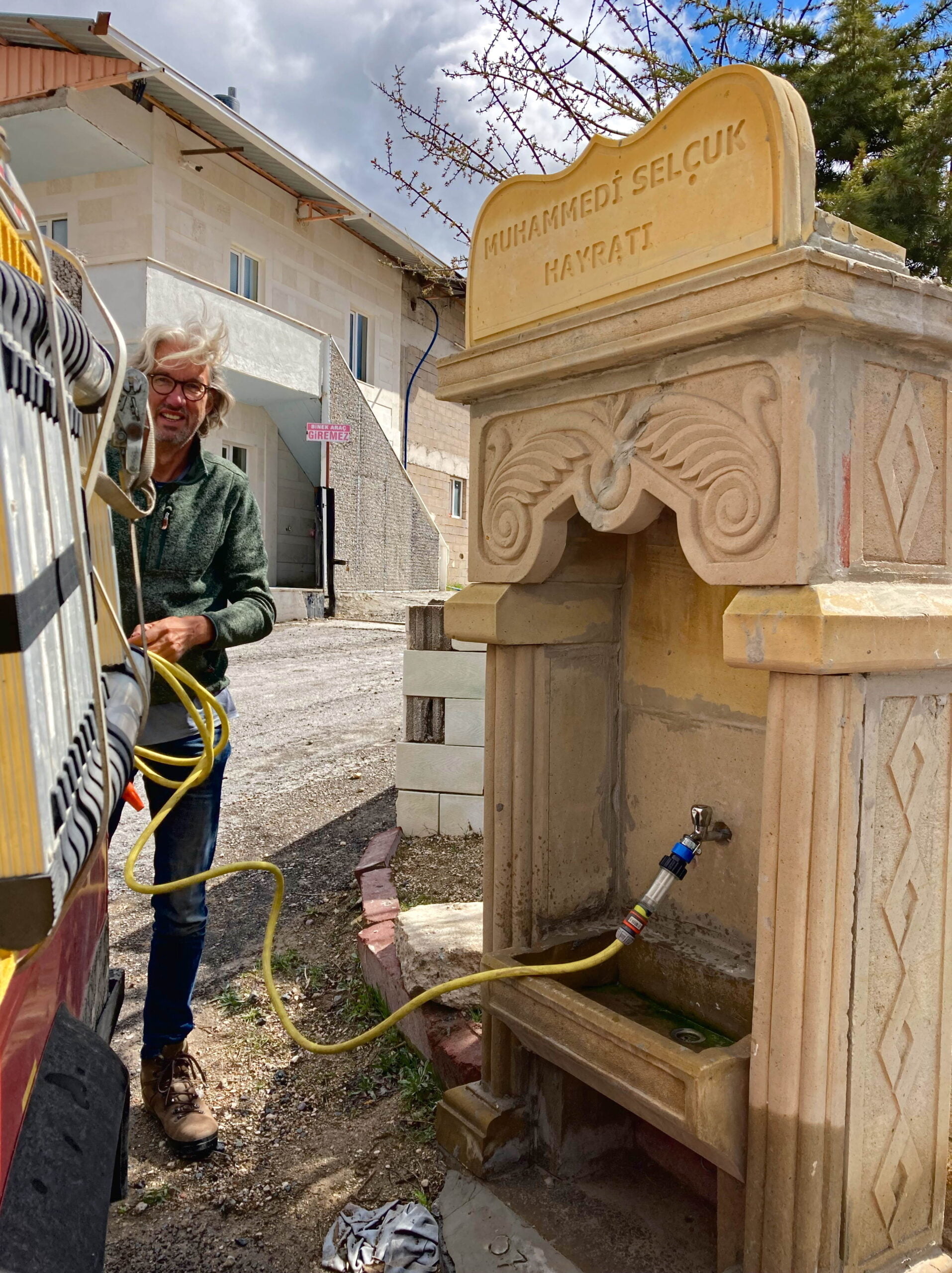
With a full water tank we can then continue our journey.
The waterfalls of Yesilköy and Kapuzbaşı
When we leave Cappadocia behind us and travel to the East, the environment changes considerably. The road is generally good, despite the rain that fell earlier, we can continue well. The valleys become less sharp, but the mountains get higher and more rivers cut through the landscape. Here and there waterfalls spring from the rocks along the main road. However, the road that Osmand points us to the Yesilköy waterfall turns out to be too slippery, so we have to turn back after a few hundred meters. Fortunately, further on we see a signpost to the Yesilköy waterfalls via a better road.

We have to descend the last part on foot to Yeşilköy Selalesi.
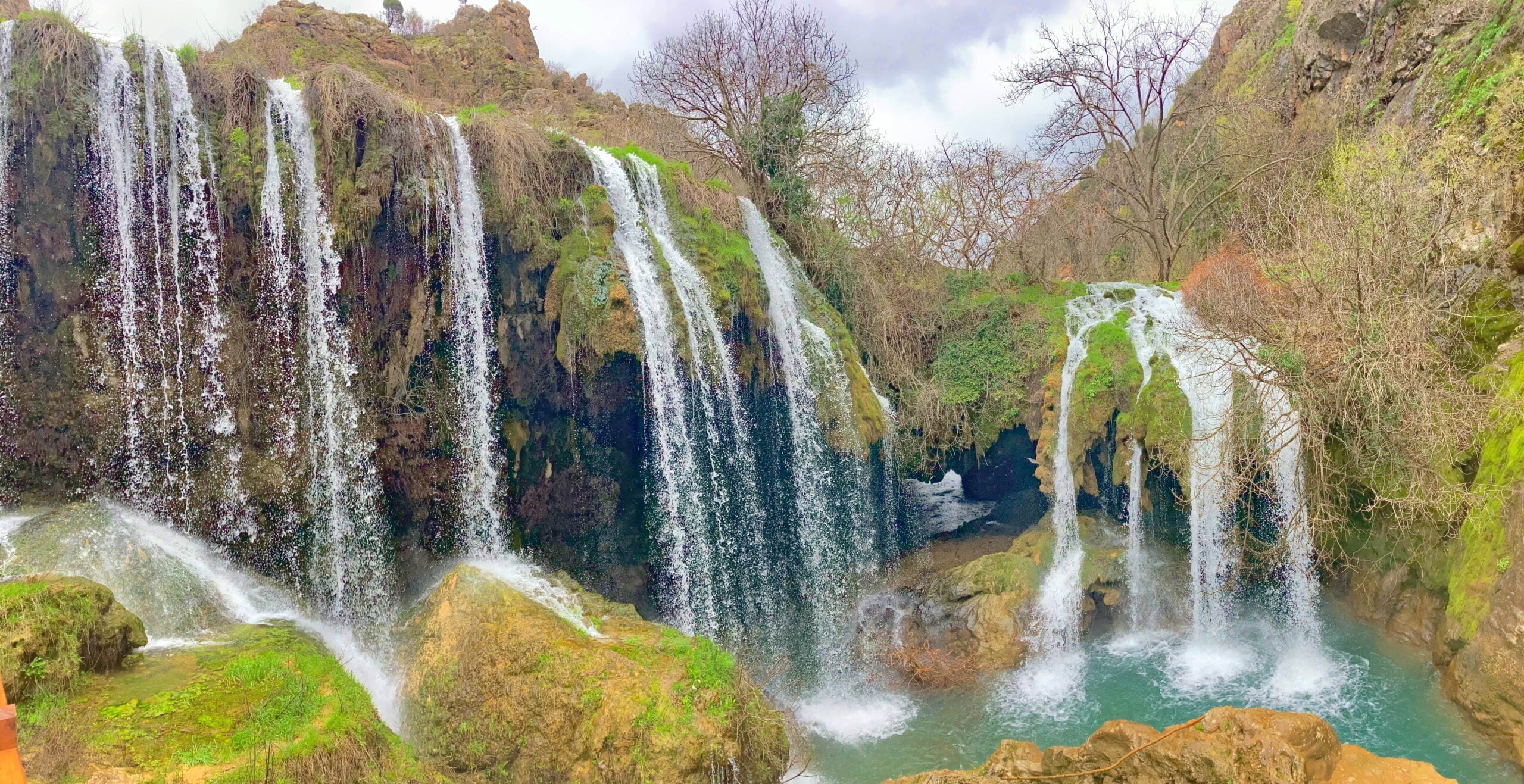
The waterfall or waterfalls are overwhelming, around us the water comes down in huge amounts. Then it disappears under the falls into the fast-flowing river. We have never seen anything like this, even in Iceland, we are speechless.
Still recovering from this natural force, we continue through valleys and along river valleys, the next waterfall, Kapuzbaşı, is even more praised in the various online and offline sources. The road to here is also winding and steep and leads along deep ravines, beautiful and exciting to drive.

The experience here is perhaps a little less than at Yesilköy, yet the sheer fact that the water literally springs from the rocks is a spectacle in itself.
The interior of eastern Anatolia
We make some kilometers through the interior of eastern Anatolia. We pass small villages where you seem to go back decades in time.
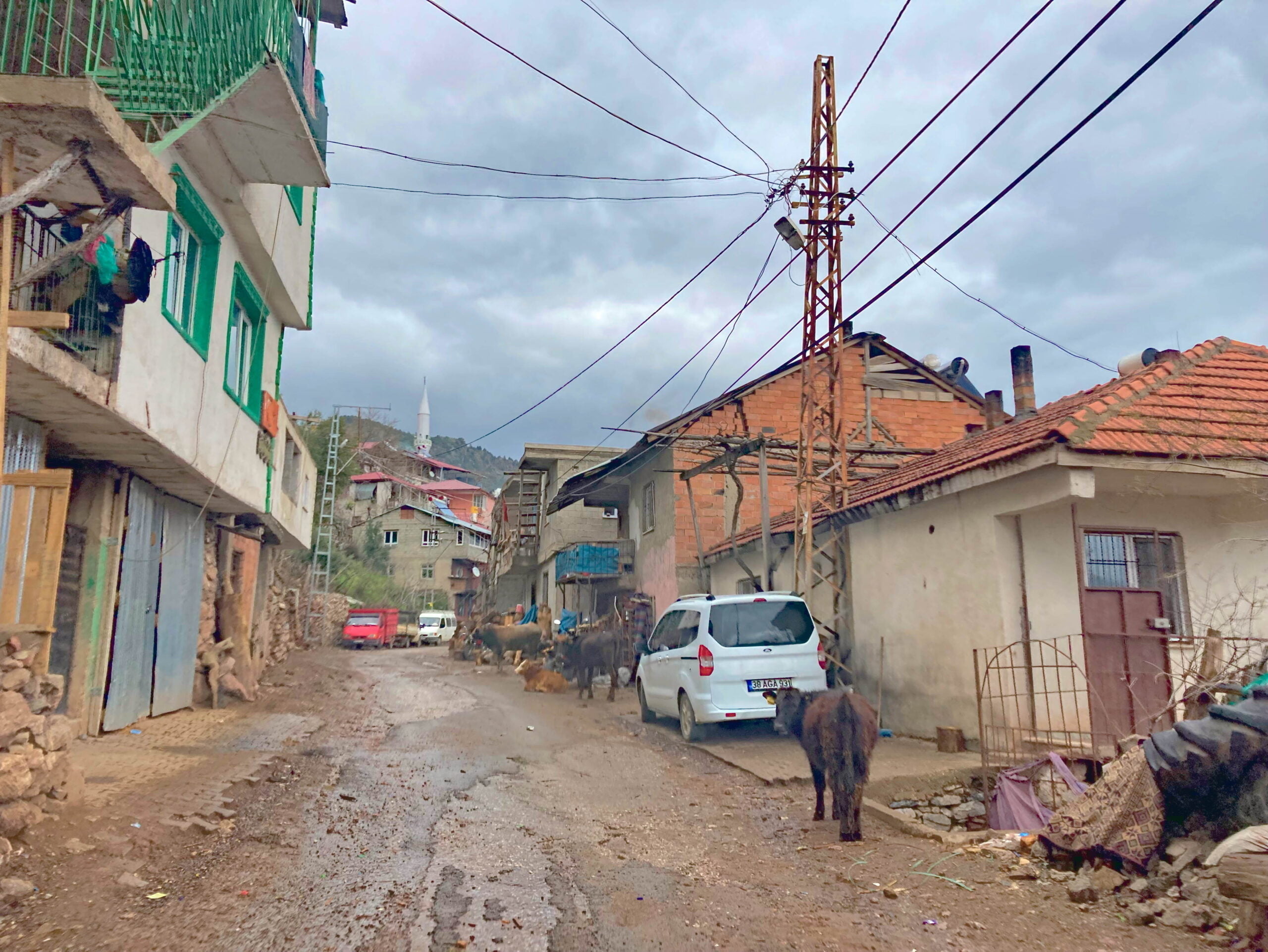


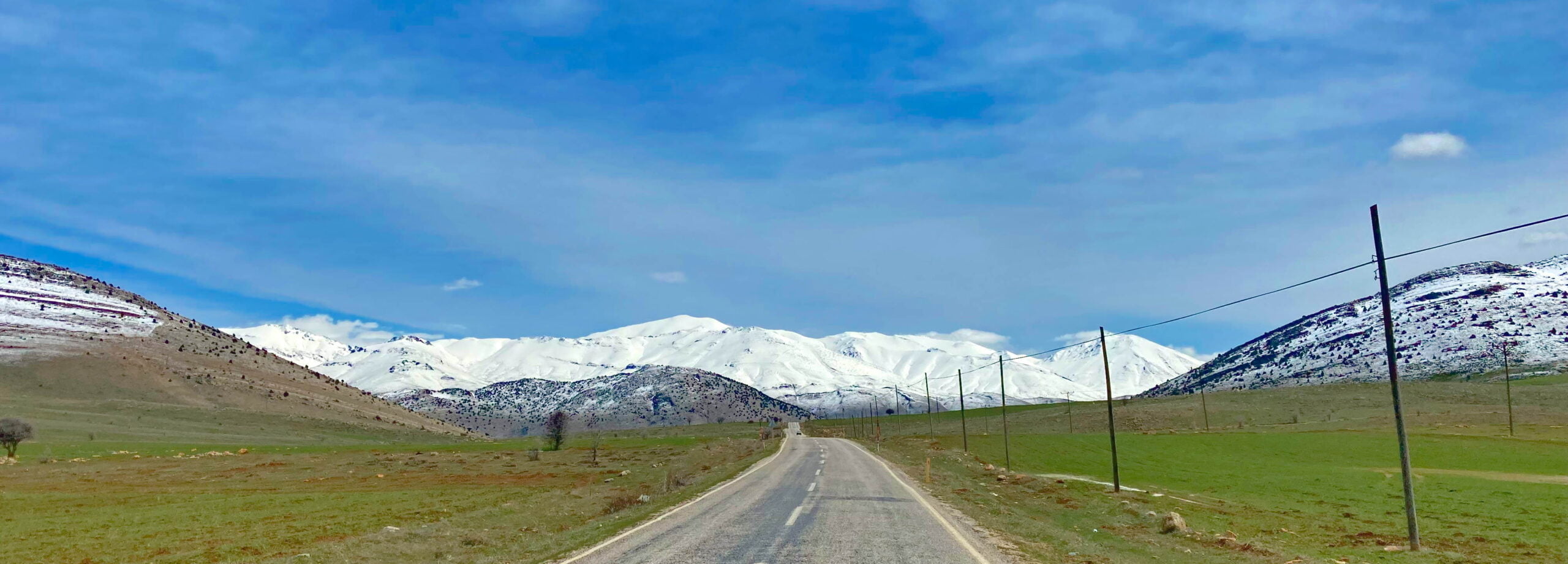
The roads are sometimes challenging, but the view of the high snow-capped peaks makes up for it. How Ramadan and the upcoming elections relate to each other is not entirely clear…



Earthquake area
A first impression
We continue to the east of Turkey. Near the city of Göksun we see aid tents from the Turkish AFAD, the international UNHCR and a Chinese organization and we pass trucks with emergency housing.


We did not realize enough that we are traveling so close to the epicenter of the earthquake of about 2 months (February 2023) ago.
Here, too, buildings are heavily damaged and we see the remains of collapsed and now cleared apartment buildings.
Many tents are placed in the yard of houses because, we suspect, family and friends are taken care of here.


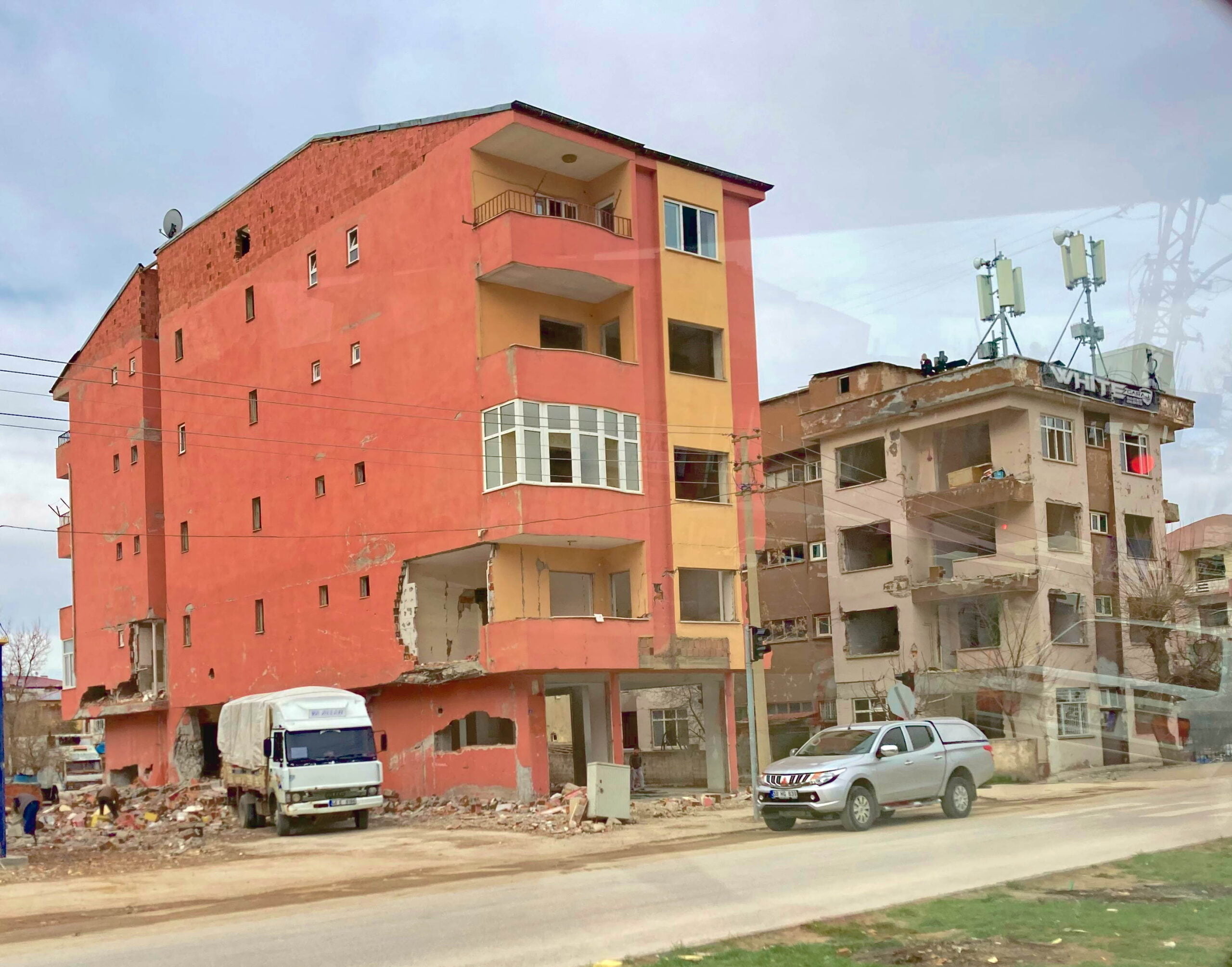

We are deeply impressed and we are silent about it.
Malatya
Especially the center of the city of Malatya, where we have booked a hotel that no longer exists, has been badly damaged. And this is a city where the number of casualties was not too bad…
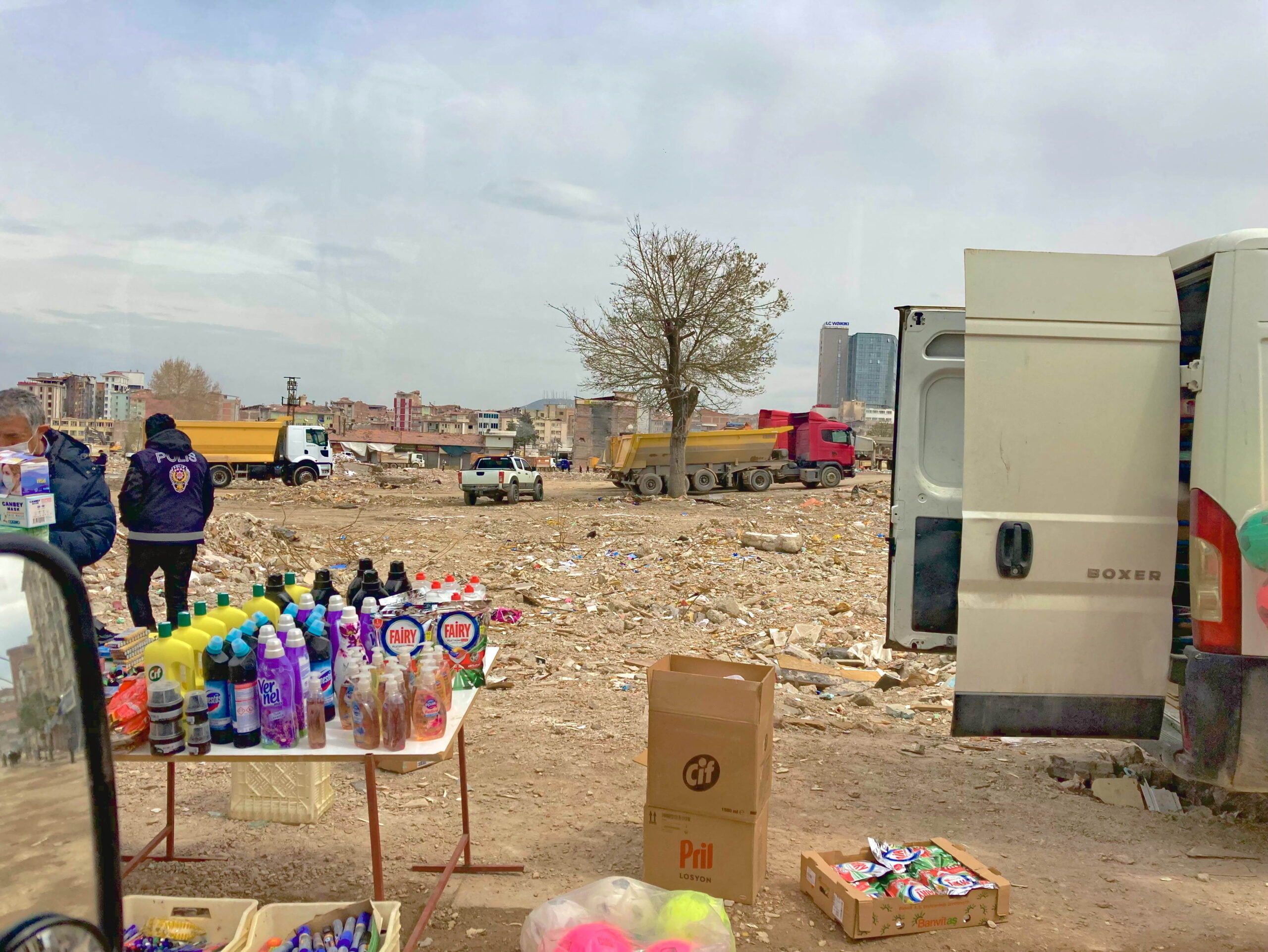


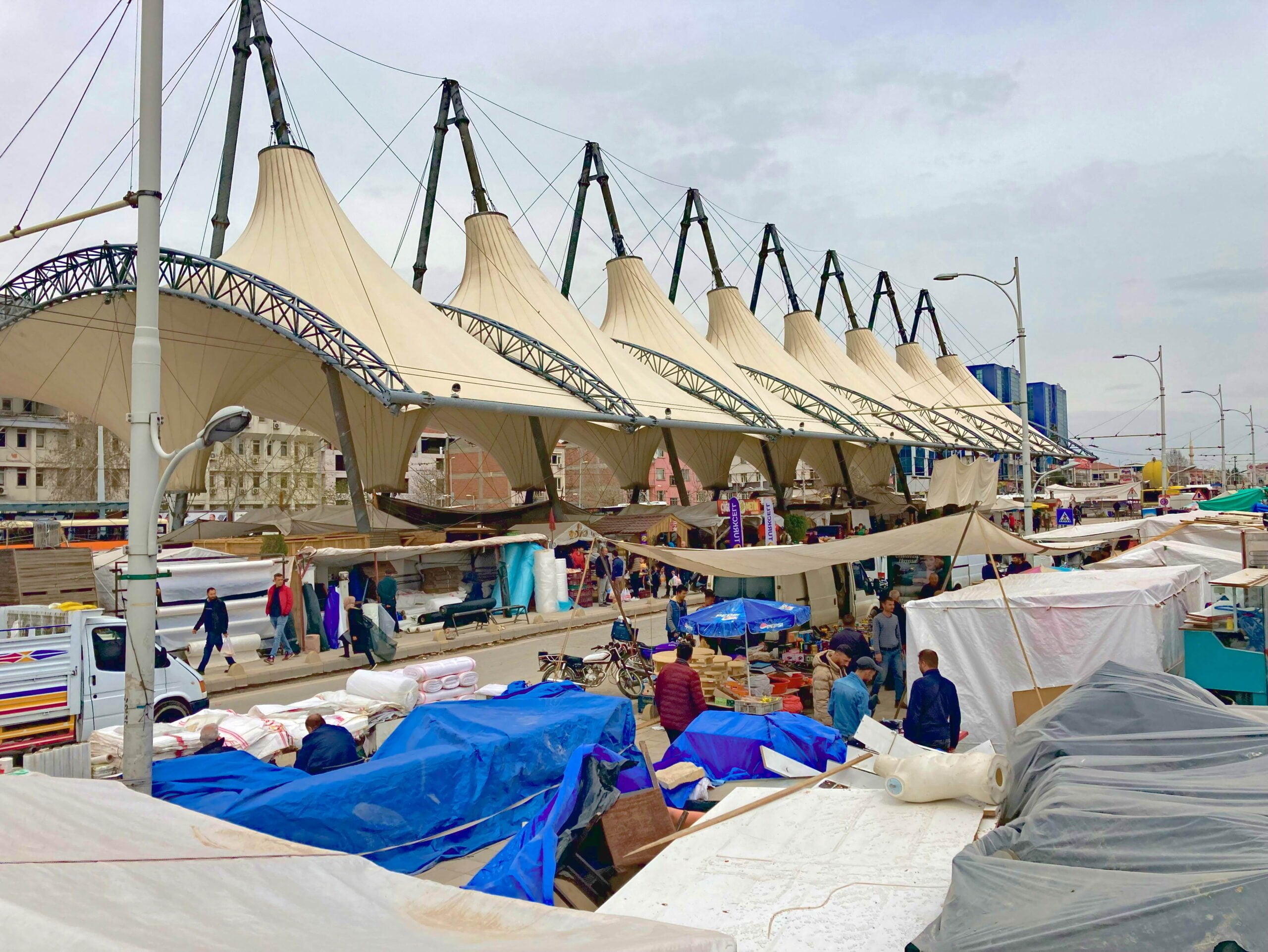
Yet life goes on here too, the market is lively and the baker bakes bread daily. Even the upcoming elections are the order of the day.


Nemrut Daği
Mount Nemrut Daği, at 2,150 meters the highest mountain in the northern Two Rivers, towers over the landscape of eastern Anatolia. Because our hotel in Malatya is no longer accessible, we decide to continue to this mountain the same day.
Wikipedia: King Antiochus Theos (69 – 40 BC) of Kommagene is probably buried on the top of the mountain, in a 50 meter high burial mound in the shape of a pyramid. In front of the burial mound is a complex of colossal stone sculptures of King Antiochus himself, flanked by two lions, two eagles and various Greek, Armenian and Persian gods, such as Zeus, Tyche and Mithras. Around the burial mound are the stone heads of the statues.
We find a place to spend the night in the parking lot of the visitor center on the north side of the mountain. When we have just arrived we get a visit from Fatma who makes it clear to us that her legs are bothering her and that her cream has run out. We give her a tube of eczema cream from the Kruidvat.
The next morning we continue to the top of the mountain, which is still covered with snow here and there.
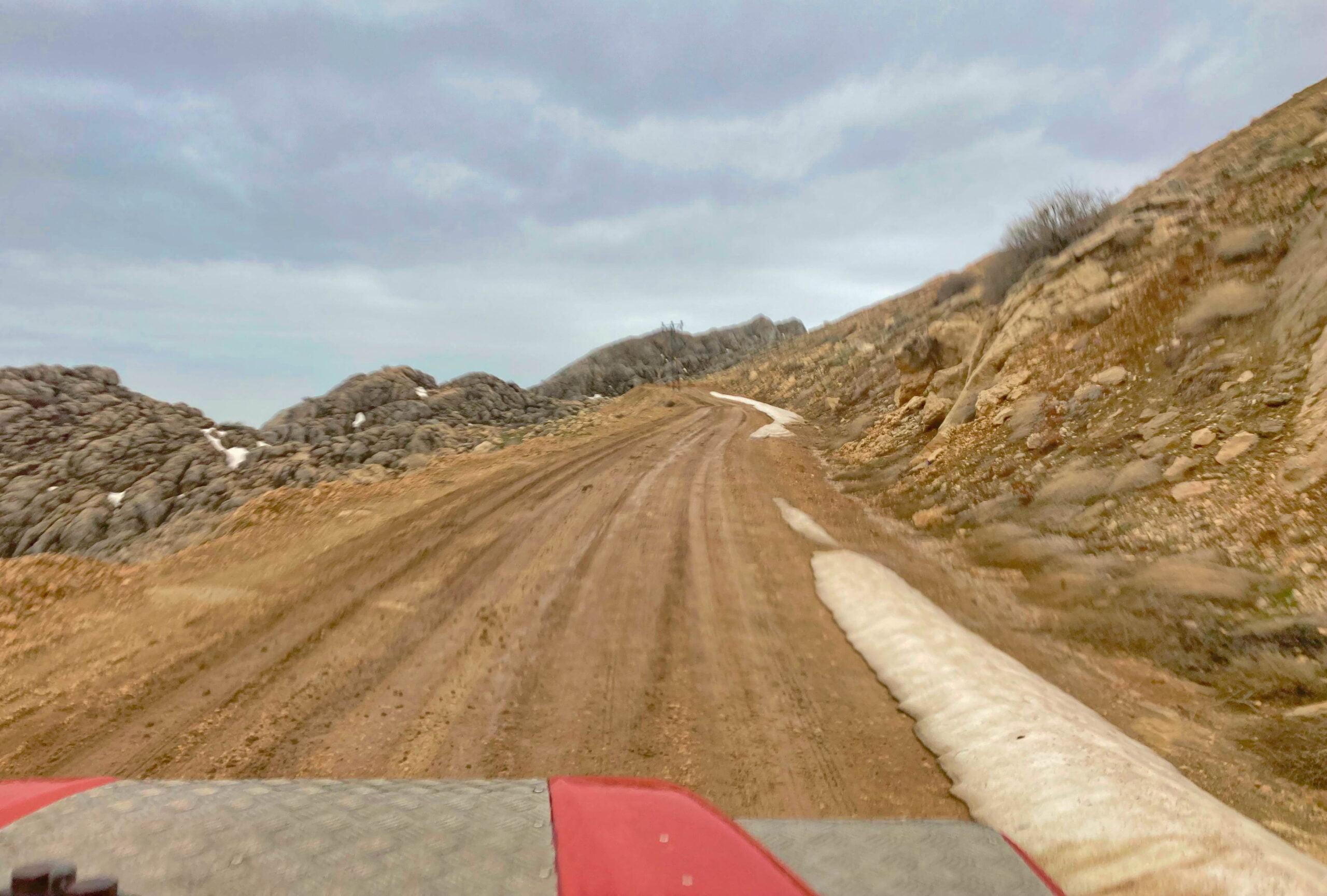

Het laatste stukje moeten we lopen over de losse stenen van de top en over de resten sneeuw die hier nog liggen.
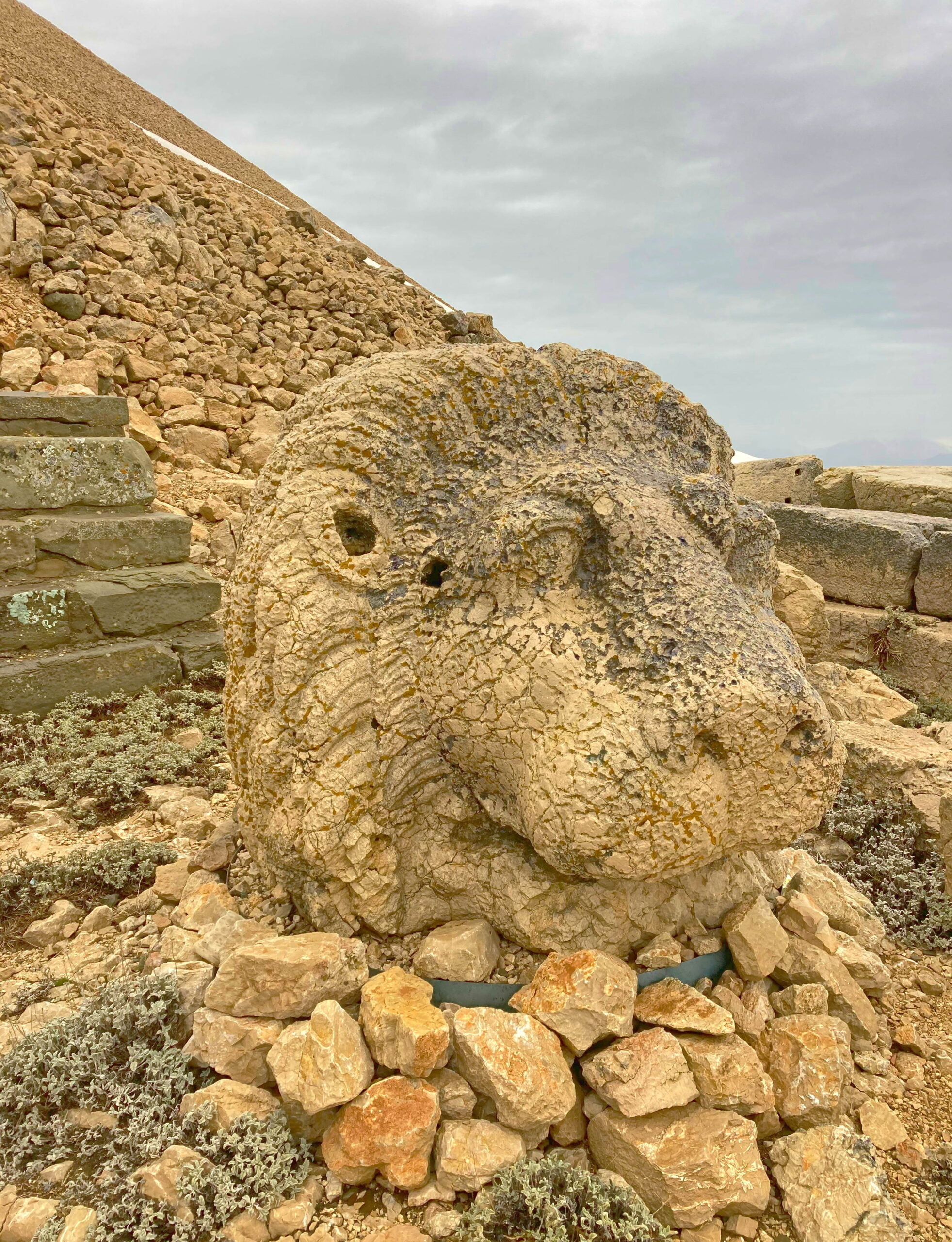

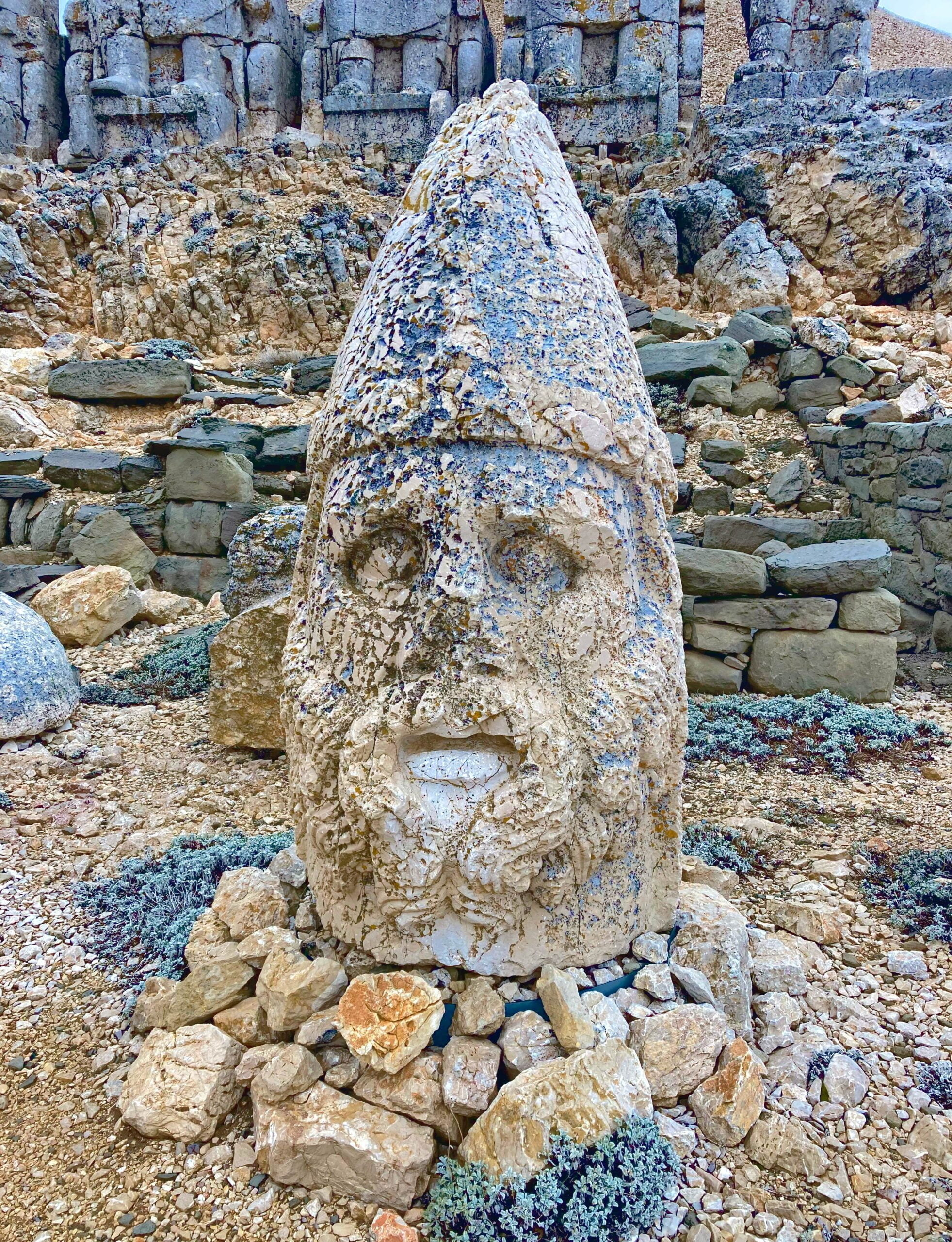
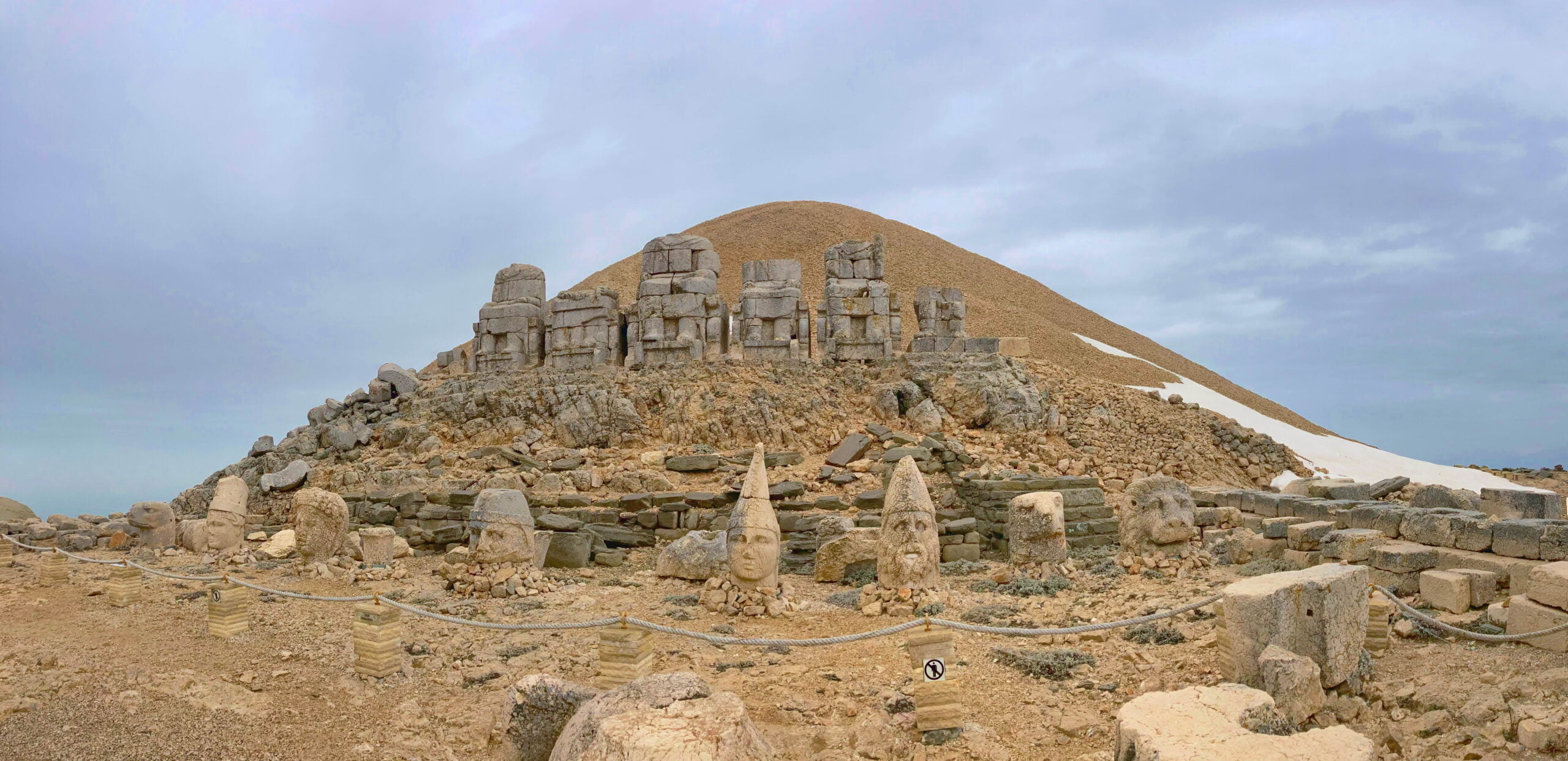
Another surprising historical site in Turkey, this country is so rich in history!