
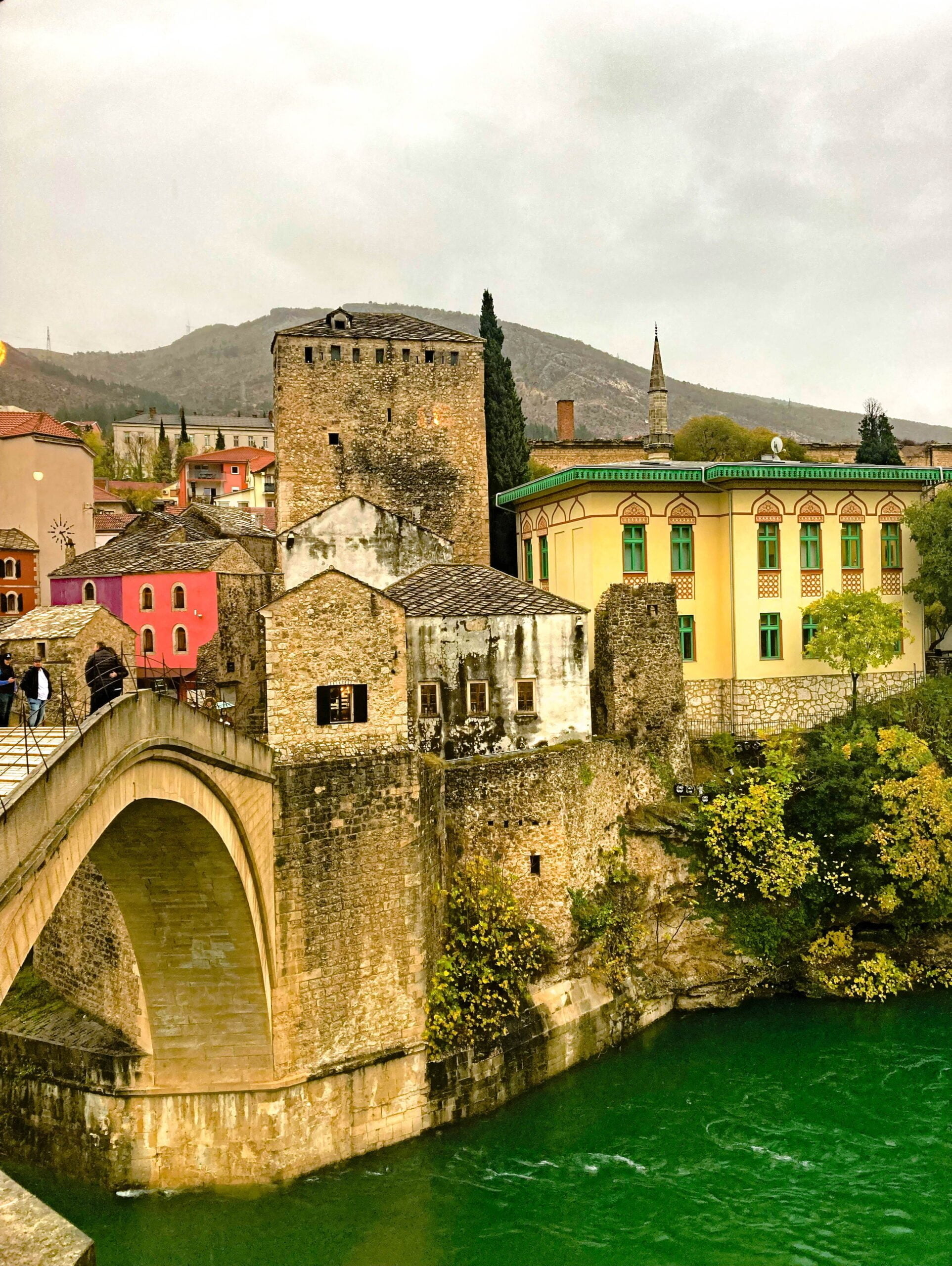
From 16 to 23 November 2022 we travel through Bosnia and Herzegovina. We experience a multifaceted journey in the turbulent history of this country and this region.
Our first stop is Una National Park, beautiful nature on the border with Croatia. Then we drive to Sarajevo for an extensive city visit and continue to Mostar and Blagaj.

The war of the 1990s is still visible, felt in the atmosphere and felt in the stories of the people we meet.
From Kulen Vakuf to Sarajevo
After our adventure in Una National Park, we stayed in an apartment in Kulen Vakuf, we head towards Sarajevo.

The first part of the route is especially challenging. Our favorite navigation app, OSMand, found a short route to the main road to Sarajevo. The map says this is a main road, we think otherwise. The freshly fallen snow makes the road even more challenging.
Fortunately, we do not see any signs of minefields on this road as we encountered earlier on.


Along the way we look for a place to stay on Park4Night, our favorite app for camping spots in Europe. That turns out to be not so easy in this season, the autumn of 2022. Many campsites are closed and wild camping is not much appreciated in this region.
The weather is also not good, it rains incessantly and it is cold. How hard it must have been for the people who experienced the war of the 1990s here in this harsh season. Along the way we are reminded of this time and time again, everywhere along the road are cemeteries with gravestones from that time. The thought of the horrors of this war makes us extra cold.

At the town of Jajce we therefore decide to drive straight to Sarajevo.
Sarajevo
Hotel Holiday
We are looking for a room in the Hotel Holiday, formerly known as Holiday Inn, the residence of many journalists in the Balkan war. This hotel was built in preparation for the 1984 Winter Olympics to house the Olympic Committee and other officials.

It is already dark when we arrive, so we check in and go to our room on the 10th floor, nice and luxurious with a bathtub. Sonja knows how to match Booking.com’s deal at the reception.😉😍
Sonja finds the restaurant Apétit via TripAdvisor, good cuisine for a good price. We eat shrimp risotto and a rump steak, beautiful dishes and well presented.


The city of Sarajevo
After a good night in our spacious hotel beds, we walk to the city. We brought the umbrella, it rains a bit and we walk along the Zmaja od Bosne (Sniper Alley in the war) towards the city. After a short walk we come across the first memory of the 1990s, one of the Roses of Sarajevo. Here a mortar hit from the surrounding mountains from where the city was besieged.


Later Ado tells that he experienced the siege of the city as a child. Every time the city was bombarded, it was a lucky moment, they didn’t have to go to school! Unfortunately, he also lost friends and loved ones were affected by the violence of war.
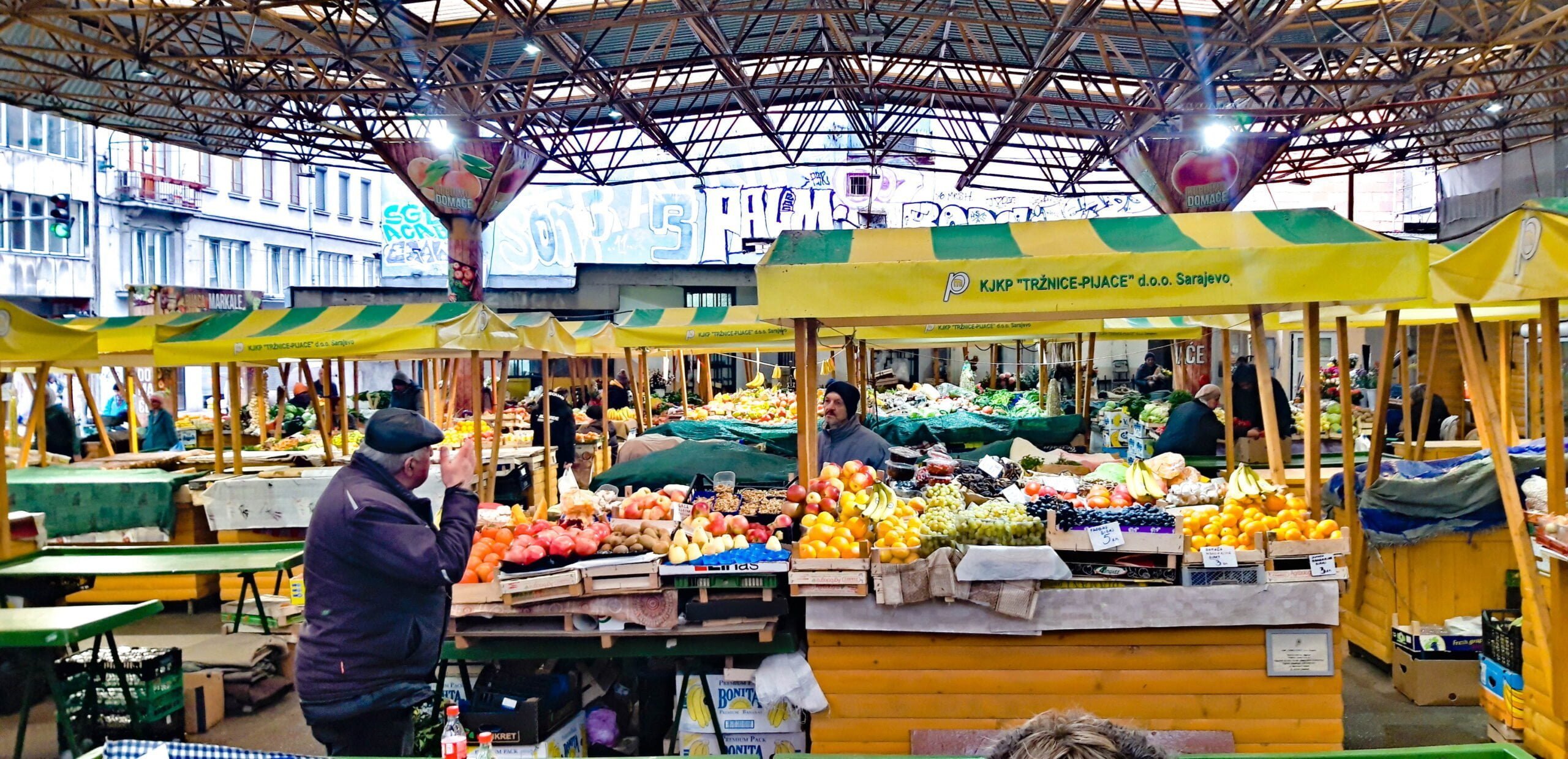


Ado is the guide of Sarajevo Spirit - City Tours, they provide a free introductory walk through the city. Highly recommended for anyone visiting the city for the first time and wanting to learn a little more about its history.
Ado tells us – we are his only guests today, another advantage of this season – his experiences and other interesting facts about the Balkan war and how it ravaged the city.

We also hear about the city’s long Muslim history, from the Ottoman conquest in the 15th century. He also talks about the Habsburg/Austrian period and the subsequent socialist period of former Yugoslavia under President Tito and the restrictions this resulted in, among others, for his parents’ generation. Ado shows us that a lot of reconstruction has taken place since the war, with the necessary changes as a result.


He leads us past beautiful squares and through narrow streets where the multicultural character of the city is still visible today.


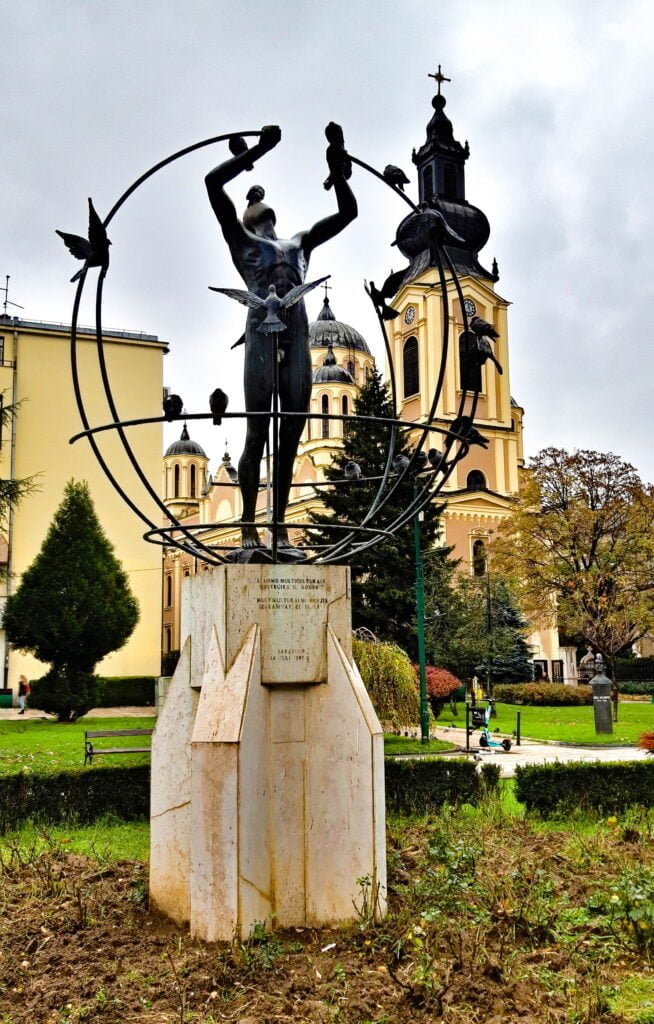


Finally, Ado and I enjoy a cup of Bosnian coffee, Sonja drinks tea. The coffee is traditionally freshly ground by hand and brewed with boiling water. You don’t put the sugar cube in the coffee, but you dip it in the coffee and let it melt in your mouth.

The coffee sets and coffee grinders are beaten by hand in the coppersmith street (see photo above), which is nice to see.
We thank Ado very much for his educational and impressive stories during our walk. We have become a lot richer with this free city walk that will stay with us for a long time.
The Tunnel of Hope
On the west side of town, dug beneath the airport runway, is the Tunnel of Hope. This 800 meter long tunnel was dug by hand during wartime. It mainly served to supply the city during the 1425-day long siege of the city from 1992 to 1995.

The house on the south side of the runway was one of the end points of the tunnel and now serves as a museum. We walk through the tunnel and experience the conditions.


With the film images that we see, we can somewhat imagine what it was like here. We are deeply impressed, horrible!
Mostar
The city of Mostar also suffered a lot in the last war. Images of the destroyed old bridge (the Stari Most) are still clear in my mind. Today the bridge has been rebuilt in its former glory and the Mostarians can dive off the bridge again. We were told about that dive by the owner of the coffee shop above the western gate to the bridge. He invited us for a coffee and told a lot about the history of the bridge and the town. By the way, the coffee and tea were not expensive, at most a few euros together (and the stories were free).


Blagaj
We find a campsite that is open in Blagaj. And what kind of campsite. A pitch for our Milady Landy with electricity and our own water connection costs €10. But for that money we are welcomed on the terrace of the campsite with a drink from the house, a piece of apple pie and a platter of fruit. Later the owner also brings us a plate of food (chicken with potatoes) and we are offered a second drink. By the way, it rains all the time… In the morning before we leave, we drink a cup of coffee and tea on the now sunny terrace.
At the checkout we want to give something extra for everything we have consumed, but this is only accepted after strong insistence.

By the way, we have nice conversations with Noah. He is a German journalist/photographer, fly fisherman and travels with his camper van through the Balkans for a report on fly fishing. He gives us tips about Turkey, where his parents originate from and we go deeper into all kinds of aspects of their lives in Germany in relation to Turkey.
Noah tips us off about the Muslim shrine at the mouth of the Buna river in Blagaj.
Tekija Blagaj
This dervish house has been a place of worship and pilgrimage for Muslims since the 15th century. It has been destroyed several times and rebuilt by the Muslim community.

We take off our shoes and Sonja covers her head and legs and enter the house. It is serenely quiet here, the murmur of the adjacent river source is barely audible and contributes to the beautiful atmosphere.


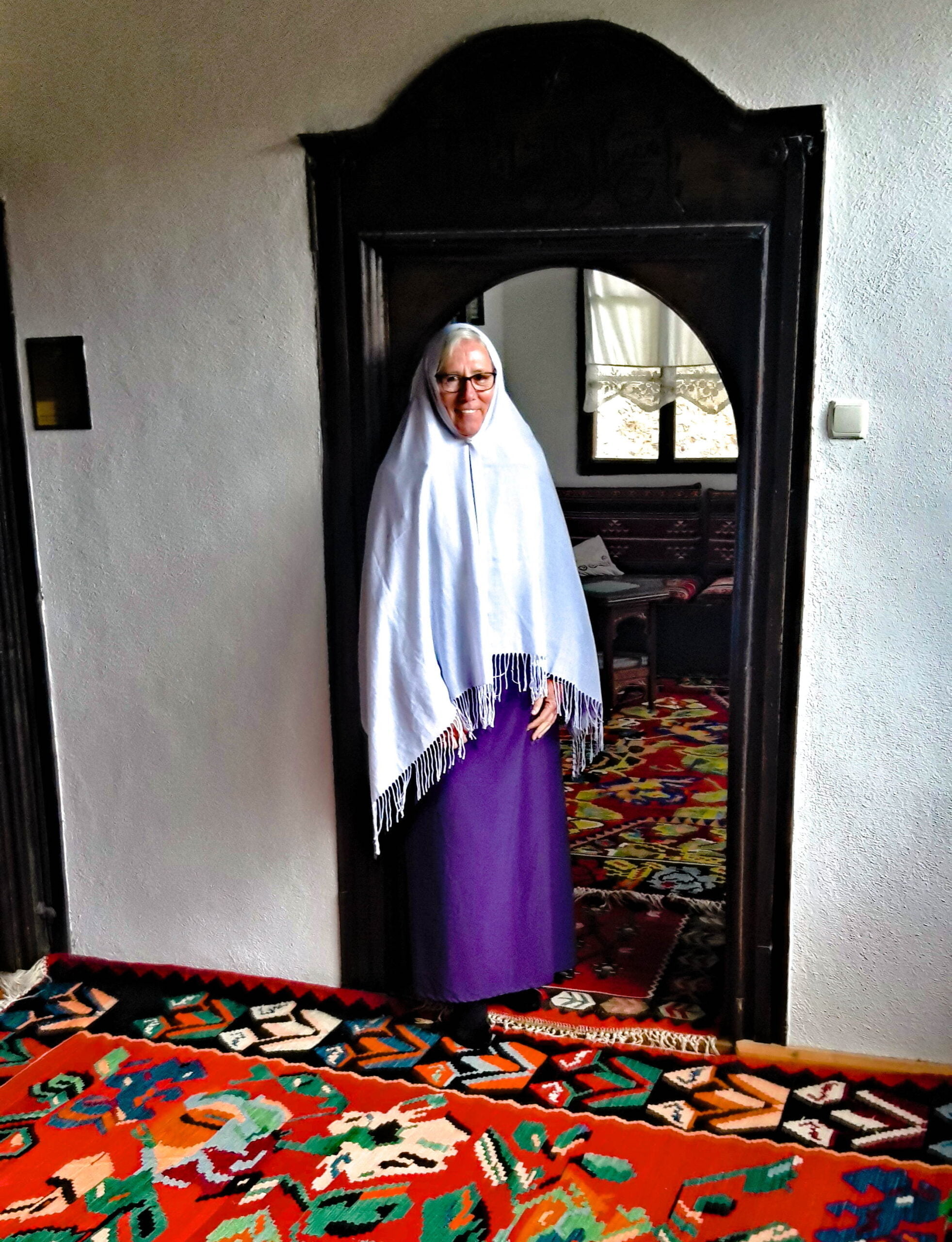


So we continue, full of impressions, but with the tranquility of this dervish monastery in our heads, further to the Croatian border.