
When we cross the border from Turkey to Georgia, we immediately notice that this country is different, more Europe in Asia. Especially Batumi, the western coastal city on the Black Sea, gives us a European impression, with the high buildings, the busy traffic and the many Toyotas (especially Prius) that drive around here. The more we drive into the country, the more we get a more Asian impression of the country. The bad roads, the small villages, the cattle that roam freely on the streets and the square and dark-haired people reinforce this impression.
For this part of the trip we limit ourselves to part of the north and east of Georgia. We will visit the city of Tbilisi, the Caucasian high mountains and the south of the country later. Highlights of this trip through Georgia, in our opinion, are the drive to Ushguli, via Mestia; our stay by the river and the visit to Martvili waterfalls; the special monasteries and churches and Baia’s wine farm in Meore Obcha, Bagdati.
In Georgia Part 1.2: Telavi Covered Market; the Vashlovani NP and our stay in Udabno.
The map below shows our journey through Georgia (click on the map to see the details).

Batumi
After the Turkish-Georgian border we can continue to Batumi, still in the rain.

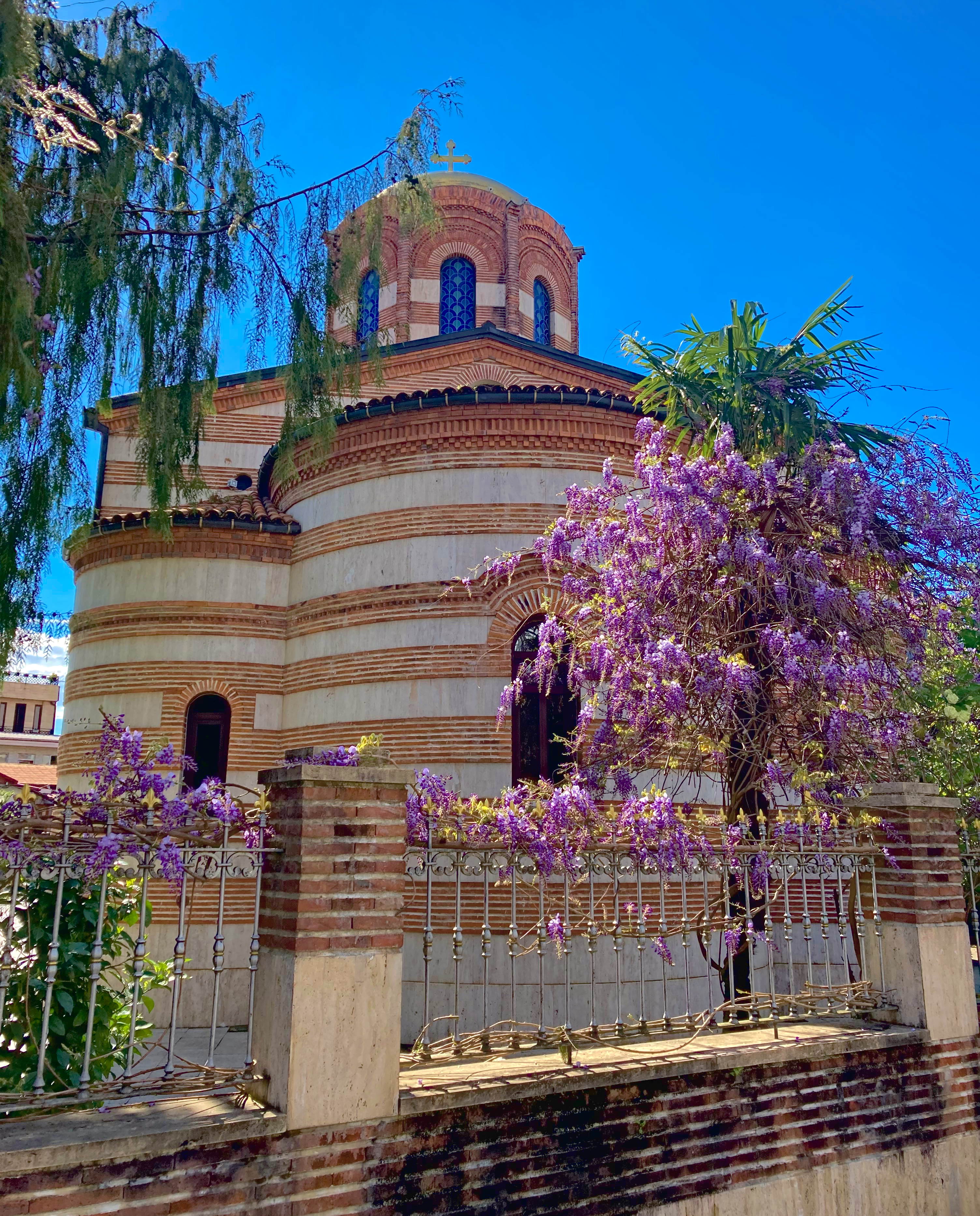
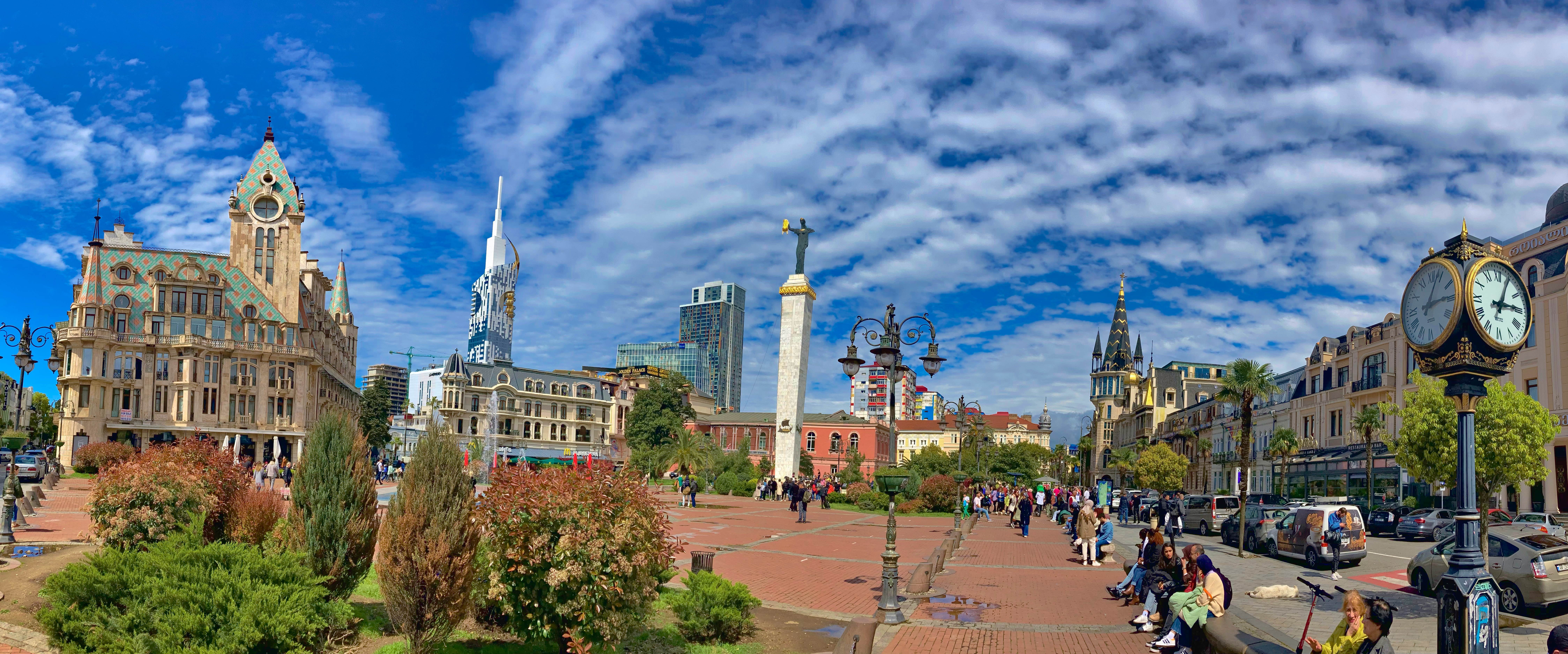
The city of Batumi feels very European after all the weeks we spent in Turkey. Tall buildings, wide avenues with a lot of traffic, churches with intact interiors, good restaurants and a beautifully decorated boulevard with works of art. Also, features of the old Soviet architecture are still visible everywhere.




We have a delicious lunch in “Go Vegan”.


The works of art literally give the boulevard extra shine. Especially the moving artwork Ali and Nino by the Georgian sculptor Tamar Kvesitadze impresses us.


On the way to Ushguli
The city is too busy for us, we are now used to peace and space around us and long for the silence. We therefore take the road to Mestia, on the edge of the high Caucasus. Along the way we marvel at cattle that walk freely on and next to the road. Especially the pigs that you see here in contrast to the sheep in Turkey.


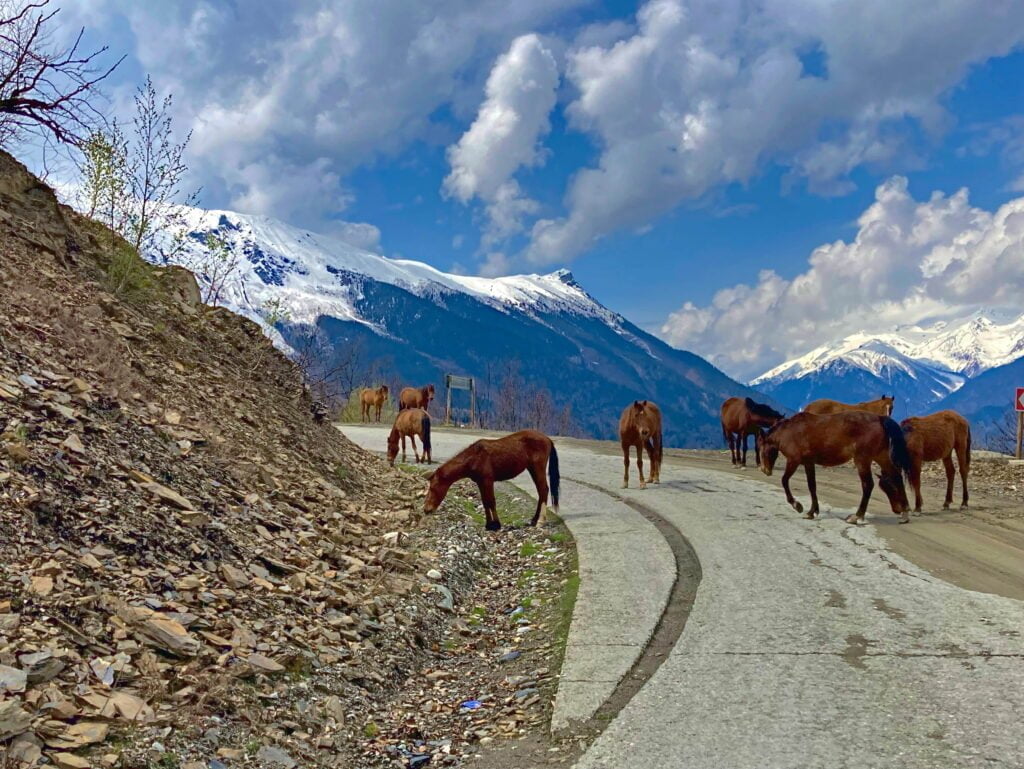


The way up from sea level at the Black Sea to well above 2,000 meters at Ushguli is generally quite good.


The towns and villages along the way have high towers, built for defense.


Only the last 6 kilometers are unpaved and sometimes narrow with sharp turns above a deep valley.
We had planned to drive east from Ushguli. But when we arrive at the top, the road turns out to be very bad and the weather is not good either. It rains and snows sometimes and the upcoming pass is about 2,800 meters, which is a bit too much, so we return on the same road (P.S. that’s a good thing, mid-June we read a report from another traveler who got stuck on this high pass).


Martvili
Camping by the river
We stop at Martvili by the river to do laundry. On the way from Ushguli I filled the black barrel with clean river water and put in the laundry with some detergent. After shaking the car for a day, the washing is done and can be rinsed. The fast-flowing river Abasha, along which we found a place to stay, offers the opportunity to rinse the laundry. First we hang the laundry under the awning, later the sun comes out and the laundry can dry in the wind and the sun.


In the afternoon, after our pancake lunch, we are invited by Pata and Lexus to taste their chacha (a local kind of raki).


Martvili Canyon
The river goes a little upstream from where we spent the night through a gorge, the Martvili Canyon. Here you can sail through with a boat to admire the waterfalls that plunge down here. Sailing in the rubber boat is a bit exciting for Sonja, but the peace and the rippling of the water make up for it.


Traveling east
Because the mountain pass at Ushguli was not passable, we now travel east at the foot of the Caucasus. The roads are fine and the landscapes are beautiful. We enjoy driving and love the views. The numerous rivers give color and movement to the landscape.


The snake
When we turn into a small road, after a beautiful church, we find a waterfall that is indicated with a brown signpost.


Enthusiastically I walk to the waterfall to take some pictures, until Sonja suddenly screams “a snake!”.

The snake crawls away in a cavity between the stones and seems to have disappeared. Until I suddenly see that he is coming to look at the other side…
Fortunately, this ends well, the snake goes for the “eye” of the camera. Afterwards we hear that this snake is not dangerous, but it is scary!
Monasteries and churches
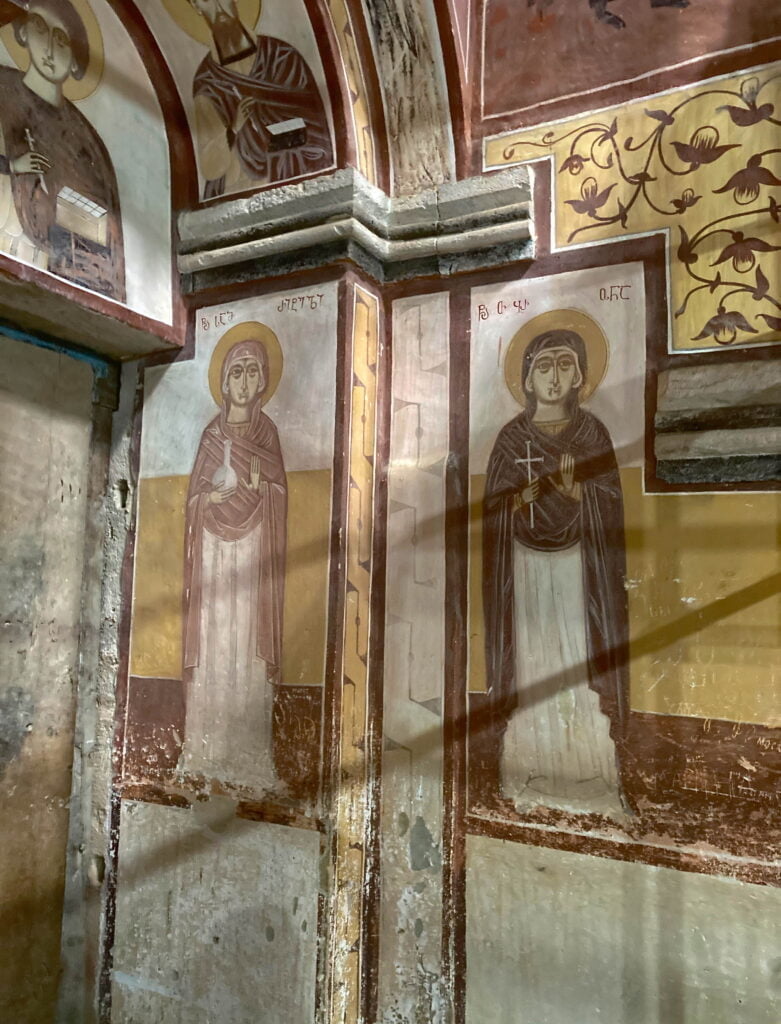
The many monasteries and churches in Georgia have experienced a revival after the Soviet era, we see repairs everywhere. We also see that the countless icons and frescoes are better preserved than in the Christian places of worship that we visited in Turkey.
Nikortsminda Saint Nicholas Temple
The Nikortsminda Saint Nicholas Temple has stood in the Georgian landscape for more than 10 centuries and is a fine example of the many churches and monasteries we encounter along the way.


Gelati Monastery
Gelati Monastery is one of the largest medieval Orthodox monasteries and at that time had an important scientific role in ancient Georgia.
The monastery is currently under restoration, but nevertheless we get a beautiful picture of the many frescoes and the special architecture of the complex.



Bagrati Cathedral in Kutaisi
The Bagrati Cathedral in Kutaisi may have been restored a little too lavishly. On the day we visit the cathedral, wedding ceremonies take place, which is interesting to experience.


Baia’s Wine
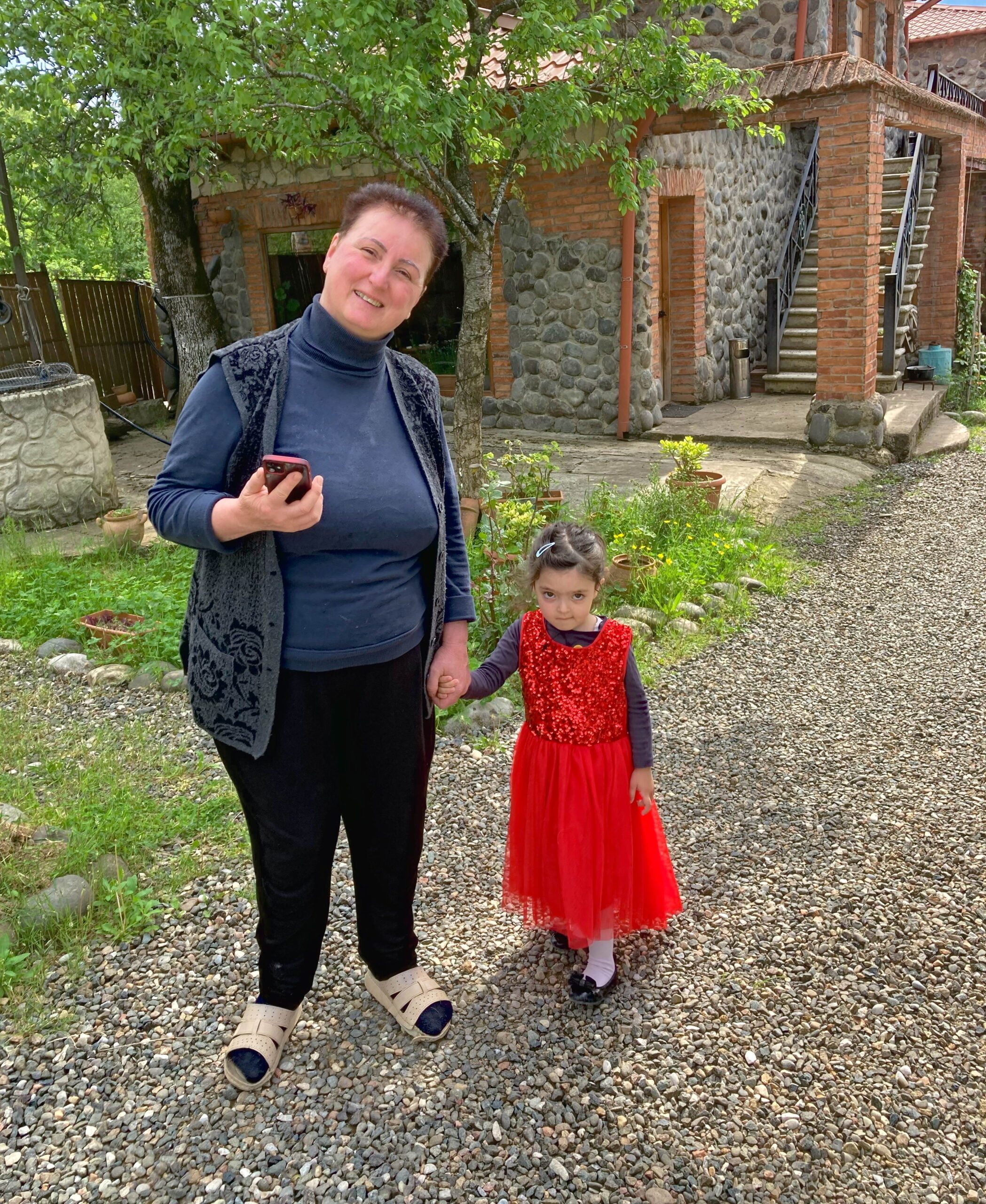
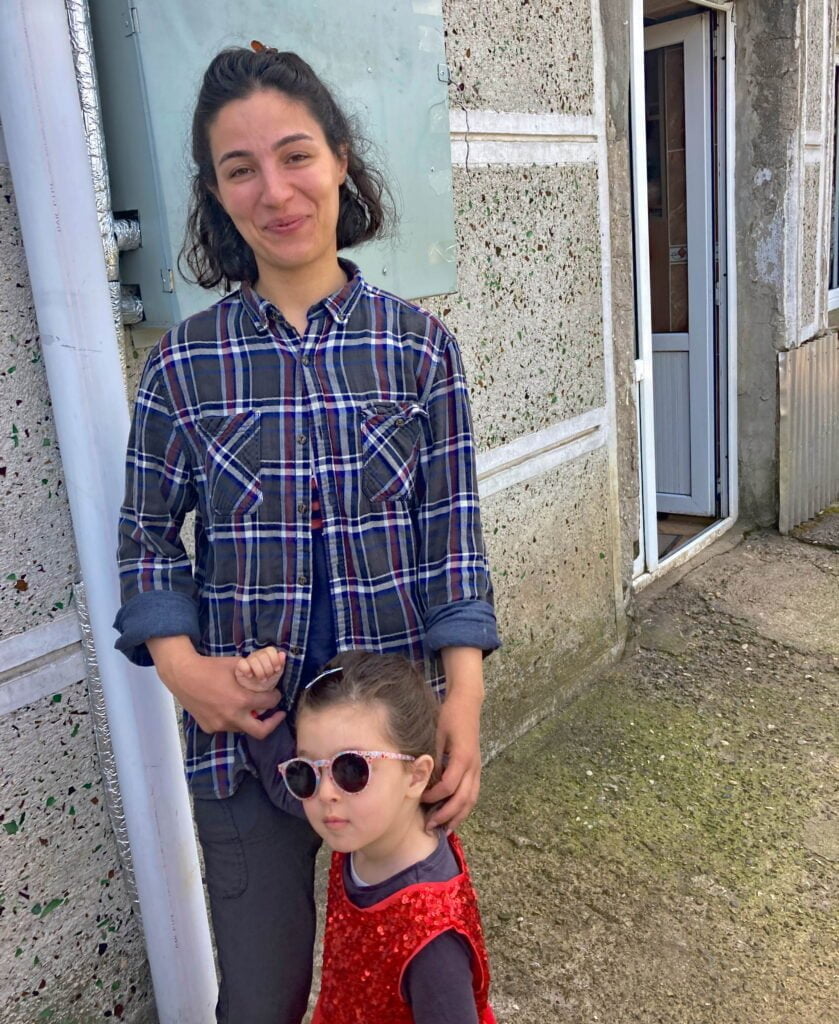
Through Anne Mulkens, a former colleague of Sonja, we hear about Baia’s Wine, a winery in western Georgia. At the town of Meore Obcha, Bagdati, after some searching and following the brown signposts, we find the wine farm. The gate is closed, but we call the phone number indicated and Baia tells us that someone will be there in 5 minutes to show us around. Baia’s mother, Tamara, comes to open the gate a little later, along with her granddaughter. They show us around the vineyard. Later another Russian couple and a Lithuanian woman join us. Tamara explains to us how the Georgian wine making process works.



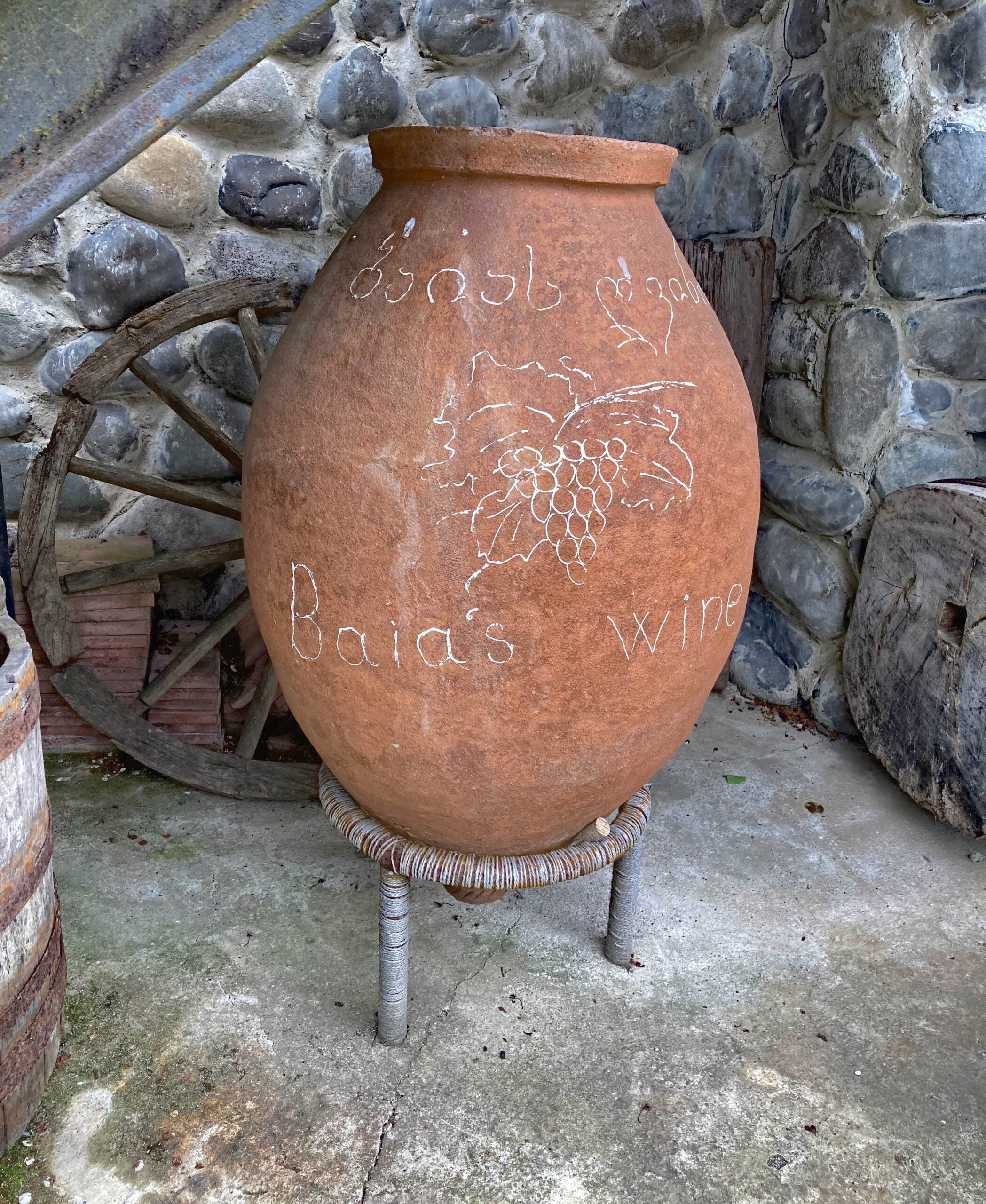
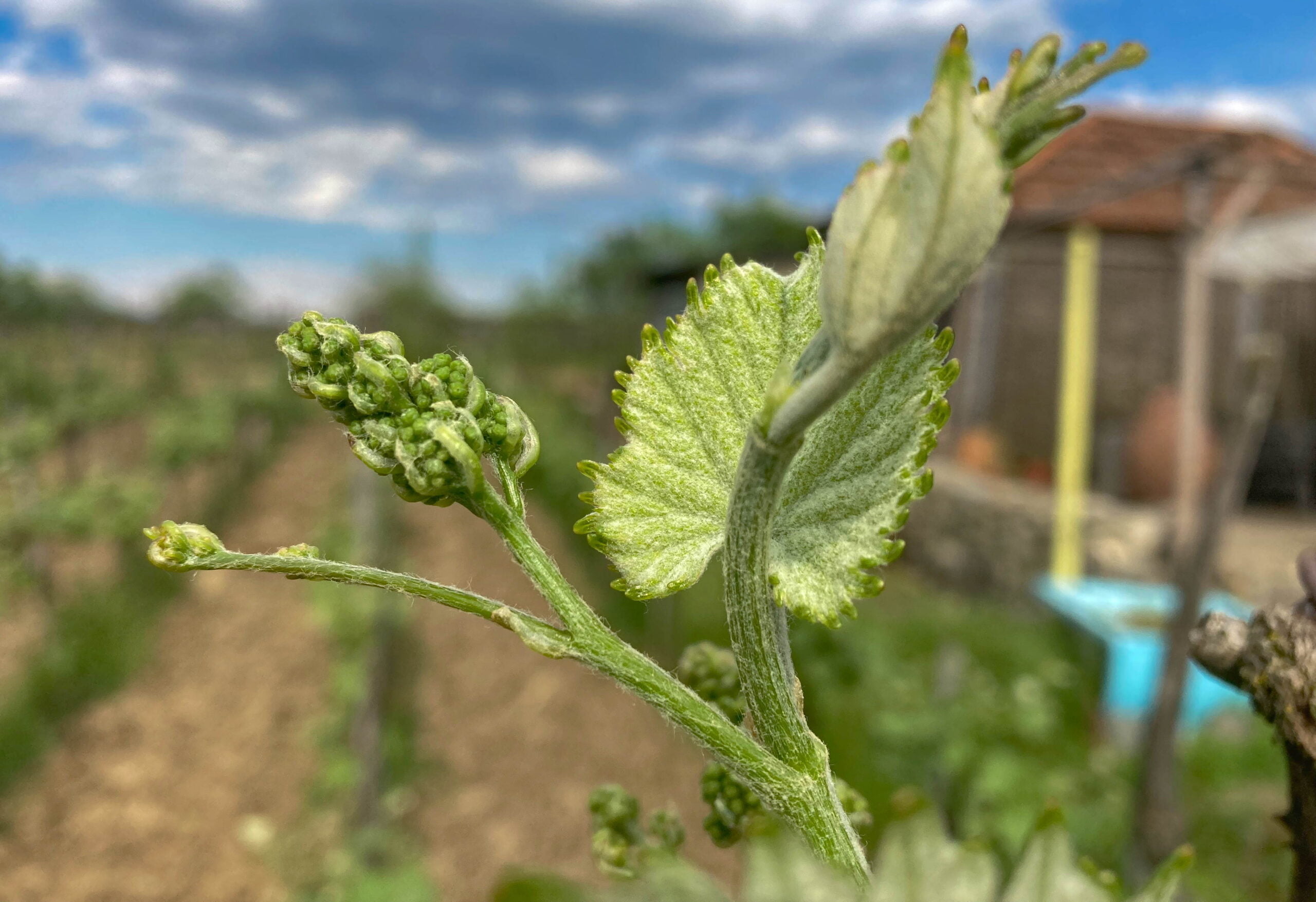


We taste the wines and get delicious appetizers.

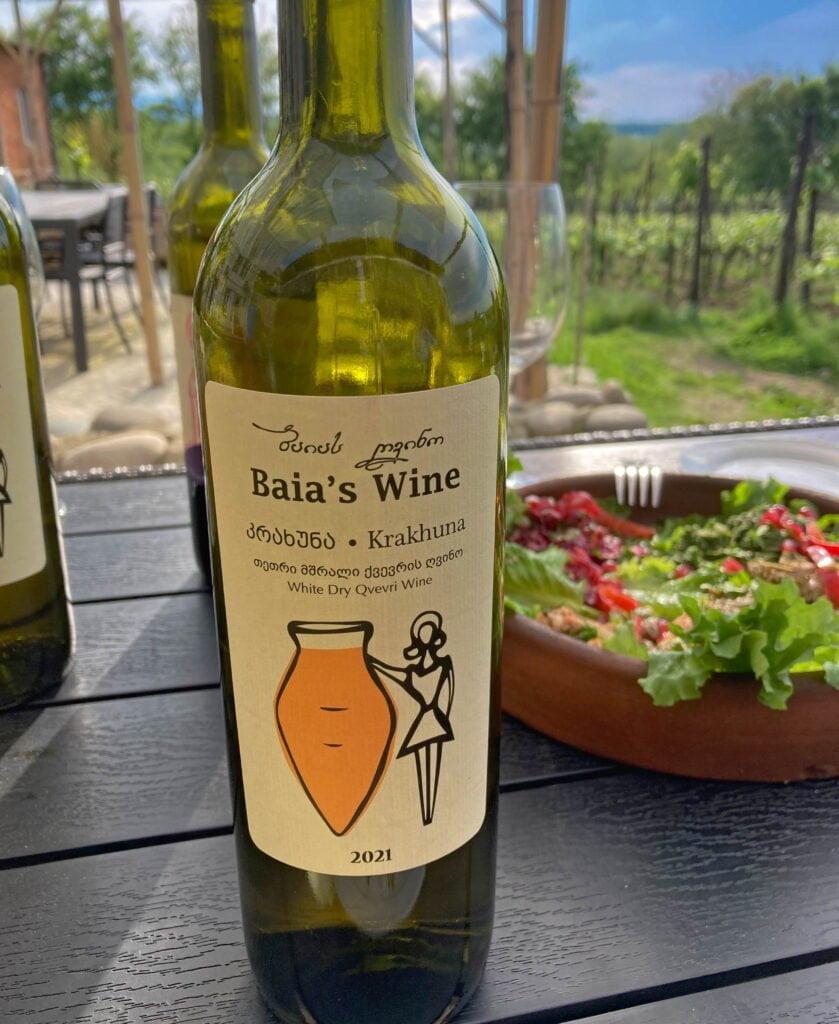
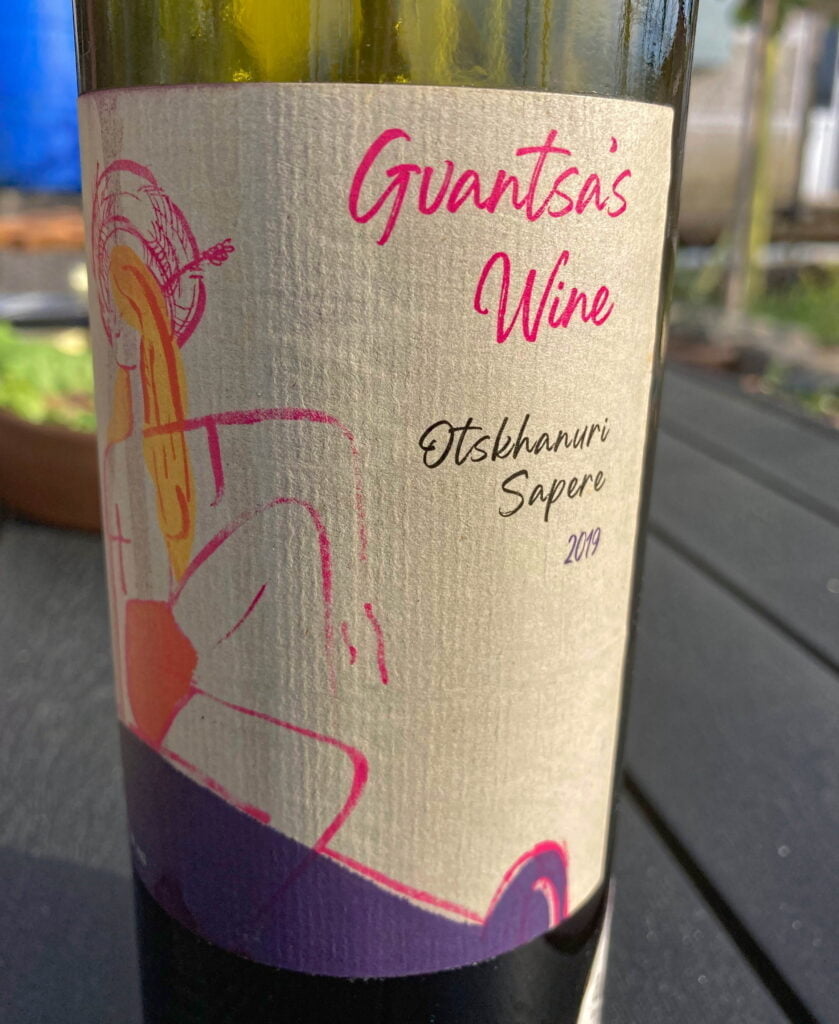
Later we join Anna and Mattheus from Poland, we have a nice evening with them. Satisfied we can crawl into bed in our own Milady in the parking lot.
The next morning we meet Baia and buy a few more bottles of wine.

Gori, the birthplace of Stalin
We visit the city of Gori as this is the birthplace of Stalin. There is a Stalin Museum that is not stripped of the heroism and personality cult of this Soviet dictator, the city is clearly proud. In a small corner of the museum, some space has been made to also describe the horrors of the Stalin regime.


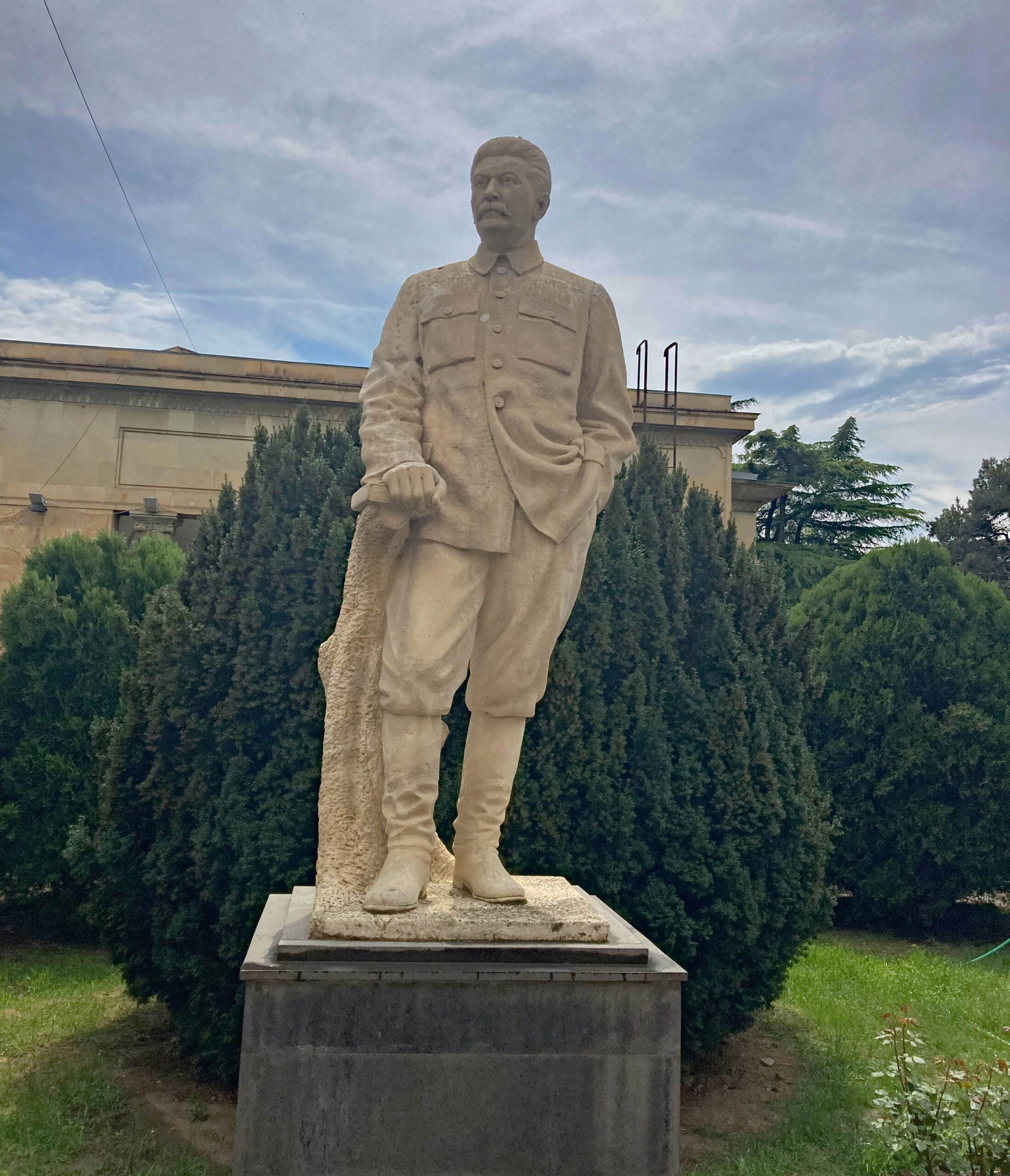
We do not exactly feel that justice has been done to the injustice that this dictator has caused, but of course we cannot deny his historical significance.