

Yes, that is how Saudi Arabia is often presented, a big sandbox. We know better by now, after more than a year in the Middle East, of which almost 5 months in Saudi Arabia, we think we have gotten to know the country a little better.
We give an overview of our journey through Saudi Arabia on Google Maps in this blog.
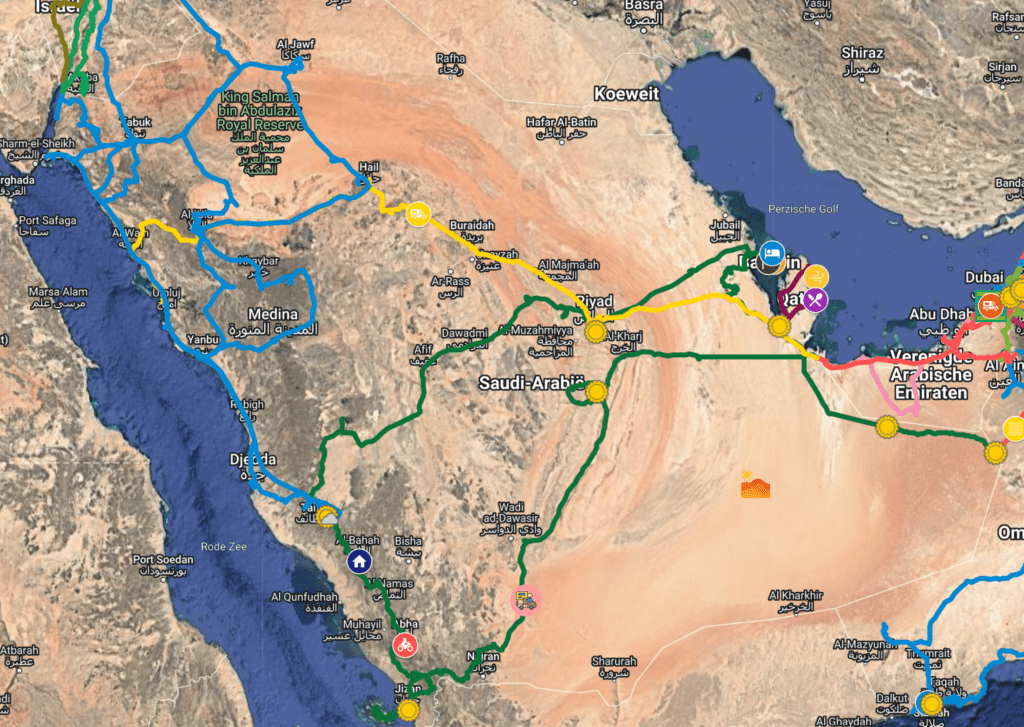
You can find our other blogs about Saudi Arabia here.
An extensive day-to-day report of our journey through Saudi Arabia can be found on Sonja’s Polarsteps.
In the blog below we look back on our journey through Saudi Arabia.
Arab society
General
We drive into this enormous country with our Western glasses, the country that is the cradle of Islam.
Our Western background makes us look at Arab society with mixed feelings. Islam and especially Muslims are often associated by “us” with harshness, oppression, limited rights (of women) and terrorism. During our stay in Saudi Arabia and the other countries of the Middle East, we are given every opportunity to nuance this image.
To be honest, my image of the country was also already formed because I did a 6-month internship in Saudi Arabia in 1980. During that period, when I was 23 years old, it was impossible for us as foreign employees to get in touch with the local population. The only contact I had were the few words I could exchange with the merchants in the souk of Taif where we were working on the construction of a palace.
Hospitality
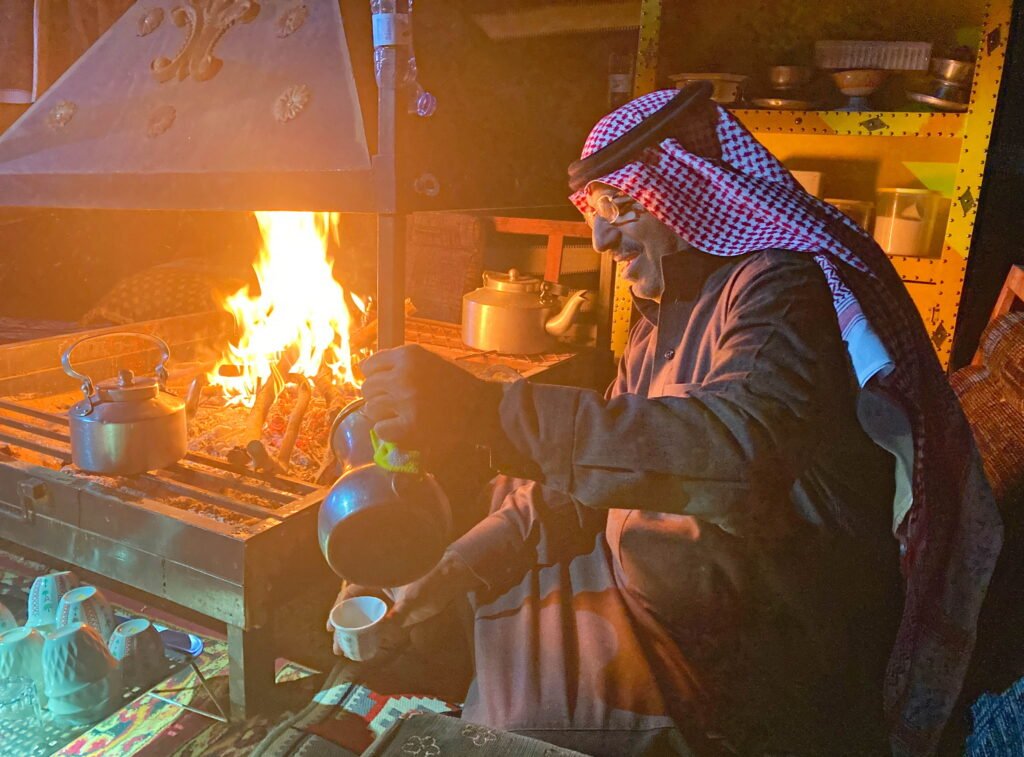
During our current journey through the country, we discover that the people we encounter are extremely hospitable. We are invited countless times for Arabic coffee with a date. We are offered extensive meals and are even surprised with several days’ stay in luxurious hotels. The hospitality, we discover during our journey, is fueled on the one hand by curiosity about us as travellers in that strange old car. On the other hand, hospitality is part of the culture of Islam. Abdullah in Dumat al Jandal explained this to us in detail by saying: First of all, I am hospitable to you because Allah requires it, that way I earn points for the hereafter. And secondly, I do it for you, to take care of you during your journey and to hear your travel stories.
Position of women
The position of women in Saudi and Arab society is at least controversial from our Western perspective. The fact that most Saudi women walk around veiled, completely covered by a niqab (face veil) and hijab (garment that covers the entire body), creates a distance that we experience as unpleasant. We mainly have encounters with men, although Sonja can sometimes have a conversation with the women. From these conversations and encounters we conclude for ourselves that Arab society consists of two parallel societies, a society for men and a society for women. These societies meet each other in families and households. But unlike in our Western society, men and women have their own social network with few similarities. Even family celebrations are largely held separately, for example during weddings, with a room for men and a room for women.
Yet we see that men have a pronounced respect for the women in their family. Mothers are adored and women run family life and are considered the most important person in the family. We have never experienced that women have a disadvantaged position, they have their own position in the family and that is highly valued.

Our “Western glasses”
Our conversations and meetings also give us the opportunity to talk about those “Western glasses” that I mentioned earlier. We share our experiences and we talk about the Western image of Muslims as terrorists. Our conversation partners sometimes react very strongly to this and sometimes sadly. But together we agree that people are often afraid of the unknown. That this fear is fueled by the one-sided reporting in the (social) media. What we can at least share from our own experiences is that here too, in Saudi Arabia, there are ordinary people, with ordinary families and an ordinary job and a house. These people are also concerned about the developments in Israel and Palestine and the surrounding countries. They are also sad about the thousands of victims of this war. They are also concerned about what this war will mean for their country.
Politics
Our conversations are rarely about politics, the Saudi regime is far removed from the people. The people we speak to are satisfied with the good health care and education. They have jobs in the government, Aramco or other companies and lead a steady life. The plans of Crown Prince Mohammed Bin Salman (vision 2030, see below) give people hope for more freedom and further economic development. That their government is not democratic is a given, people are not worried about that.
The history of Saudi Arabia
Islam
Saudi Arabia, a country known today for its religious and economic significance, has a history deeply rooted in Islam. The area now known as Saudi Arabia played a central role in the early development of this world religion.
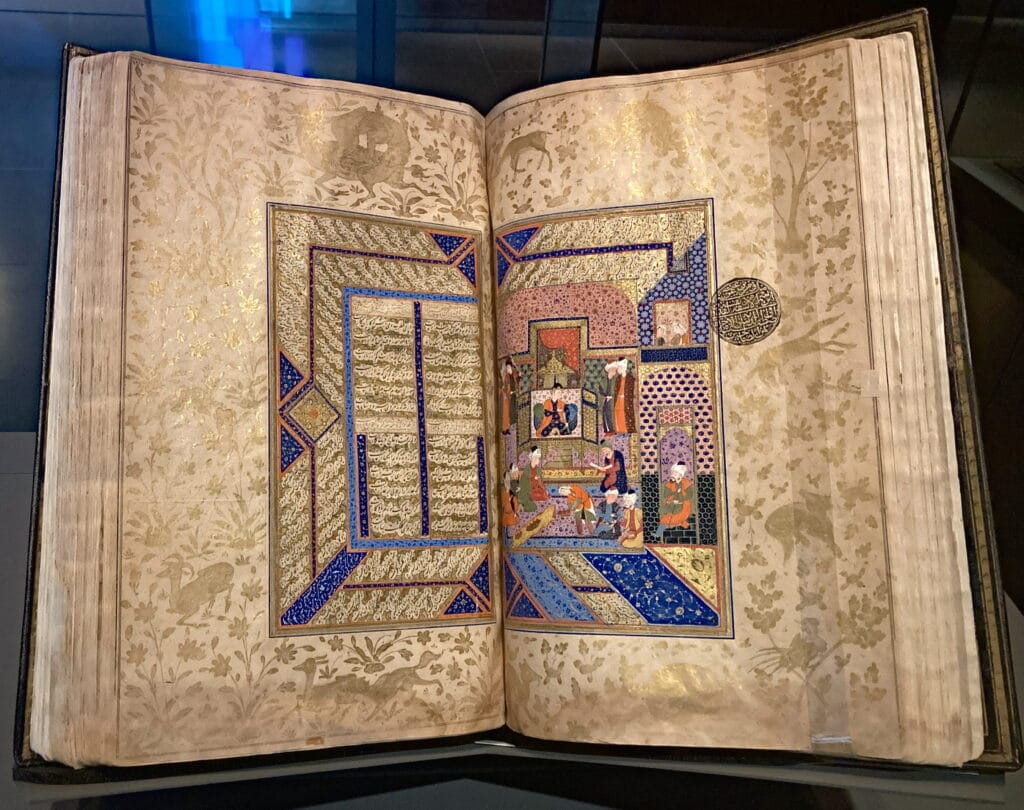
A major turning point in the history of this area was the arrival of Islam in the 7th century. The Islamic prophet Muhammad, born in the city of Mecca, began to preach his religious message and, together with his followers, wrote the Qur’an, the holy book of Islam. He later moved to Medina, where the Muslim community further developed and strengthened. These two cities, Mecca and Medina, remain the holiest places in Islam to this day.
The history of Saudi Arabia is closely linked to the spread of Islam throughout the world. After the death of Muhammad in 632 AD, Mecca and Medina became important spiritual centers for Muslims. Various tribes and dynasties ruled the area in the centuries that followed. It was not until the 20th century that Saudi Arabia was established as a unified kingdom by Abdul Aziz Al Saud, also known as Ibn Saud.
The Economic History of Saudi Arabia
We will also explore the economic history of Saudi Arabia. In the rural areas of the north and south of the country, we mainly see the traditional economy based on trade and agriculture. The further east we travel, the more we become acquainted with the modern, oil-driven economy.
1. Pre-oil era: trade and nomadic economy
Before oil was discovered, the economy of Saudi Arabia was mainly based on trade, livestock and agriculture. Its location on trade routes through the Arabian desert made the area an important hub for caravans transporting spices, incense and other goods. The Hajj (the annual Islamic pilgrimage to Mecca) also had an economic impact through pilgrims who traded and needed services.
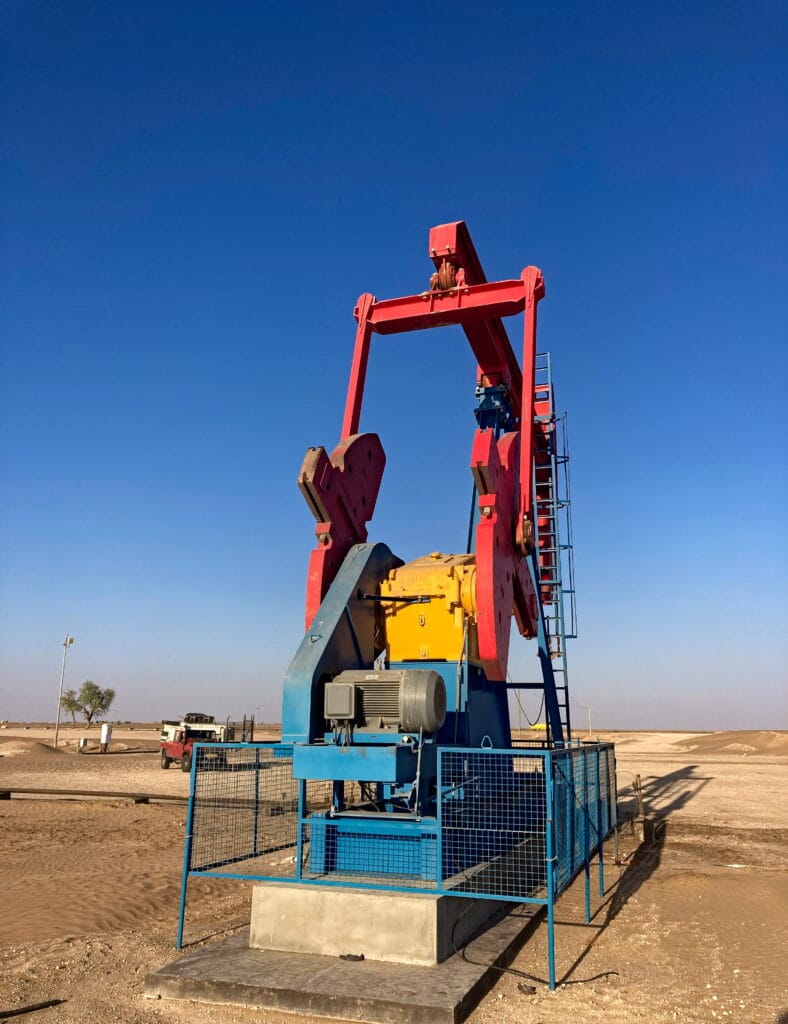
An oil well in the Rub al Khali
2. The discovery of oil (1930-1940)
The discovery of oil in 1938 in the Dhahran region was a turning point in the economic history of Saudi Arabia. This happened under the concessions granted to foreign oil companies, such as the American company Aramco (Arabian American Oil Company). After the Second World War, the massive extraction of oil began, which brought enormous wealth.
3. The Oil Boom (1950s-1970s)
In the 1950s and 1960s, oil revenues soared and Saudi Arabia began investing in infrastructure, such as roads, hospitals, and schools. The creation of OPEC (Organization of the Petroleum Exporting Countries) in 1960, of which Saudi Arabia was a founding member, increased the country’s influence on global oil prices.
4. Diversification Efforts (1980s-2000s)
Although oil brought wealth, its dependence on oil revenues made the economy vulnerable to price fluctuations. In the 1980s, during a global oil crisis, Saudi Arabia began efforts to diversify its economy, investing in petrochemicals, mining, and agriculture.
5. Vision 2030 and current developments
In 2016, Crown Prince Mohammed bin Salman introduced the “Vision 2030” plan to further diversify the economy and make it less dependent on oil. Key pillars of this plan are:
- Tourism: Development of tourism projects, such as NEOM, a futuristic city, and promotion of heritage sites.
- Privatization: Reforms in state-owned companies, such as the partial IPO of Saudi Aramco in 2019.
- Sustainability: Investments in green energy, such as solar and wind energy.
The landscapes
Our travels through Saudi Arabia introduce us to a diverse and impressive landscape that ranges from vast deserts to mountain ranges and coastlines. These are the main geographical features:

1. Deserts
Of course, we drive for days through the vast deserts of Saudi Arabia:
- Rub al-Khali (The Empty Quarter):
This is the largest continuous sand desert in the world and one of the most iconic landscapes in the country. The area is remote and is known for its impressive sand dunes, which can be up to 250 meters high. See also this blog. - An-Nafud:
A large sand desert in the north, known for its red sand and rugged beauty. This video gives our impression of this area. - Ad-Dahna:
This desert connects the Rub al-Khali with An-Nafud and is characterized by narrow strips of sand.
2. Mountain ranges
Although the country is often associated with flat deserts, we also travel through impressive mountain ranges:
- Asir Mountains:
Located in the southwest, close to the border with Yemen. This area has a surprisingly green landscape and a more temperate climate thanks to the altitude. The highest point, Jabal Sawda, reaches about 3,000 meters.
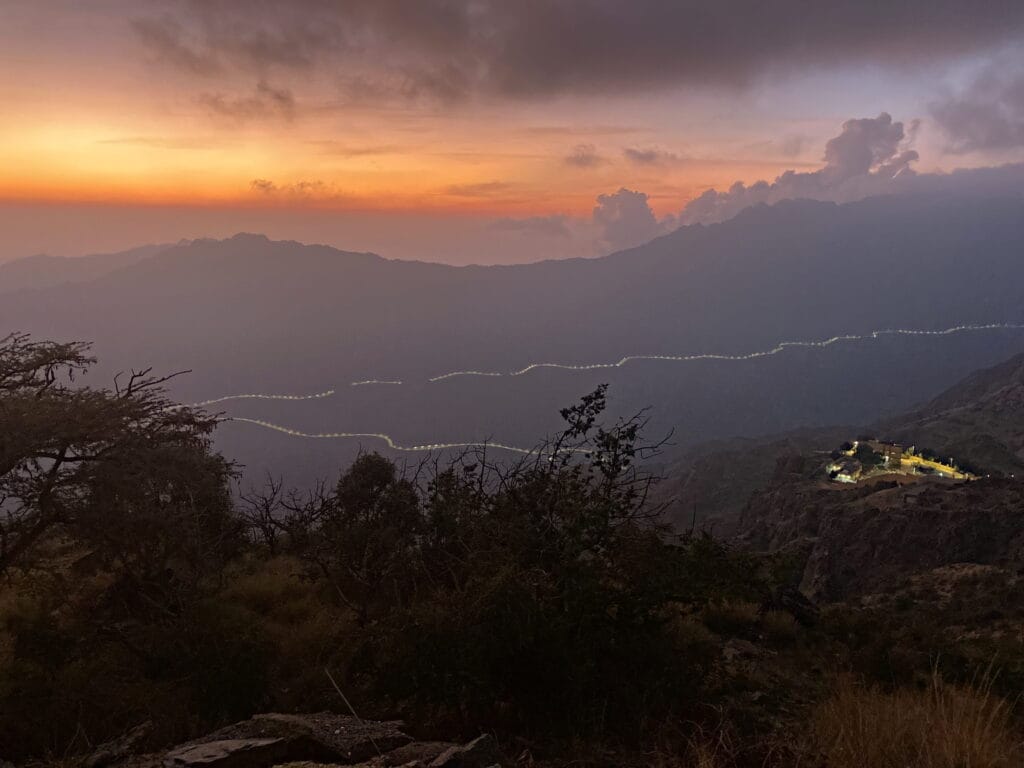
We meet Mossa here on his coffee plantation and later enjoy this beautiful sunset in Al Baha. - Hijaz Mountains:
On the way from Jeddah to Taif, we drive up the steep cliff of the Hijaz Mountains. This mountain range stretches along the west coast and is home to the holy cities of Mecca and Medina. - Sarawat Mountains:
From the south of the Asir Mountains towards Taif, we drive through one of the most important mountain ranges in the country. The Sarawat Mountains surprise us with a landscape of rolling hills and steep cliffs.
3. Coastlines
Saudi Arabia has two long coastlines that play an important role in its geography:
- Red Sea:
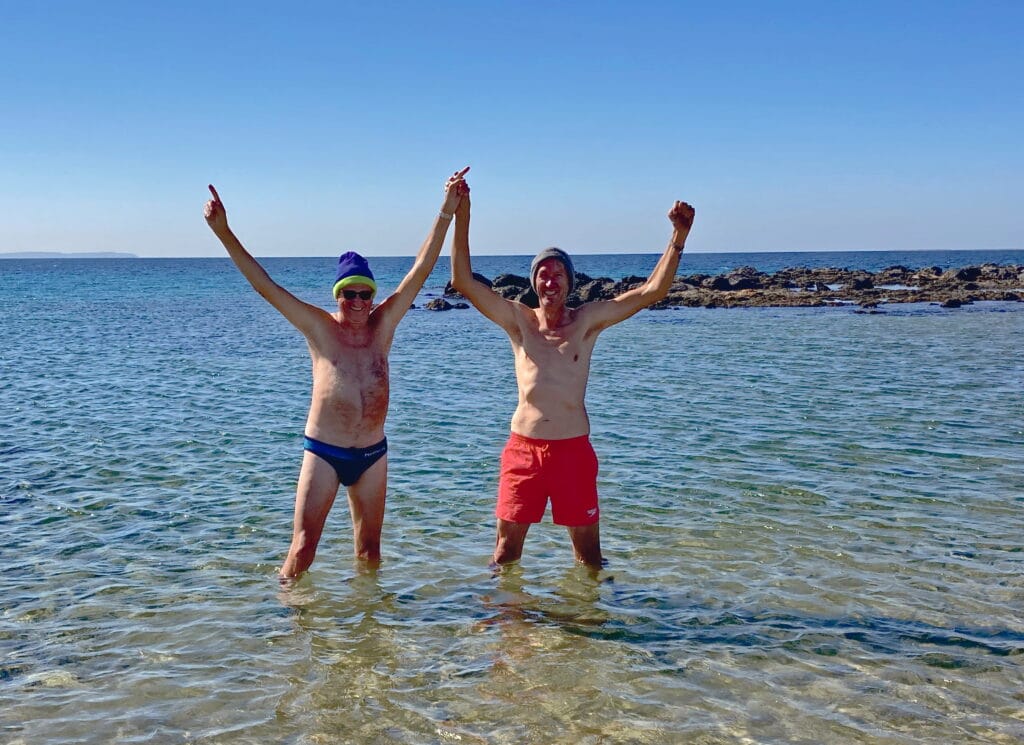
The west coast borders the Red Sea, known for its coral reefs, crystal clear waters and diving opportunities. The city of Jeddah acts as a gateway to this region. We will take a dip at various places along this coast, in the north near Sharma, at Yanbu (our New Year’s dive) and at the Farasan Islands in the far south of the country. - Persian Gulf:
The east coast borders the Persian Gulf, with flat beaches and some mangrove forests. This region is economically important because of the oil industry. We find this coast less attractive.
4. Volcanic Fields
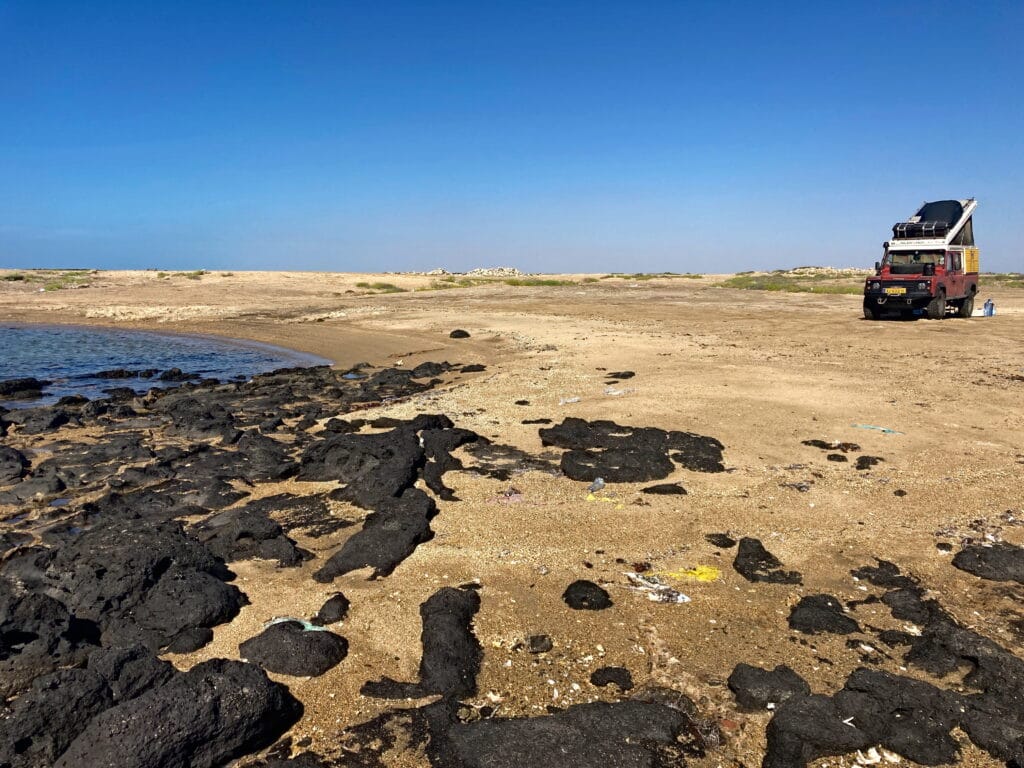
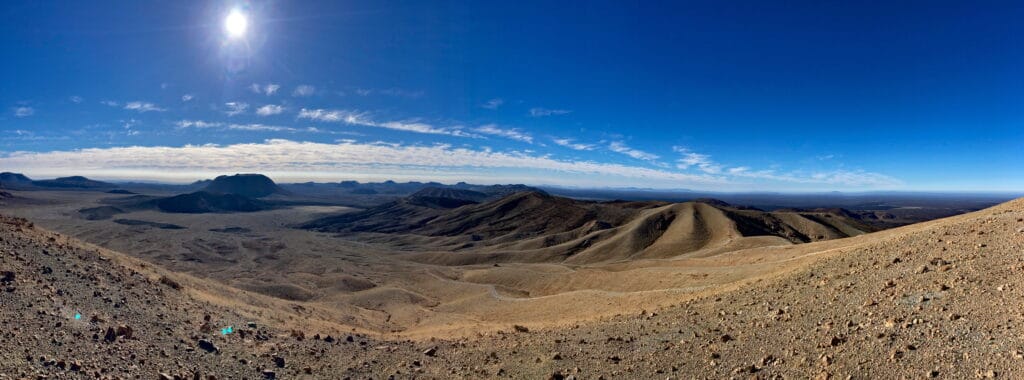
Saudi Arabia also surprised us with its volcanic landscapes, known as harrats. These lava fields, such as Harrat Khaybar and Harrat Rahat, offer a unique and sometimes otherworldly landscape of black basalt stones and ancient volcanic cones.
5. Oases and Wadis
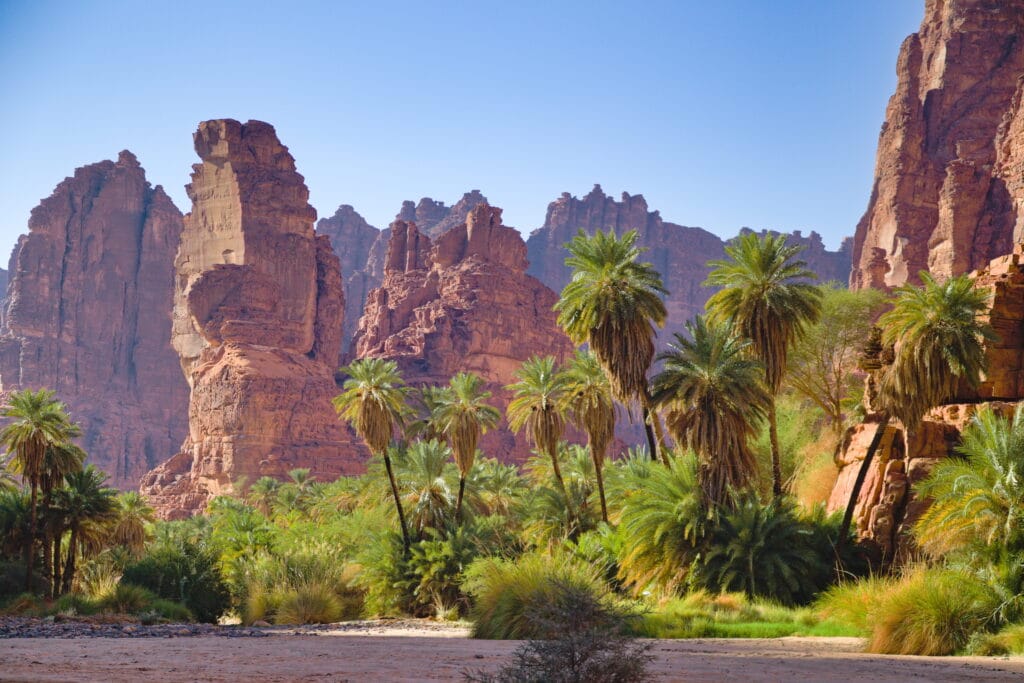
Amidst the deserts are fertile oases, such as Al-Ahsa in the east, a UNESCO World Heritage site, and our favorite of the north, Wadi Disah. These oases are historically important as resting points for caravans and for agriculture.
6. Urban landscapes
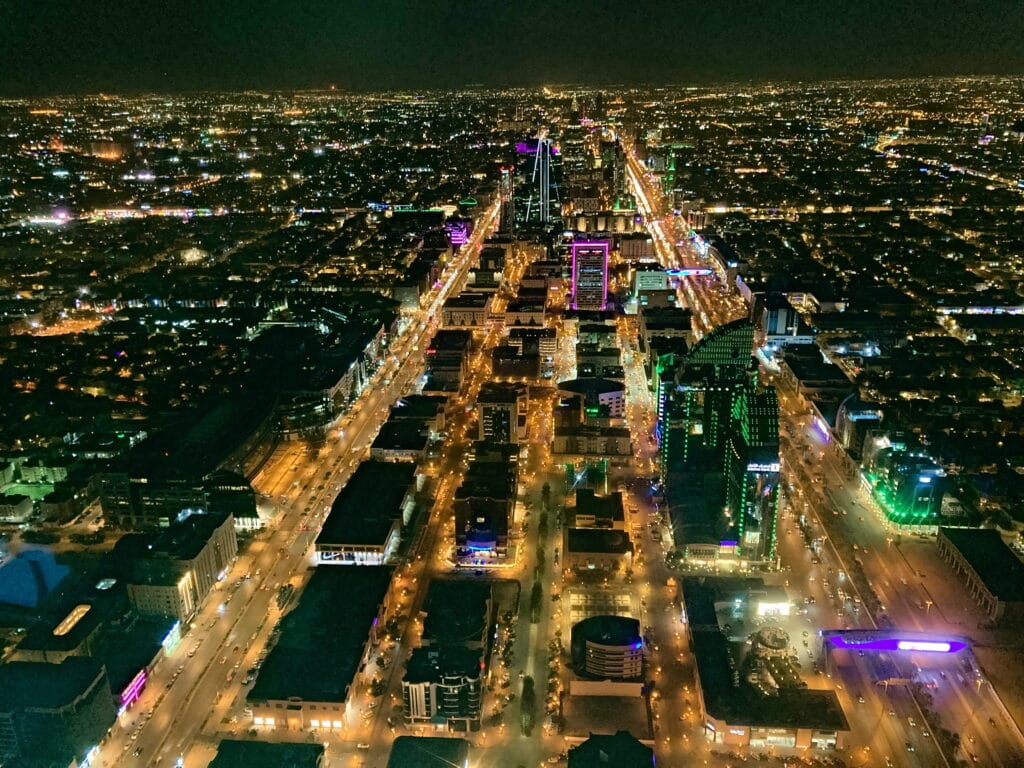
Modern cities such as Riyadh, Jeddah and the future city of NEOM add a futuristic touch to the Saudi Arabian landscape, with skyscrapers, modern infrastructure and cultural monuments.
Conclusion
Saudi Arabia is a country of contrasts, known not only for its religious and economic significance, but also for its diverse landscapes and unique culture. Although often seen as a vast desert, Saudi Arabia offers much more: from the vast sand dunes of the Rub al-Khali to the green mountains of the Asir Mountains, and from bustling modern cities to traditional oases.
The country’s cultural dynamics are shaped by a mix of tradition and modernity, where hospitality is deeply rooted in Islamic values. At the same time, the society displays a complex balance between traditional gender roles and respect within family structures.
Economically, Saudi Arabia has undergone a remarkable transformation, from a trading society to an oil-driven economy. The recent reforms under Vision 2030 show an ambitious commitment to diversification and sustainability.
This diversity and the nuances revealed in our personal experiences show that Saudi Arabia is much more than a “big sandbox”. It is a country with a rich history, a hospitable population, and a future focused on growth and modernization.
